
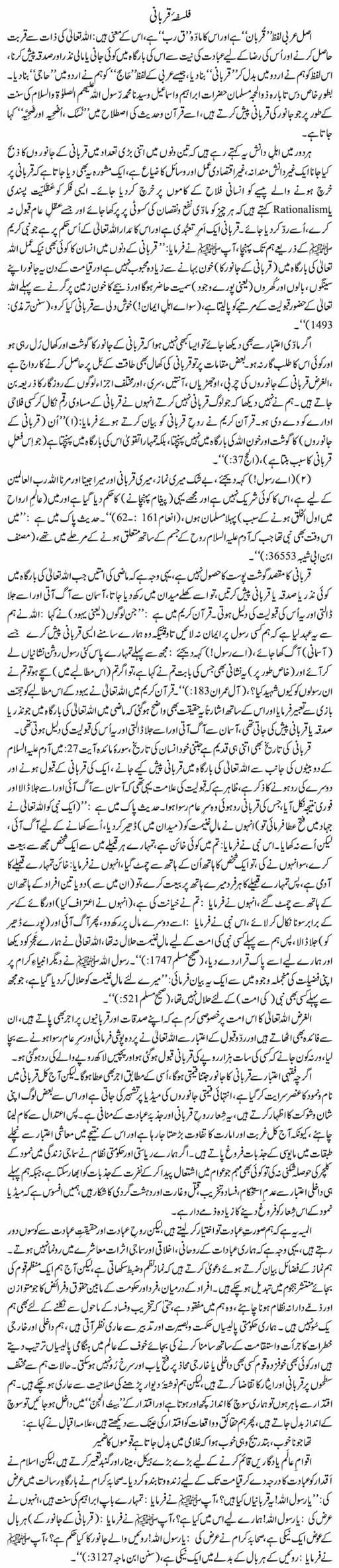
Archives
The Manner Of Giving Greetings Of Peace
In order of best, second best, and third best, these are the ways of extending greetings of peace:
1) “Assalaamu ‘Alaikum Warahmatullahi Wabarakaatuhu”: Peace as well as the mercy and blessings of Allah upon you.
2) “Asslaamu ‘Alaikum Warahmatullah” : Peace and the mercy of Allah (swt) upon you
3) “Assalamu ‘Alaikum”: Peace upon you.
This order is proven by the narration of Abu Hurairah (RA), in which a man passed by the Messenger of Allah (saas) – who was seated in a gathering – and said, “Assalaamu ‘ Alaikum.” The Prophet (saas) said, “Ten good deeds (are Written for him).” Another man passed by and said, “Asslaamu ‘Alaikum Warahmatullha,” and the Prophet (saas) said, “ Twenty good deeds.” Then another man passed by and said, “Assalaamu ‘Alaikum Warahmatullahi Wabarakaatuhu,” and the Prophet (saas) said, Thirty good Deeds (Related by Al-Tirmidhee (2689), who said, “the Hadeeth is Hasan Saheeh)
Allah (swt) said in Quran:
“When you are greeted with agreeting, greet in return with what is better than it, or (at least) return it equally” (Qur’an 4:86)
It’s a Humble request Brothers to spread Greeting as it is to get Reward from Allah (swt) (without making shortcuts)
Jazak Allah Khair
Practical Tips For A Fine Hajj
Haj is the ‘ultimate’ journey, the journey of a lifetime. Yet I’ve seen so many people, brothers and sisters, confused, angry, frustrated or just simply ignorant during Haj. So here is a piece of sincere advice for all of my brothers and sisters going for Haj this year.
Educate yourself before you go
This is the most important point. They say “Knowledge is Power,” and it is. I’ve seen people confused, not knowing what to do, looking left and right, bewildered during Haj. In the end, they just follow what the rest of the crowd is doing without knowing if what they are doing is from the Shariah of Prophet Muhammad (peace be upon him) or not. Indeed, I know people who have gone and come back from Haj, and they didn’t know what kind of Haj they performed, how many days one was required to stay in Mina, and so on. In fact, some didn’t know it takes seven rounds around the Ka’ba to make one Tawaf!
Going to Haj without knowing the basics of how to perform Haj and Umrah is like placing someone who doesn’t know how to offer Salah in the middle of a congregation. He may follow the movements in Ruku’ and Sujood, but does he really know how to pray? Does such a prayer even count?
So, study the rituals of Haj before you go. Learn how to perform this magnificent journey in a manner that is closest to the Sunnah. Because the closer it is to the Sunnah, the more acceptable it will be to Allah. Learn about the common mistakes pilgrims do, so you can avoid them.
Go with a prepared heart
Every year at Haj, you see only two kinds of people. The first kind will be sitting calm and patient, even when they are stuck for five hours in traffic, wisely utilizing the time making Dhikr of Allah or reading the Qur’an. The other kind will be grumbling and complaining, fidgeting restlessly in his seat, cussing at the bus driver and wasting his whole time fighting with whoever is sitting next to him.
Why is that? Because the first kind of people come with prepared hearts and the second type don’t.
Haj is not a mere physical journey, it is a spiritual journey of the heart and soul. And just as it is important to learn the rituals of Haj, it is equally important to condition yourself spiritually. Remember, Haj is an act of worship, the fifth pillar of our Religion. So, have Khushoo’ in it.
Trust Allah and have complete faith in Him. Be sure that He will take care of you. Be kind to others and have patience and forbearance.
Funeral prayer
Hardly any obligatory prayer in the Haram is not followed by a funeral prayer. I’ve noticed several brothers and sisters sitting there and not participating in this great act of worship, just because they don’t know how to. The Prophet (peace be upon him) said, “Whoever attends the Janazah until he offers the prayer will have one Qirat (of reward), and whoever attends until (the deceased) is buried will have two Qirats.” It was said, “O Messenger of Allah, what are the two Qirats?” He said, “Like two great mountains,” meaning, of reward. (Al-Bukhari and Muslim)
Don’t get overwhelmed
When you look at the large number of people there for Haj, don’t get overwhelmed or disturbed. Instead, raise up your head high, feel proud and thank Allah. After all, all those people are none, but your own brothers and sisters in Islam. This is the Ummah of your beloved Prophet, Muhammad (peace be upon him). They belong to you and you belong to them. They are a part of you, just as much as you are a part of them. All of you are there for one and one purpose only – to worship Allah, the One God. So, love them, show mercy to them and make Du’a for them.
Time is precious
Utilize your time to its maximum while in Makkah and Madina. Do all your prayers in the mosque. When you pray in the Grand Mosque in Makkah, the reward is multiplied by 100,000 times.
When you get to Mina, busy yourself with making Du’a, Dhikr, reading the Qur’an, etc. Your stay here is only a few precious days. You can’t waste it by talking, relaxing, and doing nothing, as some people do.
And when you are in Arafah, know that that’s the day you were waiting for. That’s what Haj is all about. The Prophet (peace be upon him) said, “Haj is Arafah.” (Abu Dawood)
Put in all you have got on the Day of Arafah. Take advantage of every second. Do not waste even a single moment. Make a Du’a list and do lots and lots of Du’a. The Prophet (peace be upon him) said: “The best of Du’a is Du’a on the day of Arafah, and the best thing that I and the Prophets before me said is, ‘La ilaha ill-Allah Wahdahu la Shareeka lah (There is no god worthy of worship but Allah alone with no partner or associate).’” (Al-Tirmidhi, authenticated by Al-Albani)
Not on vacation
Some people forget that they are going on Haj. They expect Mina to be a five star hotel. So they complain about food, weather, crowds, and just about everything.
Remember this is Haj, not a vacation. Remember, not so long ago people traveled for months through dangerous terrain and rough weather to perform Haj. If we think about that, then is there anything left to complain about?
Don’t just say it
When you recite the Talbiyah, don’t just say it like a parrot without knowing what it means and what it implies. Think about the greatness of these words and the Magnificence of the One you are saying these words to.
Haj Mabroor
Obviously, everybody wants their Haj to be ‘Mabroor’ (accepted) because the Prophet (peace be upon him) said, “There is no reward for Haj Mabroor except Paradise.” (Al-Bukhari)
They asked, “What makes Haj Mabroor, Messenger of Allah?” He replied, “Providing food to people and spreading (the greeting of) Salam (peace).” (Fath Al-Bari, 4/446)
Thus we see that being kind to people and serving and helping them leads to a Haj Mabroor.
So go ahead and help that old lady with her luggage and help someone else cross the street. Move over to make room in the row for your fellow Muslim so that he/she too can find a place to pray. Distribute candy among children, pass out glasses of Zamzam water, smile at everyone, and say Salam to those you know and those you don’t.
Keep you eyes and ears open for every opportunity to do good and jump at any chance you get to spread Khair – all for the sake of Allah alone – and Insha Allah your Haj will be one of Mabroor.
– Muslimmatters
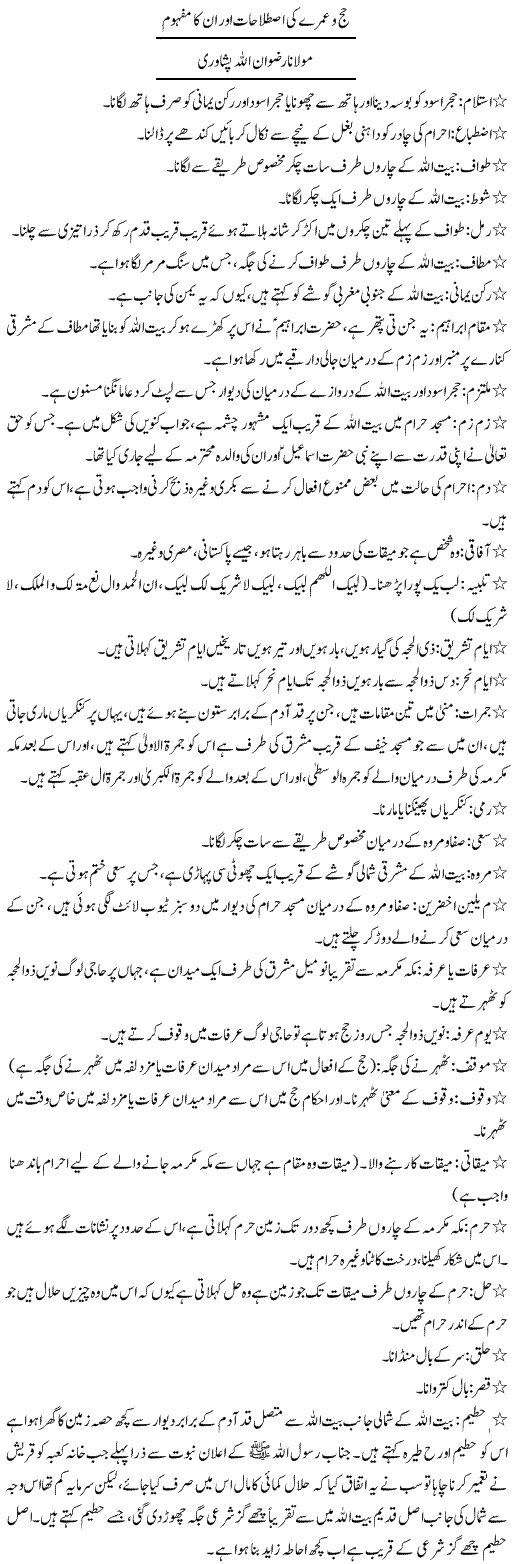
Hajj Aur Umrah Ki istilahat Aur Mafhoom
Hajj, The Journey Of Hearts
DURING Haj in Arafah, 10 years after the Hijrah, a man was thrown from his camel. The camel stomped him and the man’s neck was snapped. He was dead. The Prophet (peace be upon him) said,
“Bathe his body with water and sidr and bury him with both garments. Do not cover his head, nor touch him with camphor … for verily he will be returned (to Allah) on the Day of Resurrection in the state of Talbiyah.” – (Bukhari and Muslim)
The Prophet (peace be upon him) said about Haj, “And there is no reward for an accepted Haj … except Jannah!” This is the ultimate reward.
The first verses of Surah Al-Haj does not speak of Arafah or the rituals, it simply says:
“O mankind! Fear your Lord and be dutiful to Him! Verily, the earthquake of the Hour (of Judgement) is a terrible thing. The Day you shall see it, every nursing mother will forget her nursling, and every pregnant one will drop her load, and you shall see mankind as in a drunken state, yet they will not be drunken, but severe will be the Torment of Allah.” (Qur’an, 22:1-2)
Haj is not a journey like a vacation to a tourist destination, it is a journey of the soul and heart. When one pays careful attention to the verses speaking of Haj, he will find that almost all verses conclude with a commandment of being conscious of Allah’s presence, or a reminder of Allah’s bounteous favor upon us, or a link between Haj and the Last Day.
The destination
In the olden days, whenever a journey was to be undertaken, proper provisions had to be prepared. The deserts were long, hot, harsh, and unmerciful. There were no gas stations to fill up with chips and refreshments, or rest stops to slurp water from a fountain. In fact, there was not a human in sight for miles upon miles of barren sand dunes, and losing the way meant losing your life. Thus, you had to have the provisions with you before you made the journey – enough food, enough water, enough everything to carry you to your destination.
In the verses that speak of Haj, Allah speaks about the provisions one should take. While everyone is focused on their journey to the Ka’ba and the material provisions, Allah turns the attention of His slaves to another journey, journey of the Hereafter, and a different kind of provision, the provision of Taqwa.
“…And take a provision (with you) for the journey, but the best provision is At-Taqwa (piety, righteousness, etc.)” (Qur’an, 2:197)
On the day Buhaym Al-‘Ajlee set out with his companion for Haj, he looked toward the endless desert awaiting them both and wept, his chest soaking from the tears. “This is something,” said Buhaym, “that has made me understand the most certain journey I must one day take to Allah!”
Blessings on us
There is debate over whether someone who performs Haj should be called a Haji. The title is not something found in the Sunnah, but it has an interesting background in our cultural history. In ancient days, when someone decided to perform the journey for Haj, it was synonymous with bidding farewell to life on earth. This was due to the treacherous obstacles of traveling in the desert – trials such as sickness, starvation, and the struggles involved in the journey. An entire village might gather to bid those people farewell.
When someone would go through such a remarkable journey and return alive, he would dedicate his life to the worship and obedience of Allah. Gone was the cheating, lying, or missing Salah – he was now a “Haji.”
Today, with the jumbo jets, ocean liners, and Mercedes buses, the facilitation of performing Haj has taken away the luster of the title “Haji.” Some might complain that there are no queen-size mattress beds in Mina, or that the air conditioning motor is a tad too loud. But dear brothers and sisters, who is it that provided us with all the blessings that we are living in?
The slave of Allah can only understand the favor of Allah upon him when it is taken away.
Alhamdulillaah. Indeed the greatest blessing that Allah has favored us with is Islam, and it alone suffices as favor.
Allah knows we are going to get dusty during Haj, Allah knows it. So don’t be surprised when that dust blows, instead turn to Allah and hit back with patience and a whisper of gratitude to Allah.
The Prophet (peace be upon him) said, “Whoever performs Haj and does not have sexual relations (with his wife), nor commits sin, nor disputes unjustly (during Haj), then he returns from Haj as pure and free from sins as on the day on which his mother gave birth to him.” (Bukhari and Muslim)
Getting the heart in shape
Many years ago, as the Hujjaj swept through the valley of Muzdalifah, a man remarked out loud, “My! Look at the number of Hujjaj!” A wise man replied, “Nay, the travelers are many, but the Hujjaj are few.”
In Haj, I have seen people who are patient and seek the reward of Allah during trying moments. What is the difference between them and those who spend their breath in criticism, argumentation and fights?
Some people come to Haj prepared financially, others come with a prepared heart. That is what’s essential – a prepared heart. How can we get that heart in shape for Haj? First, attend lectures and workshops dealing with Haj. Haj is one of the pillars upon which Islam is built. When someone intends to perform this rite, it is a must upon him that he learns it well. Seeking knowledge is a must on every Muslim.
Imam Bukhari writes in his Saheeh, “Knowledge comes before statements and actions.” He then quotes the verse of Allah:
“So know that La ilaha ill-Allah (none has the right to be worshipped but Allah), and ask forgiveness for your sin…” (Qur’an, 47:19)
Secondly, establish prayers and pray Tahajjud (the late night prayers). When the Prophet (peace be upon him) was preparing his heart for the mission of conveying this Deen, Allah ordered him to prepare by praying Tahajjud.
Allah said:
“O you wrapped in garments (i.e. Prophet Muhammad peace be upon him)! Stand (to pray) all night, except a little.” (Qur’an, 73:1-2)
A student once slept over at Imam Ahmad’s house. Imam Ahmad had left a vessel of water for him. At the time of Fajr, he found the vessel still full of water and realized the student had not woken up during the night. He was shocked and remarked, “How can a person be a student of knowledge and not stand for the night prayers!”
Some people said to Ibn Mas`ood (may Allah be pleased with him), “We are unable to wake up to perform Tahajjud.”
He told them, “You are distancing yourselves from it by your sins.” And lastly, repent to Allah and make lots of Du’a.
Easy Actions Equal In Reward To Hajj
Muslim reported that the Prophet, sallallahu `alayhi wa sallam said, “?Hasn’t Allah made for you Salat Al-`Ishaa’ in congregation equal to Hajj, and the Fajr prayer in congregation equal to `Umrah.”
“Whoever walks to an obligatory prayer in congregation, it is like Hajj, and whoever walks to a voluntary prayer, it is like a voluntary `Umrah.” (Saheeh Al Jaami`, 6432)
“Whoever prays Fajr in congregation, then sits remembering Allah until the Sun rises, then prays two units of prayer, he will receive the reward of Hajj, and `Umrah – complete, complete, complete.” (Saheeh Al Jaami`, 6222)
It is authentically reported that people said, “O Messenger of Allah! The rich took the reward of akhirah, they do Hajj and we do not; they engage in jihaad, and we do not. So the Prophet, sallallahu `alayhi wa sallam, said, “Shall I not guide you to something that, if you stick to it, you will come with what is better than what one of them will come with: that you say Allahu Akbar 34 times, and Subhan Allah 33 times, and Alhamdulillah 33 times, at the end of every prayer.”
“When one prays for one’s brother, the angel says: ‘Amin, and for you the same.'” (Saheeh Al Jaami`, 2143) So pray for your brother pilgrim that Allah accepts his Hajj and gives him its reward.
Dhu al-Hijjah

Virtues Of The First Ten Days Of The Month Of Hajj
In brief – What to do in the month of Hajj
Fasting – Keep fast on the 9th day of the month of Hajj
Glorification of Allah Almighty – From the Fajr prayer of 9th till the Asr prayer of 13th day of the month of Hajj, recite the following words 3 times after every fard prayer:
Allahu Akbar, Allahu Akbar,
La Ilaha Illallahu, Wallahu Akbar
Allahu Akbar wa lillahilhamd.
Sacrifice (Qurbani) – Offer sacrifice of a sheep, lamb or a share in a cow or camel on 10th, 11th or 12th of this month
The month of Hajj, Dhul-hijjah, is the last month of the Islamic calendar. The first ten days of Dhul-hijjah are among the most magnificent days in Islamic calendar.
The Prophet (peace and blessings of Allaah be upon him) has said: “There are no days in which righteous deeds are more beloved to Allah than these ten days.” The people asked, “Not even jihaad for the sake of Allah?” He said, “Not even jihad for the sake of Allah, except in the case of a man who went out to fight giving himself and his wealth up for the cause, and came back with nothing.” (Reported by al-Bukhaari, 2/457).
The virtue of these ten days is based on many things, including:
Allah swears an oath by them, and swearing an oath by something is indicative of its importance and great benefit. Allah says (interpretation of the meaning): “By the dawn; by the ten nights” [al-Fajr 89:1-2]. Many commentators of the Holy Qur’an have said that this verse of the Holy Qu’ran refers to the first ten days of Dhul-Hijjah.
The Prophet (peace and blessings of Allah be upon him) testified that these are the best days of this world, as has been noted above.
Prophet Muhammad (peace and blessings of Allah be upon him) commanded us to devote time to recite Tasbeeh (“Subhan-Allah”), Tahmeed (“Al-hamdu Lillah”) and Takbeer (“Allahu akbar”) during these ten days. The Prophet (peace and blessings of Allah be upon him) has said: “There are no days greater in the sight of Allah and in which righteous deeds are more beloved to Him than these ten days, so during this time recite a great deal of Tahleel (“La ilaaha ill-Allaah”), Takbeer and Tahmeed.” (Reported by Ahmad, 7/224; Ahmad Shaakir stated that it is saheeh).
These ten days include Yawm ‘Arafaah (the Day on which the pilgrims stand in the plain of ‘Arafaah), on which Allah perfected His Religion. According to a hadith of the Prophet (peace and blessings of Allah be upon him) “Fasting on this day will expiate for the sins of two years”.
These days also include Yawm al-Nahar (the Day of Sacrifice).
Among the good deeds which a Muslim, who has not gone to perform Hajj, during the first ten days of Dhul-Hijjah, should strive to do are:
Fasting
It is Sunnah to fast on the ninth day of Dhul-Hijjah, because the Prophet (peace and blessings of Allah be upon him) urged us to do good deeds during this time, and fasting is one of the best of deeds. Allah has chosen fasting for Himself, as is stated in the hadeeth qudsi: “Allah says: ‘All the deeds of the son of Adam are for him, except for fasting, which is for Me and I am the One Who will reward him for it.’” (Reported by al-Bukhaari, 1805).
The Prophet (peace and blessings of Allah be upon him) used to fast on the ninth of Dhul-Hijjah. It is reported that the Prophet (peace and blessings of Allah be upon him) used to fast on the ninth of Dhul-Hijjah, on the day of ‘Aashooraa’, on three days of each month, and on the first two Mondays and Thursdays of each month.” (Reported by al-Nisaa’i, 4/205 and by Abu Dawud; classified by al-Albaani as saheeh in Saheeh Abi Dawud, 2/462). According to a hadith, the fast on the ninth of Dhul-Hijjah becomes a cause, hopefully so, of forgiveness for sins committed in one year.
Takbir-ut-tashriq
It is Sunnah to say Takbeer (“Allaahu akbar”), Tahmeed (“Al-hamdu Lillaah”), Tahleel (“La ilaha ill-Allaah”) and Tasbeeh (“Subhaan Allaah”) during the first ten days of Dhul-Hijjah. In particular, it is obligatory (wajib) on each Muslim to recite the Takbir of Tashriq after every fard prayer beginning from the Fajr of the 9th Zulhijjah (the month of Hajj) up to the ‘Asr prayer of the 13th Zulhijjah.
The words to be recited are as follows:
Allahu Akbar, Allahu Akbar,
La Ilaha Illallahu, Wallahu Akbar
Allahu Akbar wa lillahilhamd.
(Allah is the greatest, Allah is the greatest, There is no god but Allah, and Allah is the greatest, Allah is the greatest, and to Allah belongs all praise.)
According to authentic Islamic sources, it is wajib on each Muslim, to recite this Takbir after every fard salah, whether one is performing salah with Jama’ah (collectively) or on own (individually). Muslim brothers should recite it in a loud voice, while sisters should recite it in a low voice.
Sacrifice
One of the good deeds that will bring a Muslim closer to Allah during these ten days is offering a sacrifice, by choosing a healthy animal. Sacrifice (or Qurbani, as is known in Urdu) can only be performed during the three days of Eid-ul-Adha, namely the 10th, Ilth and 12th of Dhul-Hijjah. It is only in these days that slaughtering of an animal is recognized as an act of worship. Although sacrifice is permissible on each of the three aforesaid days, it is preferable to perform it on the 10th of Dhul-Hijjah.
Repentance
Repentance means returning to Allah and foregoing all the deeds, open and secret, that He dislikes, out of regret for what has passed, giving it up immediately and being determined never to return to it. We must hasten to repent at once when we have committed a sin, in open or in secret.
A Muslim should ensure that he makes use of this golden opportunity provided by Allah. May Allah enable us to make use of this opportunity.
If a Muslim wants to offer a sacrifice, he/she should avoid the following things during first ten days of the month of Hajj:
It is a saying of the Prophet (peace and blessings of Allah be upon him) that: “When you see the new moon of Dhul-Hijjah, if anyone of you wants to offer a sacrifice, then he should stop cutting his hair and nails until he has offered his sacrifice.” According to another report he said: “He should not remove (literally, touch) anything from his hair or skin.” (reported by Muslim with four isnaads, 13/146)
The wisdom behind this prohibition mentioned by the Prophet (peace and blessings of Allah be upon him) is so that a Muslim who has not gone to perform Hajj may resemble those in ihram in some aspects of the rituals performed, and so that he may draw closer to Allah by offering the sacrifice. So he leaves his hair and nails alone until the time when he has offered his sacrifice.
Ambiya-e-Ikram Ki Zindagi Bandagi

The Night of Hijrat(Migration)-Suraqa bin Malik And The Deviation
The Night of Hijrat was a night which reflected the extreme love and obedience of Hazrat Abu bakr Siddique radiallahu taala anhu who accompanied the Holy Prophet Muhammed Salalaahu Alaihi wassallam and Hazrat Maula Ali radiallahu taala anhu who slept on the bed of the Holy Prophet Muhammed Salalaahu Alaihi wassallam
When the Holy prophet Muhammed salalaahu alaihi wasallam was with his Khaleel, Abu Bakr radiallahu taala anhu a person Suraqa bin Malik followed the Holy prophet Muhammed Salalaahu Alaihi wasallam and when Hazrat Abu bakr siddique got worried that they have been discovered, The Holy Prophet Muhammed Salalaahu Alaihi wasallam consoled Syaddina Abu Bakr Siddique radiallahu taala anhu and then invoked evil on Suraqa bin Malik , and Suraqa bin Malik’s horse sunk in the earth till its belly , then Suraqa repented to the Holy prophet Muhammed Salalaahu Alaihi wassalam and supplicated
‘I see that you have invoked evil on me. Please invoke good on me, and by Allah, I will cause those who are seeking after you to return.’
The Holy Prophet Muhammed accepted his repentance and invoked good to him and he was saved, and then he deviated all people away from the Holy Prophet Muhammed Salalaahu Alaihi wasallam
‘” I have looked for him here in vain.’ So he caused whomever he met to return”
This incident is narrated beautifully in Sahih Bukhari.
Sahih Bukhari – Volume 4, Book 56, Number 812 :
Narrated by Al-Bara’ bin ‘Azib
Abu bakr came to my father who was at home and purchased a saddle from him. He said to ‘Azib. “Tell your son to carry it with me.” So I carried it with him and my father followed us so as to take the price (of the saddle). My father said, “O Abu bakr! Tell me what happened to you on your night journey with Allah’s Apostle (during Migration).” He said, “Yes, we traveled the whole night and also the next day till midday. when nobody could be seen on the way ( because of the severe heat) . Then there appeared a long rock having shade beneath it, and the sunshine had not come to it yet. So we dismounted there and I leveled a place and covered it with an animal hide or dry grass for the Prophet to sleep on (for a while). I then said, ‘Sleep, O Allah’s Apostle, and I will guard you.’ So he slept and I went out to guard him. Suddenly I saw a shepherd coming with his sheep to that rock with the same intention we had when we came to it. I asked (him). ‘To whom do you belong, O boy?’ He replied, ‘I belong to a man from Medina or Mecca.’ I said, ‘Do your sheep have milk?’ He said, ‘Yes.’ I said, ‘Will you milk for us?’ He said, ‘Yes.’ He caught hold of a sheep and I asked him to clean its teat from dust, hairs and dirt. (The sub-narrator said that he saw Al-Bara’ striking one of his hands with the other, demonstrating how the shepherd removed the dust.) The shepherd milked a little milk in a wooden container and I had a leather container which I carried for the Prophet to drink and perform the ablution from. I went to the Prophet, hating to wake him up, but when I reached there, the Prophet had already awakened; so I poured water over the middle part of the milk container, till the milk was cold. Then I said, ‘Drink, O Allah’s Apostle!’ He drank till I was pleased. Then he asked, ‘Has the time for our departure come?’ I said, ‘Yes.’ So we departed after midday. Suraqa bin Malik followed us and I said, ‘We have been discovered, O Allah’s Apostle!’ He said, Don’t grieve for Allah is with us.’ The Prophet invoked evil on him (i.e. Suraqa) and so the legs of his horse sank into the earth up to its belly. (The subnarrator, Zuhair is not sure whether Abu bakr said, “(It sank) into solid earth.”) Suraqa said, ‘I see that you have invoked evil on me. Please invoke good on me, and by Allah, I will cause those who are seeking after you to return.’ The Prophet invoked good on him and he was saved. Then, whenever he met somebody on the way, he would say, ‘I have looked for him here in vain.’ So he caused whomever he met to return. Thus Suraqa fulfilled his promise.