



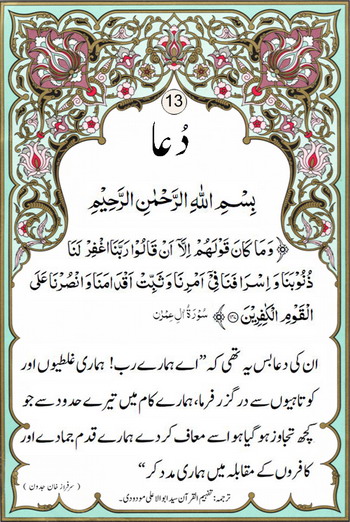



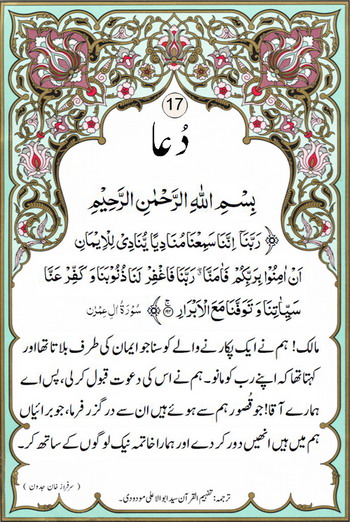
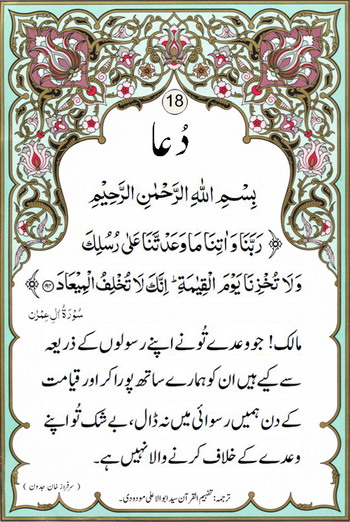


Qurani Duain. Prayers and supplications found in the Holy Quran
December 2025
Al-Shahid – Allah Is The Witness
The Qur’an refers to Allah by this name eighteen times.
In the following verse, Jesus (peace be upon him) addresses Allah by this name: “I was a witness over them while I dwelt among them; when You took me up, you were Ever-Watchful over them, and You are a Witness to all things.” [Surah al-Ma’idah: 117]
We also read verses like: “Allah is Witness over all things.” [Surah al-Mujadilah: 6]
And: “Allah is sufficient as Witness.” [Surah al-Nisa’: 79]
Allah is the Witness, for whom nothing escapes His sight and nothing eludes His knowledge. And He is the just Witness, a Witness for truth. He is the Witness for the oppressed and downtrodden against those who wrong them.
This name reminds us that what may go unseen by human eyes is still witnessed by Allah.
Allah says: “So wait patiently for your Lord’s decree, for surely you are in Our sight.” [Surah al-Tur: 48]
Another meaning of this name is that Allah is a Witness to faith.
In this context, Allah says: “Allah (Himself) is witness that there is no god save Him. And the angels and the people of knowledge (too are witnesses).” [Surah Al Imran: 18]
The belief that Allah is the Witness makes us more aware that Allah witnesses whatever we do.
Allah says: “And you are not engaged in any affair, nor do you recite concerning it any portion of the Quran, nor do you do any work, but We are witnesses over you when you enter into it.” [Surah Yunus: 61]
Tib-e-Nabvi: Shehad
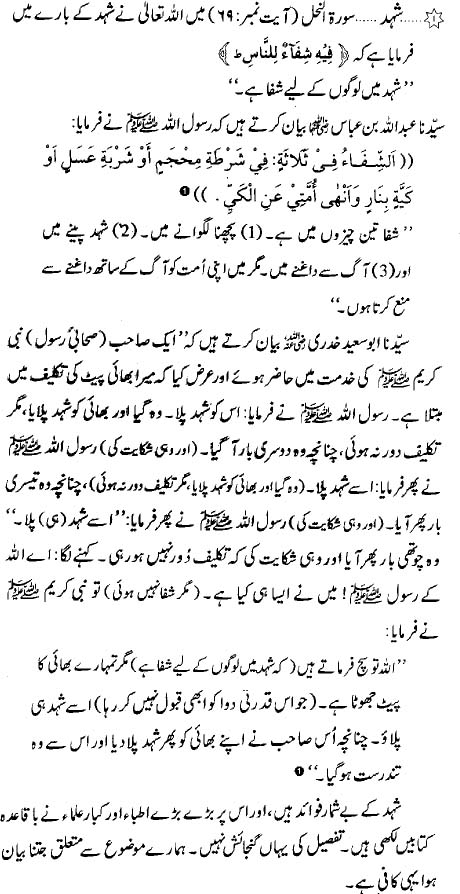
Tib-e-Nabvi: Shehad
How The Prophet Taught Moral Lessons
In Madinah, Prophet Muhammad (peace be upon him) used to set aside time every morning to teach his Companions. He was renowned for his eloquence and clarity of speech. He did not speak too quickly, and although his phrasing was precise, he did not speak slowly or in fragments with numerous pauses. It was easy for everyone to follow what he said.
A’ishah described his way of speaking as follows: “Allah’s Messenger did not ramble on the way you do these days. His speech was clear and precise. Those who listened to him easily remembered what he said.” [Sahih al-Bukhari (3568) and Sahih Muslim (2493)]
Almost every day, he would sit in the mosque in Madinah with his Companions gathered around him. He would often start a discussion by posing a question. Once, he asked: “Might I inform you of the gravest of major sins?” When his Companions replied in the affirmative, he said: “The gravest of major sins are to associate partners in worship with Allah, to disrespect your parents, and to bear false witness.” [Sahih al-Bukhari (2654)]
Sometimes, he posed questions to open their eyes to a new idea or perspective that they had not considered before. For instance, once he asked, “Do you know what it means to be bankrupt?” They replied that it means to possess neither money nor goods. He said: With respect to my followers, the one who is bankrupt is one who is brought forth on the day of judgment with prayers, fasts, and charity to his credit, but he had spoken ill of some people, falsely accused some people, misappropriated the wealth of others, and assaulted people or shed their blood. Those he had wronged will be compensated from his good deeds until he has no more to his credit. Then the remainder of those he had wronged will be compensated by having some of their sins placed on him. As a consequence, he is consigned to Hell. [Sahih Muslim (2581)]
Khana Khanay Ki Sunnatien
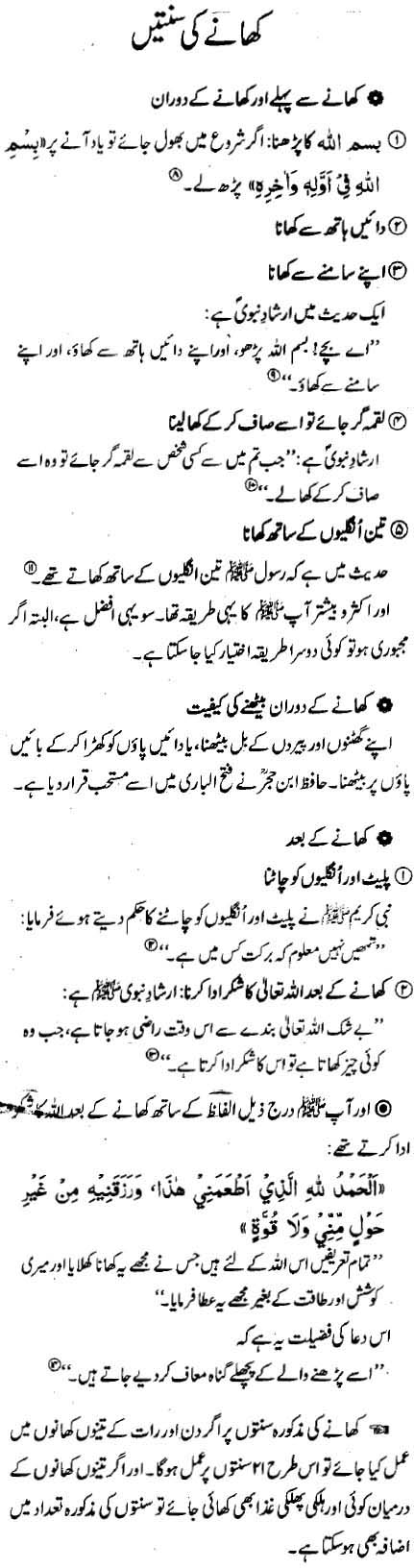
Khana Khanay Ki Sunnatien
Whoever Relies On Allah (Has Tawakkul), He Is Sufficient For Him
Abu Hurayra said that the Messenger of Allah said, “Allah Almighty said, ‘I have declared war on anyone who shows enmity to a friend of Mine. My slave does not draw near to Me with anything I love more than what I have made obligatory on him. And my slave continues to draw near to Me with supererogatory actions until I love him. When I love him, I become his hearing with which he hears, his seeing with which he sees, his hand with which he strikes, and his foot with which he walks. If he were to ask me for something, I would give it to him. If he were to ask me for refuge, I would give him refuge.'” (Al-Bukhari)
Tawakkul
Whoever relies on Allah (has Tawakkul), He is sufficient for him. (At-Talaaq 65:3)
Tawakkul is another attribute that results from a genuine Eeman in Allah Subhaanahu wa Ta`aala, as well as the hereafter and continual remembrance of both. It is an attitude that emanates from the conviction that:
Maal Aur Aulad Ki Haqeeqat
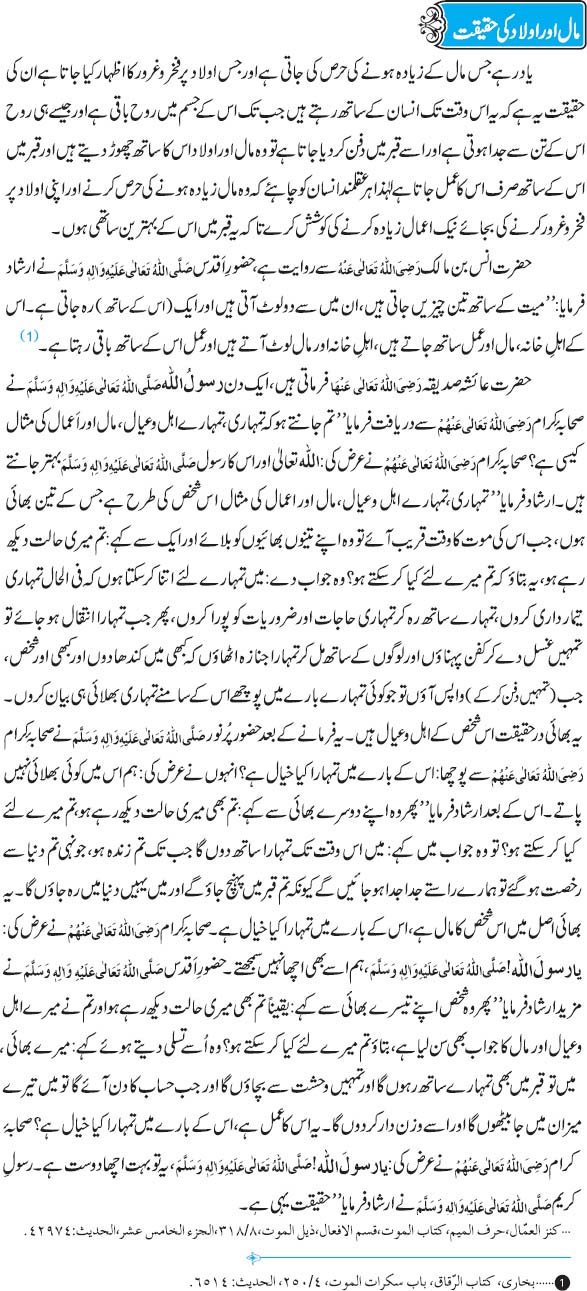
Maal Aur Aulad Ki Haqeeqat
The Ultimate Source Of Knowledge
Suhaib (Radi Allahu anhu) reported: Allah’s Messenger (SalAllahu alaihi wasallam) said, “When the inhabitants of Jannah enter Jannah, Allah, the Glorious and Exalted, will say to them: ‘Do you wish me to give you anything more?’ They will reply: ‘Have you not made our faces bright? Have you not brought us into Jannah and delivered us from Hell?’ And Allah will remove the Veil. The (dwellers of Jannah) will feel that they have not been rewarded anything dearer than looking at their Rabb.” [Muslim] As Taken from Riyad-us-Saliheen
Allah, the Exalted , says: Verily, those who believe, and do deeds of righteousness, their Lord will guide them through their Faith; under them will flow rivers in the Gardens of Delight (Paradise).
Their way of request therein will be Subhanaka Allahumma (Glory to You, O Allah!) and Salam (peace, safety from evil) will be their greetings therein (Paradise)! And the close of their request will be: Al-Hamdu Lillahi Rabb-il-‘Alamin [All the praises and thanks be to Allah, the Lord of ‘Alamin (mankind, jinn and all that exists)]. [Holy Qur’an Surat Yunus 10:9,10]
The Ultimate Source of Knowledge
Many new Muslims find that it is through the Quran that they become acquainted with Islam, and the sudden interest in the faith sends them on a life-changing experience.
Sufyan Suri (Rahmatullah alaih) Ka Buray Anjam Ka Dar
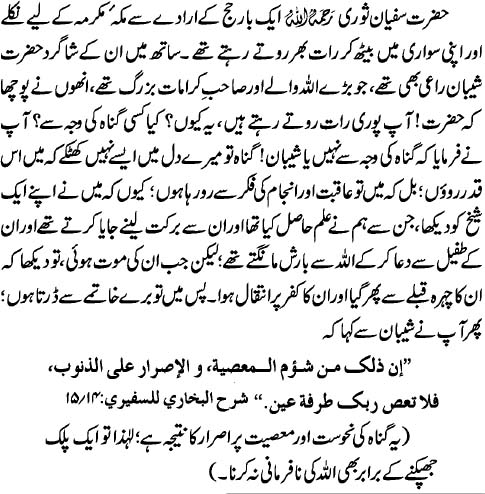
Sufyan Suri (Rahmatullah alaih) Ka Buray Anjam Ka Dar
Never Forget To Repent And Ask For Forgiveness For Your Wrongdoings
But to those who do evil in ignorance and then after that repent and put things right, to them your Lord is Ever-Forgiving, Most Merciful. (Surat an-Nahl: 119)
Having a grasp of the importance of sincerity towards Allah leads one not to falter in turning to Him, and to repent and seek His forgiveness, regardless of the wrongdoing. This is an example of Allah’s infinite mercy, as recounted in the Qur’an:
Anyone who does evil or wrongs himself and then asks Allah’s forgiveness will find Allah Ever-Forgiving, Most Merciful. (Surat an-Nisa’: 110)
Allah grants His servants the opportunity to make amends for any wrongdoing. In Allah’s sight, what matters is not the significance or insignificance of the wrongdoing, but one’s sincerity. This is certainly a great mercy bestowed upon believers:
Those who, when they act indecently or wrong themselves, remember Allah and ask forgiveness for their bad actions—for who can forgive bad actions except Allah?—and do not knowingly persist in what they were doing. (Surah Al ‘Imran: 135)
Believers must acknowledge that no matter how serious a mistake may be, even the greatest offense one could possibly imagine, turning to Allah with a sincere repentance will relieve that person of his burden. As the Prophet Muhammad (Sallallahu alaihi wasallam) said: If anyone constantly seeks pardon (from Allah), Allah will appoint for him a way out of every distress and a relief from every anxiety, and will provide sustenance for him from where he expects not. (Abu Dawud)
It may well be that a person had disbelieved all through his life, until that very moment. He may have pursued only his whims and desires. However, in return for one’s repentance for his wrongdoings, following a firm and sincere resolve never to commit the same error again, one can always hope for Allah’s forgiveness. Remember that to experience relief from the burden of the offenses committed against Allah takes only a moment through sincere repentance and is the only way to salvation. Basically, a person needs to keep only his promise to Allah and be sincere to Him:
Allah only accepts the repentance of those who do evil in ignorance and then quickly repent after doing it. Allah turns towards such people. Allah is All-Knowing, All-Wise. There is no repentance for people who persist in doing evil until death comes to them and who then say, “Now I make repentance,” nor for people who die disbelievers. We have prepared for them a painful punishment. (Surat an-Nisa’: 17-18)
No matter what the sin may be, never forget to turn to Allah in repentance. Keeping in mind that death may come upon you at any moment, bringing to a sudden end any further opportunity to repent, ask for forgiveness now.
Certainly, it is difficult except for the humble (Surat al-Baqara: 45); but remember that such people will enter Hell abjectly (Surah Ghafir: 60), and be dragged face-first into the Fire (Surat al-Qamar: 48). On that day they will be banned from the presence of their Lord; Allah will neither speak to them nor purify them…
Except for those who repent and believe and act rightly: Allah will transform the wrong actions of such people into good – Allah is Ever-Forgiving, Most Merciful – for certainly all who make repentance and act rightly have turned sincerely towards Allah. (Surat al-Furqan: 70-71)