
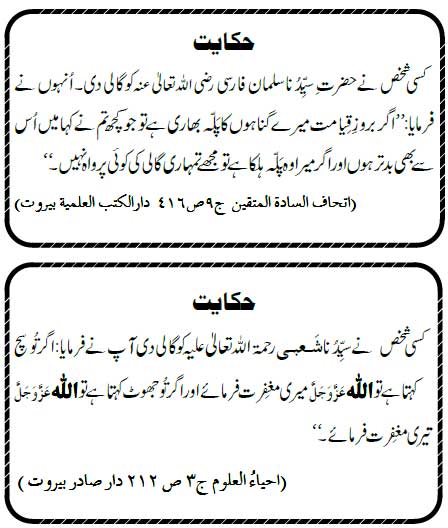
Hakayat – Gaali
The Role Model
- When becoming humiliated, remember the Prophet [PBUH] in Ta’if.
- When being starved, remember the Prophet [PBUH] tying two stones to his stomach in the battle of Khandaq.
- When becoming angry, remember the Prophet [PBUH]’s control of anger on the martyrdom of his beloved Uncle Hamza.
- When losing a tooth, remember the Prophet [PBUH]’s tooth in the battle of Uhud.
- When bleeding from any part of the body, remember the Prophet [PBUH]’s a body covered in blood on his return from Ta’if.
- When feeling lonely, remember the Prophet [PBUH]’s seclusion in Mount Hira.
- When feeling tired in Salaat, remember the Prophet [PBUH]’s blessed feet in Tahajjud.
- When being prickled with thorns, remember the Prophet [PBUH]’s pain from Abu Lahab’s wife.
- When being troubled by neighbors, remember the old woman who would empty rubbish on the Prophet [PBUH].
- When losing a child, remember the Prophet [PBUH]’s son, Ibrahim.
- When beginning a long journey, remember the Prophet [PBUH]’s a long journey to Madinah.
- When going against a Sunnah, remember the Prophet [PBUH]’s intercession, (Ummati, Ummati, Ummati) (My Ummah).
- When sacrificing an animal, remember the Prophet [PBUH]’s sacrifice of 63 animals for his Ummah.
- Before shaving your beard, remember the Prophet [PBUH]’s face rejecting the two beardless Iranians.
- When falling into an argument with your wife, remember the Prophet [PBUH]’s encounter with Aisha and Hafsa.
- When experiencing less food in the house, remember the Prophet [PBUH]’s days of poverty.
- When experiencing poverty, remember the Prophet [PBUH]’s advice to Ashaab-e-Suffa (People of Suffa).
- When losing a family member, remember the Prophet [PBUH]’s departure from this world.
- When becoming an orphan, remember the Prophet [PBUH]’s the age at six.
- When sponsoring an orphan, remember the Prophet [PBUH]’s sponsor for Zaid ibn Haritha.
- When fearing an enemy, remember the Prophet [PBUH]’s saying to Abu Bakr in Mount Thour .
- Whatever situation you may find yourself in, remember your role model, the best of creation: Prophet [PBUH] Muhammad.
Compiled, edited, and adapted by Khalid Latif
Ayat-e-Shifa
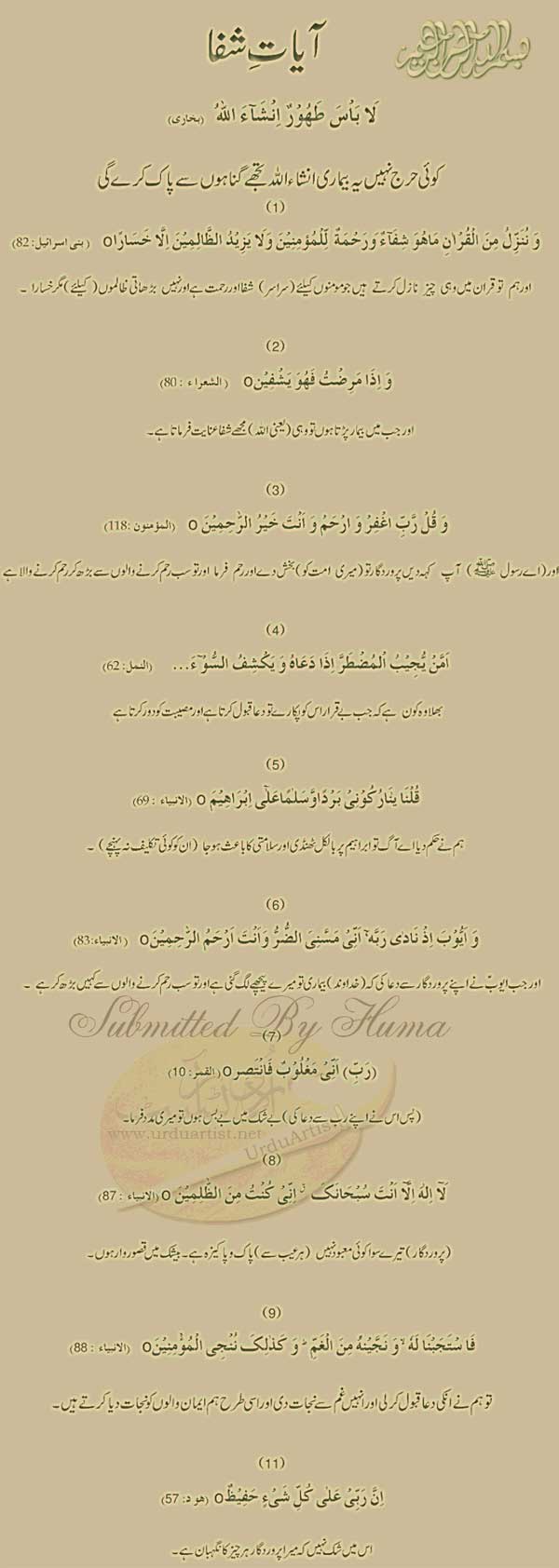
Ayat-e-Shifa
Avoid 7 Great Destructive Sins
Narrated Abu Huraira: The Prophet (PBUH) said, “Avoid the seven great destructive sins.” They (the people!) asked, “O Allah’s Apostle! What are they?” He said,
” (1) To join partners in worship with Allah;
(2) to practice sorcery;
(3) to kill the life which Allah has forbidden except for a just cause (according to Islamic law);
(4) to eat up usury (Riba),
(5) to eat up the property of an orphan;
(6) to give one’s back to the enemy and flee (running away / escaping) from the battle-field at the time of fighting
(7) and to accuse chaste women who never even think of anything touching chastity and are good believers.”
(Bukhari 8/840)
‘Abdullah b. Amr reported Allah’s Messenger (may peace be upon him) as saying: The whole world is a provision, and the best object of benefit of the world is the pious woman.
(Muslim 8/3465-Marriage Kitab Al Nikah)
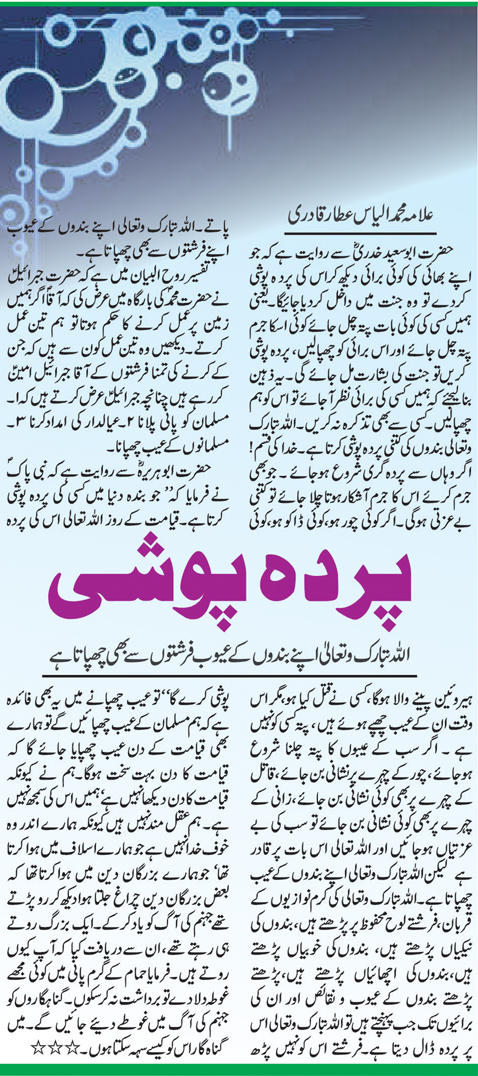
Parda Poshi
The Best of Muslim
“The best of the Muslims is he from whose hand and tongue the Muslims are safe.” (Muslim)
“The best of people are those with the most excellent character.” (Tabarani, Sahîh)
“The best of marriages are the easiest ones.” (Abu Dâwûd, Sahîh)
“The best of you are those who feed others and return greetings.” (Abu Ya’la, Hasan)
“The best of that which you treat yourself with is cupping.” (Hakim, Sahîh)
“The best days that you should perform cupping are the 17th, 19th, and 21st of the month. I did not pass a single gathering of angels on the night of Isra’ except that they would say to me, ‘O Muhammad, perform cupping!’” (Ahmad, Sahîh)
“The most beloved of deeds according to Allah are the continuous ones, even if they are little.”(Agreed upon)
“The most beloved words according to Allah the Highest are four: Subhanallah, Alhamdulillah, La ilahaillallah and Allahu Akbar; there is no problem with which one you start with.” (Muslim)
“The best of provision is that which suffices.” (Ahmad in ‘Zuhd’, Hasan)
“The best of dowries are the easiest.” (Hakim, Sahîh)
“The most beloved word according to me is that which is most truthful.” (Bukhari)
“The best of dinars are the dinar spent by a man upon his dependents, the dinar spent by a man upon his horse in the path of Allah, and the dinar spent by a man upon his companions in the path of Allah, the Mighty, the Magnificent.”(Muslim)
“The best word of remembrance is: La ilaha illallah and the best supplication is:Alhamdulillah.” (Tirmidhî, Hasan)
“The best of all charity is that which is given to the relative that harbours enmity against you.”(Ahmad, Sahîh)
“The best prayer is that with the longest standing.” (Muslim)
“The best of all worship is supplication(dua).” (Hakim, Sahîh)
“The best deed is the prayer in its right time and Jihad in the path of Allah.” (Bayhaqi, Sahîh)
The Messenger of Allah (ﷺ) was asked: “Which of the believers is the most intelligent?” He (ﷺ) replied, “Those who remember death the most and are best prepared for what comes after it. Those are the intelligent ones.” (Reported by Tabraani, Ibn Majah, classed as Hasan)
Waldain Ki Rehnumai
Hadiths
Sayyiduna Jundub ibne-Abdullah Al-Azdi (RadhiAllaho anho) a sahabi of Nabi Sallallahu alaihi wasallam narrates
that Rasulullah (Sallallahu Alaihi Wasallam) said: The example of the person who teaches people well and neglects himself (does not practice himself), is like a lamp which is a source of illumination for people and burns itself.
{ Tabarani, Targhib }
Narrated ‘Ali (Radi’Allahu anhu): The Prophet (sall’Allahu alaihi wa sallam) said, “Do not tell a lie against me for whoever tells a lie against me (intentionally) then he will surely enter the Hell-fire.”
{ Sahih Bukhari } (Book # 3, Hadith # 106)
Narrated Salama bin Al-Akwa (radi’Allahu anhu) : I heard the Prophet (sall’Allahu alaihi wa sallam) saying, “Whoever (intentionally) ascribes to me what I have not said then (surely) let him occupy his seat in Hell-fire.”
{ Sahih Bukhari } (Book # 3, Hadith # 109)
Narrated Abu Huraira (Radi’Allahu anhu): The Prophet (Sall’Allahu alaihi wa sallam) said, “…Whoever tells a lie against me (intentionally), then (surely) let him occupy his seat in hell-fire.”
{ Sahih Bukhari } (Book # 3, Hadith # 110)
Narrated Abu Huraira (Radi’Allahu anhu): The Prophet (Sall’Allahu alaihi wa sallam) said, “Name yourselves after me (by my name), but do not call yourselves by my kuniya, and whoever sees me in a dream, he surely sees me, for Satan cannot impersonate me (appear in my figure). And whoever intentionally ascribes something to me falsely, he will surely take his place in the (hell) Fire.
{ Sahih Bukhari } (Book # 73, Hadith # 217)
The True Meaning of Life is to Plant Trees under whose shade you do not expect to sit.
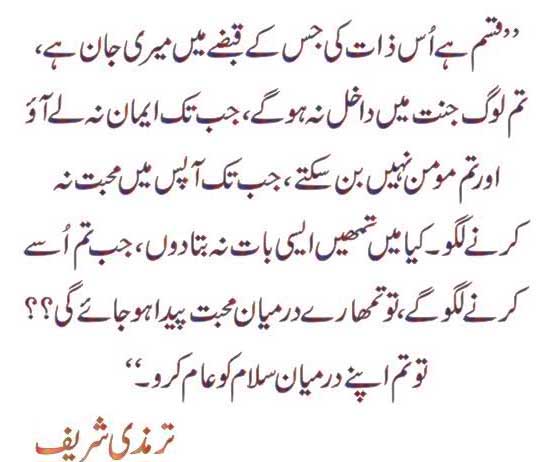
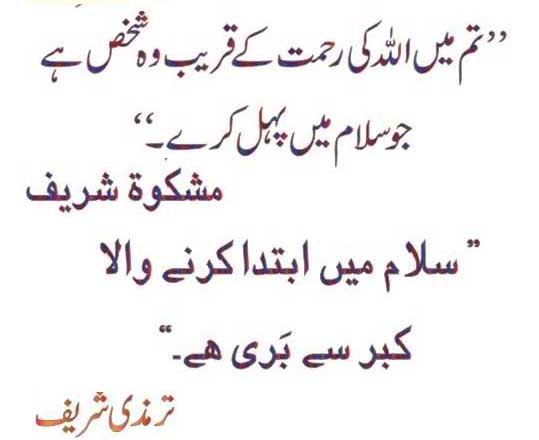
Salam
Virtue Of Fasting The Day Of Ashura
Indeed, fasting on the day of `Ashura’ – the 10th of Muharram- is of great merit in Islam. The Prophet (peace and blessings be upon him) said, “Fasting the day of `Ashura’ (is of great merits), I hope that Allah will accept it as an expiation for (the sins committed to) the previous year” (Muslim).
Also, fasting on the 9th of Muharram is highly recommended by the Sunnah. Imam At-Tirmidhi reported that Ibn `Abbas (may Allah be pleased with them both) used to say: We should fast on two days: the 9th and 10th of Muharram to distinguish ourselves from the Jewish community. (At-Tirmidhi)
Explaining the virtue of fasting on the 9th and the 10th of Muharram, Dr. Muzammil H. Siddiqi, former President of the Islamic Society of North America, states:
It is the Sunnah of the Prophet (peace and blessings be upon him) to fast on the 9th and 10th of Muharram. The Prophet (peace and blessings be upon him used to fast on the day of ‘Ashura’. When he came to Madinah, he found out that the Jews of Madinah were also fasting on this day remembering Prophet Musa (peace and blessings be upon him). The Prophet (peace and blessings be upon him) admired this tradition and said to the Jews, “I am closer to Musa than you are.” He fasted and he also told his Companions to fast on this day.
Later, before the end of his life, the Prophet (peace and blessings be upon him) told Muslims to add the 9th day also. Thus, it is recommended to fast on both the 9th and 10th of Muharram.
Moreover, in his well-known book, Fiqh As-Sunnah, the late Sheikh Sayyed Sabiq states:
Abu Hurayrah (may Allah be pleased with him) reported: “I asked the Prophet (peace and blessings be upon him): ‘Which Prayer is the best after the obligatory Prayers?’ He (peace and blessings be upon him) said: ‘Prayer during the mid of the night.’ I asked: ‘Which fasting is the best after Ramadan?’ He (peace and blessings be upon him) said, ‘The month of Allah that you call Muharram” (Ahmad, Muslim, and Abu Dawud).
Mu`awiyyah ibn Abi Sufyan (may Allah be pleased with him) reported that he heard the Messenger of Allah (peace and blessings be upon him) say: “Concerning the day of ‘Ashura’, it is not obligatory upon you to fast on it as I do. Whoever wishes may fast and whoever does not wish to is not obliged to do so” (Al-Bukhari and Muslim).
It is noteworthy that Muslim scholars have stated that fasting of ‘Ashura’ is of three levels as follows:
- fasting for three days, i.e., on the 9th, 10th, and 11th of Muharram,
- fasting the 9th and 10th of Muharram, and
- fasting only on the 10th of Muharram.
There is a great reward in fasting on the day of ‘Ashura’. There are many hadiths that mention their blessings and virtues. It is good to fast on this day, although it is not obligatory.
Allah Almighty knows best.