

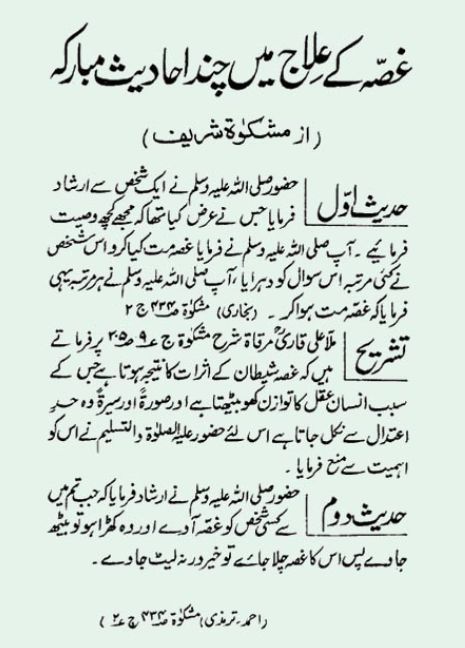
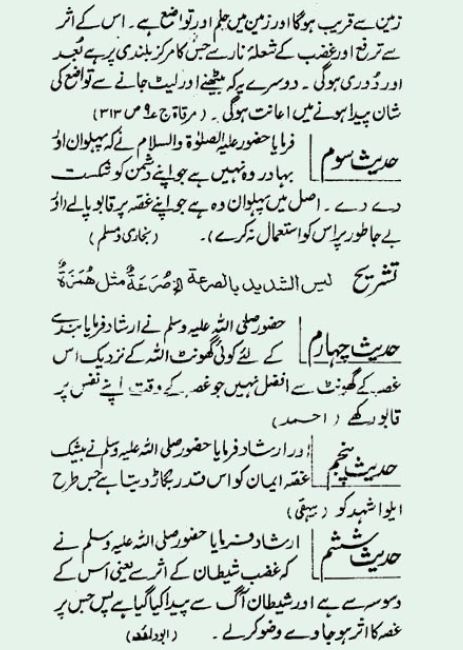
Gusse Ka Ilaj Hadees Ki Roshni Mein
TAG: Shaitan
What Makes Us Different From Iblis, Shaitan
Iblis. Shaytan. The Devil. Whatever name you call him, everyone knows him. He is the accursed one. The rejected outcast, who was thrown out of Jannah. The one damned to the Fire of Hell forever and doomed until eternity.
Ever wonder how he got there? I mean, really wondered…?
What did he do, or perhaps not do, that condemned him to be the most despicable and humiliated creature in the heavens and the earth?
Yes, sure, we all know the story. We’ve known it since we were babies. We’ve read it in the Qur’an a million times. But, have we ever read the story with the eyes of our hearts? Have we really thought about what happened? Have we ever pondered it? What did Iblis do that was so wrong? Let us look at some of Iblis’ actions.
1. Did Iblis not believe in Allah? Indeed, he did!
Iblis, the accursed, believed in Alah. He knew Allah is the Master, Owner, Sustainer, the Giver of life and death, the Lord of all things. In fact, he calls Him my Rabb, my Lord.
He (Iblis) said, ‘My Lord, reprieve me till the Day they are raised.’ (Surah al-Hijr:36)
Why, Iblis even swore by Allah’s Might, knowing fully well that it is Allah Subhaanahu wa Ta’ala, Who is Almighty and that all Power belongs to Him Alone. Iblis swears: He (Iblis) said, ‘I swear by Your Might, that I will surely mislead them all. (Surah Saad:82)
2. Did he believe that someone else created him? NO, he knew Allah is his Creator!
Shaytan knew very well that Allah is the Creator of the heavens and the earth and whatever is in them, including himself, all jinn and mankind. He admitted it himself.
(Iblis) said: ‘I am better than he (Adam). You created me of fire, and You created him of clay.’ (Surah al-Aaraaf:12)
O Nafs
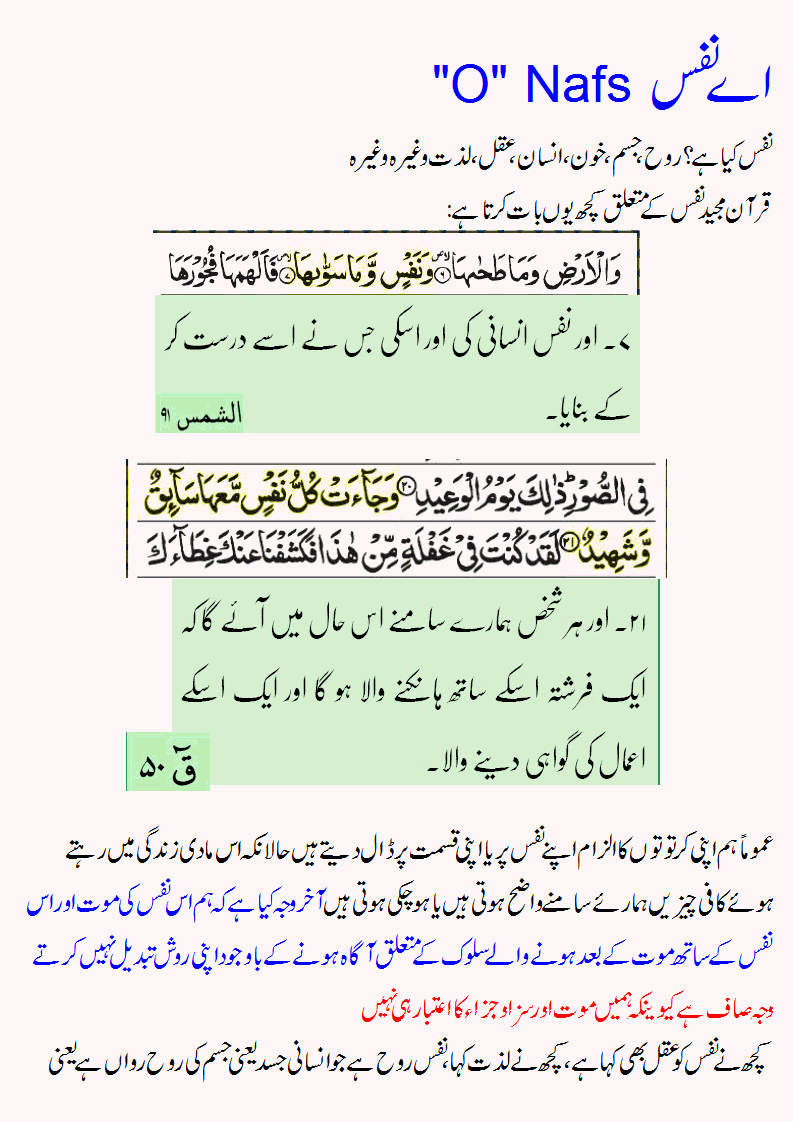
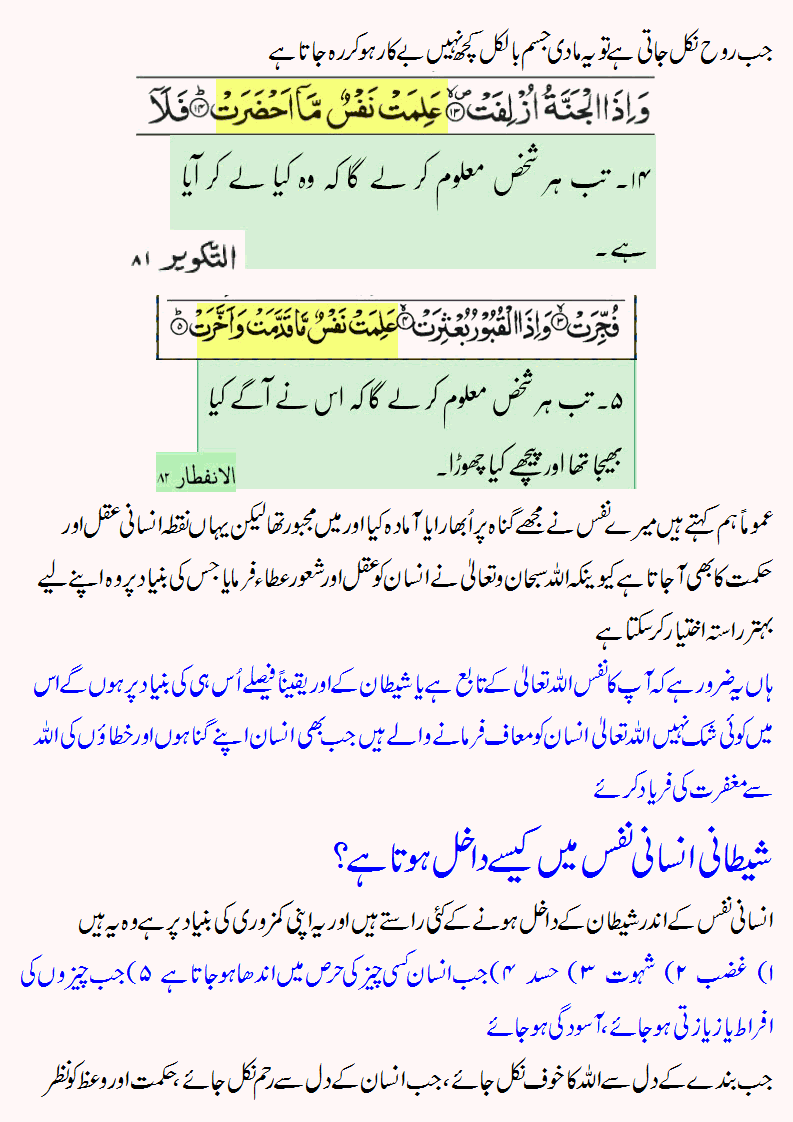
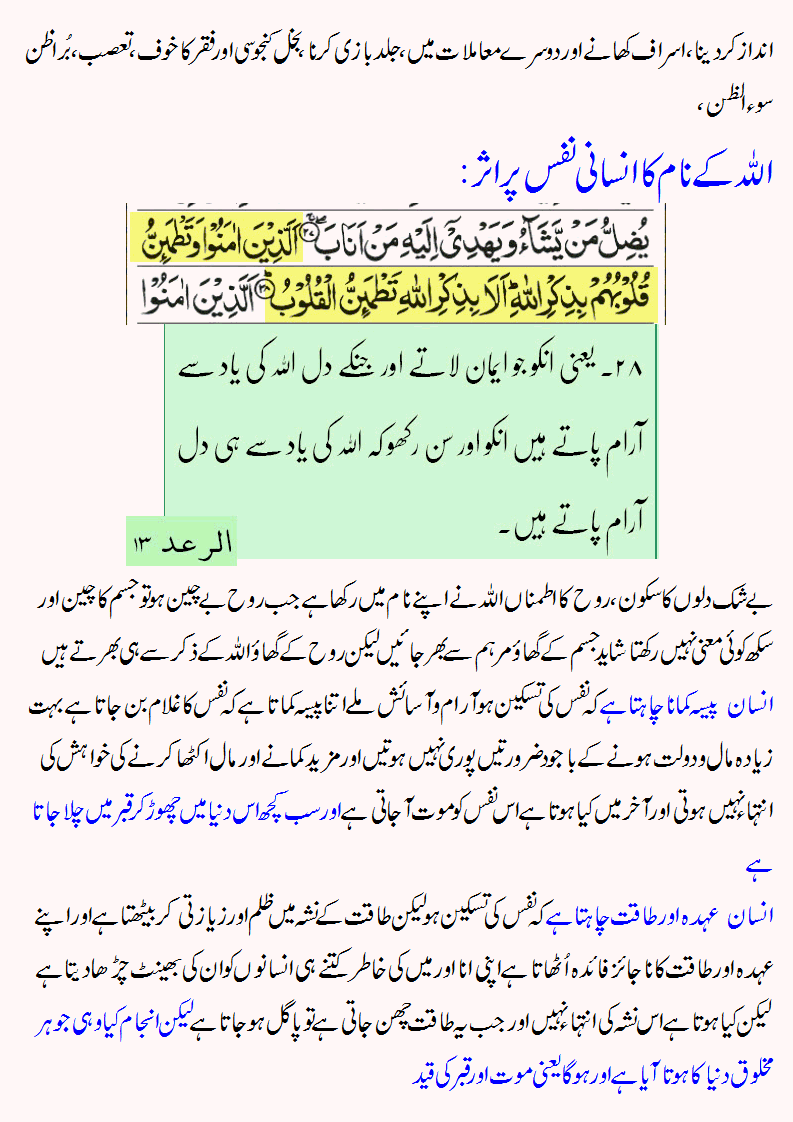
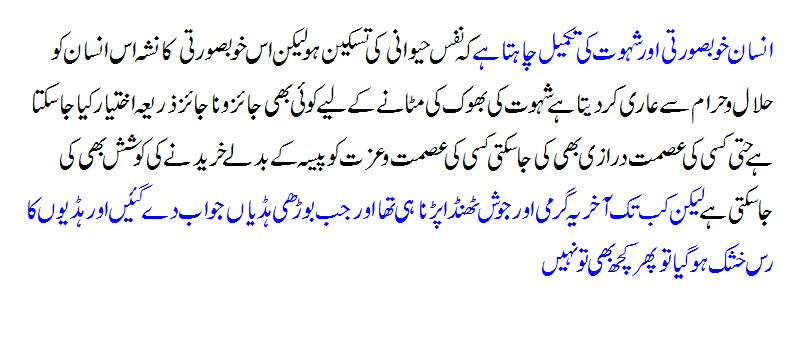
O Nafs (Nafs kya hai? Rooh, Jism, Khoon, Insan, Lazzat…)
Being Sad Is Not Encouraged In Our Religion
So do not become weak [against] your enemy, nor be sad… (Quran 3: 139)
And grieve not over them, and be not distressed because of what they plot. (Quran 16: 127)
Be not sad, surely Allah is with us. (Quran 9: 40)
Referring to true believers, Allah informs us that: Upon such shall come no fear, nor shall they grieve. (Quran 2: 38)
Sadness enervates the souls will to act and paralyzes the body into inactivity. Sadness prevents one from action instead of compelling one towards it. The heart benefits nothing through grief; the most beloved thing to the Devil is to make the worshiper sad in order to prevent him from continuing on his path. Allah, the Exalted, says: *Secret counsels [conspiracies] are only from Shaitan [Satan], in order that he may cause grief to the believers. (Quran 58: 10)
In the following hadith, the Prophet (PBUH) said: “In a company of three, it is forbidden for two to hold secret counsel to the exclusion of the third, since doing so will be a cause of sadness for him.”
Contrary to what some believe (those who have an extreme ascetic bent), the believer should not seek out sadness, because sadness is a harmful condition that afflicts the soul. The Muslim must repel sadness and fight it in any way that is permissible in our Religion.
There is no real benefit to sadness; the Prophet (PBUH) sought refuge from it in the following supplication: “O Allah, I seek refuge in you from anxiety and grief.”
Grief is coupled with anxiety in this hadith. The difference between the two is that if a bad feeling is related to what is going to happen in the future. Then one is feeling anxiety. And if the cause of this feeling concerns the past, then one is feeling grief both weakens the heart, causing inactivity and a decrease in will power.
Despite what has been mentioned above, grief may sometimes be both inevitable and necessary. When they enter Paradise, its dwellers will say: All the praises and thanks be to Allah, Who has removed from us [all] grief. (Quran 35: 34)
This verse implies that they were afflicted with grief in this life, just as they were afflicted with other forms of hardship, both of which were out of their control. So whenever one is overcome by grief and there is no way to avoid it, one is rewarded, because grief is a form of hardship, and the believer is rewarded for going through hardship. Nonetheless, the believer must ward off grief with supplication and other practical means.
“Whatever befalls the believer in terms of anxiety, hardship, or grief, Allah will remove his sin.”
It indicates that grief is a trial with which the believer is afflicted, and through which some of his sins are atoned for. However, it does not indicate that grief is something to be sought after; the believer should not seek out means of finding grief, thinking that he is performing an act of worship.
And as for the alleged hadith, “Verily, Allah loves all sad hearts,” the chain of its narrators is unknown, so it is not an authentic hadith, especially in view of the fact that the basic principles of our religion are contrary to it.
In this verse, Allah says of his Prophet Israaeel (Israel): And he lost his sight because of the sorrow that he was suppressing. (Quran 12: 84)
Here we are informed of his grief over losing his beloved son. Simply informing about something does not in itself signify either approval or disapproval of that thing. The fact is that we have been ordered to seek refuge from sadness, as it is a heavy cloud that hangs above its victim, and is a barrier that prevents one from advancing to higher aims.
There is no doubt that sadness is a trial and a hardship, and is in some ways similar to sickness. However, it is not a stage, level, or condition that the pious should actively seek out.
Suspicion In Islam: Try To Avoid It
O Allah, save me from all those things that will lead to my destruction in this world and the next, and guide me towards those which will benefit me in both worlds. Ameen.
Misunderstandings crop up because of waswasa (repeated, unfounded doubts or fears). Sometimes Satan gains control of a person’s mind, rendering him worse than a hypocrite or a show-off. In other words, he becomes Satan in the garb of a human being! Satan enslaves his thought process, and the person does whatever Satan wants him to do
Sometimes Satan is also able to dominate the hearts of certain people.
The worst effect of waswasa of thought is that the person becomes suspicious. First, he is plagued with bad thoughts. Suspicion is from Shaitan. Shaitan makes a small beginning, but as soon as man gives him an opportunity, he takes man to the seventh level of Hell. He will not settle for anything less. In addition, Shaitan even ridicules man and says, “You have reached the depths of Hell yourself, what do I have to do with you?” Suspicion, driven by waswasa of thought, starts on a low scale, but soon escalates.
The biggest danger of suspicion is that it may lead one to sin. Because of waswasa of thought and suspicion, the affected person views others as sinners and bad characters.
The kind of suspicion which is a sin is the ascribing of evil motives, and it is not permissible for a Muslim to impute such motives to his brother Muslim without justification and clear evidence. Because the basic assumption concerning people is that they are innocent, a mere suspicion should not be allowed to result in the accusation of an innocent person.
For example, a man suspects his wife. This is a great sin. Or, for example, when a man enters their path, the husband tells his wife, “He is making passes at you.” This man talks like an insane person. Sometimes the wife suspects her husband, although he has become so old, he is devoid of carnal desires. But the moment he steps into the house, she creates a hue and cry, accusing him of maintaining a secret second wife. “Where else could you have gone all this time?” she asks him.
Like the silkworm, a person who remains trapped in the cocoon of his doubts and wrong thoughts will suffocate to death. O men! Do not talk about matters without knowledge. Don’t assume things. Don’t suspect others. Your eyes, your ears, and even your hearts will be questioned on the Day of Reckoning about these suspicions and these wrong thoughts! On that day, the organs of your body will bear witness against you
Islam aims at establishing its society on the clearness of conscience and mutual trust, not on doubts, suspicions, accusations, and mistrust.
Allah Almighty states: O you who believe, avoid (indulging in) much suspicion; truly, some suspicion is a sin. (S:49 V:12)
The Holy Prophet (peace be on him) said, “Avoid suspicion, for airing suspicion is the most lying form of speech.”(Reported by al-Bukhari and others.)
Human weakness is such that no one is free of suspicion and wrong thoughts, especially concerning those with whom relationships are not good. However, one must not give in to such thoughts nor go beyond thoughts to action, as stated in the hadith, “If you have a suspicion, do not pursue it.”(Reported by al-Tabarani.)
Suspicion could ruin relations between people, particularly when it is based on flimsy evidence or hearsay. The Prophet (Peace be upon him) has spoken in very clear terms about misplaced suspicion, giving clear orders to refrain from it. One clearly authentic hadith that groups together some of the actions that cause discord within the community and make people dislike one another is reported by Abu Hurairah. He quotes the Holy Prophet (peace be upon him) as saying: “Beware of suspicion, for it is the most untrue of what people say. Do not spy on one another, or compete with one another. Do not boycott, envy, or hate one another, but remain — you servants of God — brothers and sisters.”(Related by Al-Bukhari, Muslim, Abu Dawood and Al-Tirmidhi).
Shaitan Aur Khabees Jinnat Ko Ghar Say Dur Kerne Kay Liay

Shaitan Aur Khabees Jinnat Ko Ghar Say Dur Kerne Kay Liay
Moat Kay Waqt Shaitan Laeen Kay Insan Par Hamlay


Moat Kay Waqt Shaitan Laeen Kay Insan Par Hamlay
Bait Al Khala Mein Dakhil Hone Aur Nikalne Ki Sunnatien

Bait Al Khala (Laterine) Mein Dakhil Hone Aur Nikalne Ki Sunnatien
Shaitan Ka Galba Ki Aik Alamat

Shaitan Ka Galba Ki Aik Alamat
Do Not Confer Of Sin, Revolt And Disobedience Of Apostle (sal-allahu-alleihi-wasallam)
[2. Surah Al-Baqarah: Ayah 195] “And spend in the way of Allah and cast not yourselves to perdition with your own hands, and do good (to others); surely Allah loves the doers of good.”
[58. Surah Al-Mujadila : Ayah 9] “O you who believe! when you confer together in private, do not give to each other counsel of sin and revolt and disobedience to the Apostle, and give to each other counsel of goodness and guarding (against evil); and be careful of (your duty to) Allah, to Whom you shall be gathered together.”
[58. Surah Al-Mujadila: Ayah 10] “Secret counsels are only (the work) of the Shaitan that he may cause to grieve those who believe, and he cannot hurt them in the least except with Allah’s permission, and on Allah let the believers rely.”
[6. Surah Al-An’am: Ayahs 68] “And when you see those who enter into false discourses about Our communications, withdraw from them until they enter into some other discourse, and if the Shaitan causes you to forget, then do not sit after recollection with the unjust people.”
[25. Surah Al-Furqan: Ayah 63] “And the servants of the Beneficent God are they who walk on the earth in humbleness, and when the ignorant address them, they say: Peace.”
“Our Lord! do not punish us if we forget or make a mistake; Our Lord! do not lay on us a burden as Thou didst lay on those before us, Our Lord do not impose upon us that which we have not the strength to bear; and pardon us and grant us protection and have mercy on us, Thou art our Patron, so help us against the unbelieving people.”