

Archives
An Enemy Inside You
Every Muslim has perfect faith in that Allah Almighty has sent man in this world to prepare for the world to come. The one, who succeeds in making preparation here, must be successful by the grace of Allah on the Day of Judgment, whereas the ignorant and the one, who falls prey to skeptical incredulity, will face utter failure and dejection and also incur the anger of Allah Almighty on the Day of Judgment.
Where Allah Almighty has provided with the innumerable blessings to facilitate the preparation, he has also put some hurdles in the path to test His men. For those devoted Muslims who have a natural desire for heaven, must know how to cross these hurdles, otherwise it seems almost impossible to attain eternal success.
If we briefly look at these hurdles, four things will come before us.
1. World
2. Creation
3. Nafs
4. Satan
Of these four “NAFS” and “SATAN” are the most dangerous. The world and the creature are particularly apparent, whereas the other two are invisible and it is as clear as a day that invisible enemy is more dangerous than the visible.
Which one is more destructive”NAFS” or “SATAN” Reasoning on it
Of the “NAFS” and “SATAN”, the more destructive one is to be picked without any shadow of a doubt it would be “NAFS”. Because “NAFS” is the disastrous evil that had destroyed even Satan”s faith. Briefly going through it, when Allah Almighty after creating Adam (ALAIHE SALAAM) ordered all the angles including “SATAN” to prostrate to Adam, all the angles carried out the orders but “SATAN” refused to do so and was cursed forever. Allah Almighty says, “He (the SATAN) refused and became too proud and turned out disbeliever. (34, Albaqra; Part 1 Translation from The Kanzul-Iman)
Imam Ghazali (RAHMA TULLAH ALAYH) says when “SATAN” denied there was no other SATAN to instigate him, what was the cause for which he lost his faith”… the Imam maintains that it was his “NAFS” which drove him to arrogance and revolt and compelled him to fall into the pit of destruction.
This argument has proved that “NAFS” is more dangerous for our destiny the “SATAN”. Therefore, declaring it “THE BIG BROTHER} of the “SATAN” won”t be wrong.
Now the question arises, what necessary measures are to be taken to fight and to dominate it? For this, the following things are noteworthy.
To take cognizance of “NAFS” in respect of its reality. And where does it’s abode is.
We have to be aware of its attacking strategies and to get knowledge of those things which assist it to persuade the man towards activities and indifference?
The ways are to be found to defend his attacks and to subdue it completely.
Now Insha Allah (by the will of Allah) all these points shall be discussed in detail.
1. Cognizance of “NAFS” and its abode.
According to terms of “sharia”, the soul is called “NAFS”. It is quoted in “Maram al klam fi akaid al Islam” “For “NAFS”, it is what has been named soul in the “Sharia”.
What is the reality of the soul? Three sects have been quoted in “Maram al klam”.
a) It is not allowed to argue over it because it is one of those things which Allah Almighty has specified with His divine knowledge.
b) It is an alone spirit, which has not diffused into the body but has the relation of possession and device with the body. Thus life is based on the perpetuity of this and its opposite side is death. Imam Ghazali (RAHMAT ULLA ALAIH) is convinced of it.
c) It is a delicate substance that has been transmigrated into the body. This is the creed generally represented by “Ehle sunnat wal jamat”
In the light of this creed, it is clear that the definition of “NAFS” is, “It infects the second name for the soul whose abode is the human body.
In the holy book of Quran Allah Almighty has mentioned “NAFS” with these three attributes.
NAFS-e-Ammara
According to its nature when it instigates man towards negligence, disregard, and evil, it is called “Ammara”. As is quoted in the holy Quran, “Surely the self incites to the evil except for those on whom my Rubb (Sustainer} has conferred Mercy.” (53, YOUSUF; PART 13 TRANSLATION FROM THE KANZUL-IMAN)
NAFS-e-Lawama
When a Muslim falls short of virtuous deeds………or…..commits evil acts, some times his “NAFS” condemns it. For this reason, it is called Lawama”. This system of condemnation is found in abundance in those steady Muslims who try to do virtuous deeds and refrain from the evils, and rare in sinners. Probably it is “NAFS-e-Lawama” which is generally called the conscious. As Allah Almighty said, ?And indeed I call to witness the reprehensive self.?
(2, ALQIYAMHA; PART 29 TRANSLATION FROM THE KANZUL-IMAN)
NAFS-e-Mutma inna
When a man after a hard struggle makes his “NAFS” habitual to yield and surrender to the will of Allah Almighty, it is called “Mutma inna”. As Allah Almighty said, “O you contented human self! Return to you Rubb (Sustainer) so pleased with Him, as He is pleased with you. So you enter among My chosen devotees; and you enter My Paradise.”
(27-30, ALBALAD; PART 30 TRANSLATION FROM THE KANZUL-IMAN)
The type of “NAFS” under discussion
NAFS-e-Ammara is the type that is under discussion here out of the three. This is one which is declared the “BIG BROTHER” of the “SATAN” due to its ability of wickedness and vice. It has destroyed its younger brother’s faith and, will play an important role to damage the Muslims, till the last Day of Judgment. It is useless to expect any good from it. It is a brutal enemy. The only way of resurrection is to subdue it through a fight. Otherwise, it would be very difficult to protect the faith.
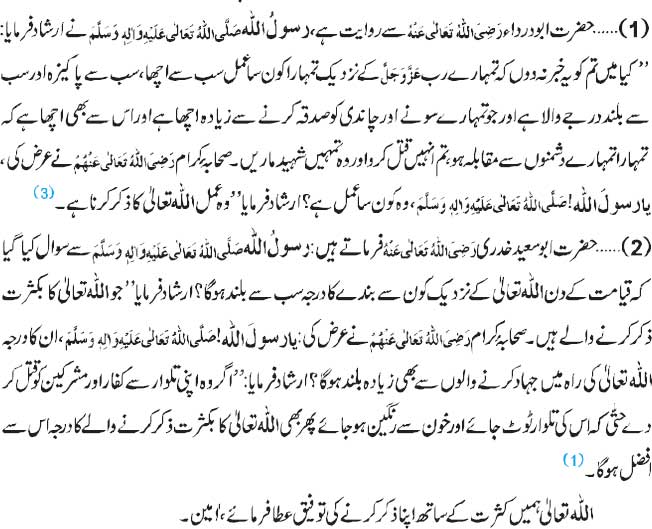
Namaz Be Hayai Se Rokti Hai
Islam & The Concept Of Friendship
Humans have always been social creatures and in need of friends and companions. Much of our lives are spent in interaction with others. For us Muslims who are living in a society where we are clearly a minority, the issue of choosing the right companions is essential for preserving our Deen. Befriending righteous and virtuous Muslims is an essential means for staying on the Straight Path. Strong individuals, on the other hand, are the core of a strong community, something that Muslims should always strive for.
We all know that we were created for a specific purpose and that Allah the Highest has given us life in order to test us. None of us will deny that we are here for a relatively short period of time and that we shall meet Allah ( s.w.t.) one Day.
Once we know our purpose and our goal, we should seek ways to achieve them so as to benefit our own selves. All of us believe that Allah has sent us a Messenger ( s.a.w.) and revealed to us the Qur’an, the Best Speech.
In an authentic Hadith, the Prophet Muhammad ( s.a.w.) said:
“A person is likely to follow the faith of his friend, so look at whom you befriend.”(1).
The person most noble in character and dealings with fellow humans gave us a very clear message and advice in regard to friendship. We should choose the friend that is satisfied with our Deen and avoid the friend that is displeased with it. Whoever we see and are pleased with his Deen, we should befriend him and whoever we are displeased with his Deen and his manners, we ought to avoid him. There is no good in the companion who does not wish for us (from good) what he wishes for himself. It is also no good in the companion who wishes for us what he wishes for himself if what he likes for his own soul is leading him towards destruction and Hellfire.
The bases for the actions of those who follow the evil ways are corrupt; their actions are built upon misguidance and deviation. Their deeds are worthless to them as Allah ( s.w.t.) said: “And We will proceed to what they have done of deeds, so We shall render them to scattered floating dust.” [25:23]. Their actions, even if we regard them as righteous and noble are of no value to them, so how can they be of benefit to us? Friends are those who feel for their companions, in both happy and sad moments. If we share our feelings with the wrongdoers whose actions are worthless and based on corruption, then we are following the same ways and standards as they are. The affection which results from that friendship leads to love and closeness to other than the righteous believers, and this may even lead to avoiding those who are on the Straight Way. Mixing with followers of any way other than that of the Guidance also results in a change in one’s behavior, morals, and conduct. If we agree, follow, and are pleased with such friends, then we inherit their habits, behaviors, and even religion. Such a Muslim would find himself in a situation wherein he is willing to hide his Islam in front of those who despise it (those that he considers as friends) and to separate from the believers. When this situation occurs, a point is reached when there is a very slight difference between the Muslim and his wrong-doing companion. Such companionship is the root of the sickness of one’s heart and the loss of one’s Deen.
Instead of making friends with the misguided ones we should befriend the righteous and treat the rest in a gracious and just manner. Staying on a sufficient distance is necessary, yet treating everybody in a noble and kind manner is required.
In another Hadith, Prophet Muhammad ( s.a.w.) said:
“The example of a good companion and a bad companion is like that of the seller of musk, and the one who blows the blacksmith’s bellows. So as for the seller of musk then either he will grant you some, or you buy some from him, or at least you enjoy a pleasant smell from him. As for the one who blows the blacksmith’s bellows then either he will burn your clothes or you will get an offensive smell from him.” (2)
In his commentary of this Hadith, Imam an-Nawawy said that the Prophet (s.a.w.) compared a good companion to a seller of musk and spoke of the virtue of having companions who are good, who have noble manners, piety, knowledge and good culture. Such are those who grant us from their virtue. And he ( s.a.w.) forbade us to sit with those who do evil, commit a lot of sins and other bad deeds, as well as with innovators, backbiters, and so forth. Another scholar said: “keeping good company with the pious results in the attainment of beneficial knowledge, noble manners, and righteous actions, whereas keeping company with the wicked prevents all of that.”
Many times a Muslim is encouraged by his friends to do evil and to forget his duties. The result is that Muslims themselves are often ashamed to leave them to perform the prayer, their friends thus causing them to clearly deviate from the Right Path.
Allah the Exalted says in the Qur’an:
“And (remember) the Day when the wrong-doer will bite his hands and say: Woe to me! Would that I had taken a path with the Messenger. Woe to me! If only I had not taken so-and-so as a friend! He has led me astray from this Reminder (the Qur’an) after it had come to me. And Satan is ever a deserter to man in the hour of need.” [25:27-29]
So take heed before the inevitable Day comes and we are reckoned for our acts.
Allah, the All-Wise also says: “Friends on that Day will be enemies one to another, except al-Muttaqoon (i.e. those who have Taqwah).” [43:67]
Hafidh Ibn Katheer, commenting on this verse, relates a story on the authority of Ali Ibn Abi Talib ( r.a.a.) and says that any friendship for other than Allah is turned into enmity, except what was in it for Allah the Mighty and Majestic: Two who are friends for Allah’s sake; one of them dies and is given the good news that he will be granted al-Jannah, so he remembered his friend and he supplicated for him, saying: O Allah, my friend used to command me to obey You and to obey Your Prophet ( s.a.w.) and used to command me to do good and to forbid me from doing evil. And he told me that I will meet You. O Allah, do not let him go astray after me until you show him what you have just shown me, until You are satisfied with him, just like You are satisfied with me.” So he is told: “Had you known what is (written) for you friend, would you have laughed a lot and cried a little.” Then his friend dies and their souls are gathered, and both are asked to express their opinions about each other. So each one of them says to his friend: you were the best brother, the best companion and the best friend.” And when one of the two disbelieving friends die, and he is given tidings of Hellfire, he remembered his friend and he said: O Allah, my friend used to order me to disobey You and disobey Your Prophet, and commanded me to do evil, and forbade me from doing good, and told me that I would not meet You. O Allah, do not guide him after me until you show him what you have just shown me and until you are dissatisfied with him just like You are dissatisfied with me.” Then the other disbelieving friend dies, and their souls are gathered, and both are asked to give their opinions about each other. So each one says to his friend: you were the worst brother, the worst companion and the worst friend.”
That is the end of those who do not have Taqwah and those who befriend for a sake other than that of Allah the Exalted. Allah has surely spoken the truth and we all should grasp what He has informed us of. It is through the good company that Allah, the Highest, saves those who are astray and guides the wicked. The benefit of mixing with the righteous is immense, and it will, insha’Allah, be even more obvious to us in the Hereafter. One of the early Muslims said that it is from Allah’s blessings upon a youth when he turns to worship that he is given brother who is a follower of the Sunnah encouraging him upon it”.
Sealing a friendship for Allah’s sake will result in one’s receiving protection of Allah ( s.w.t.). And as Ibn Abbas said: “No one may taste true faith except by this (i.e. building relationships for Allah’s sake), even if his prayers and fasts are many. People have come to build their relationship around the concerns of the world, but it will not benefit them in any way.”
A scholar has said: “To seal a friendship for Allah’s sake indicates the obligation of establishing relationships of love and trust for His sake; this is a friendship for the sake of Allah. It also indicates that simple affection is not enough here; indeed what is meant is a love based upon alliance. This entails assistance, honor, and respect. It means being with those whom you love both in word and deed.”
Loyalty for the sake of Allah really means to love Allah and to come to the assistance of His Deen; to love those who are obedient to Him and to come to their help. Moreover, the Shahadah “La Ilaha Illa Allah” requires us to ally ourselves for the sake of Allah, and it requires us to ally ourselves to the Muslims wherever we find them.
In two other authentic narrations of the Prophet ( s.a.w.) we were commanded to keep company with a believer only (3), and told that a person will be with those he loves (4). So if we love and associate ourselves with those who are misguided, we should fear for our fate. The wise person is the one who prepares himself for the Hereafter, not the one who neglects his faith and falls into the trap of Satan who tells him that he will be forgiven and that he can do whatever he wishes. If we truly believe that the best speech is the Speech of Allah and that he best guidance is the guidance of Prophet Muhammad ( s.a.w.), we should act in accordance with them, lest we build a proof against ourselves. Ali (r.a.a.) said: “Mix with the noble people, you become one of them, and keep away from evil people to protect yourself from their evils.” If we are truly concerned about our fate, we must come to this realization: those who take us away from remembering Allah, from obeying Him and His Prophet ( s.a.w.), those who fail to remind us of our daily prayers and those who do not give us sincere advice in regard to our Deen; such are really our foes and not our friends.
On the other side, a believer in the mirror of his brother” (5), and if he sees any faults in the other believer, he draws his attention to it, helps him to give it up, and helps him wipe away any evil that he may have. Ibn Hazm said: Anyone who criticizes you cares about your friendship. Anyone who makes light of your faults cares nothing about you.”
How can we expect sincere advice and exhortation in regard to our religion from those who are displeased with our Deen or are simply indifferent? Are they going to help us achieve the purpose of our life, or will they take us away from it? Will they desire for us Allah’s pleasure or is that Completely irrelevant to them and not their concern at all? Are they leading us to al-Jannah or to the Hellfire? These are the questions we have to ask ourselves, lest we wake up after we die.
“O you who believe! Take care of your own selves. If you follow the right guidance and enjoin what is right and forbid what is wrong no hurt can come to you from those who are in error. The return of you all is to Allah, then He will inform you about (all) that which you used to do.” [5:105]
We ask Allah to make us of the righteous ones and give us companions that will take us away from His Wrath and lead us to His Pleasure and Paradise.
References:
1- Abu Dawood and at-Tirmidhee
2- al-Bukhary and Muslim.
3- Abu Dawood and at-Tirmidhee.
4- Al-Bukhary and Muslim.
5- Abu Dawood, Hassan Hadith.
Allah Ki Hamd-o-Sana Kay Fazail
Dunya Ki Muzamat
Islam’s Accent On Justice
DOING justice is one of the key features of the Qur’anic teachings. It has been specifically termed as akin to piety (5:8). Its importance and practice have been emphasized in several ways. One is when the Qur’an directly enjoins the believers to do justice and refrain from doing injustice (16:90).
The other is when the Qur’an says that Allah loves those who do justice (5:42) and warns those who carry the burden of the sins of inequities (injustices) (20:111) with a categorical declaration that for unjust there will be no helpers. The third is when the Qur’an enjoins the believers to be firm and foremost in doing justice for the sake of Allah (4:135). Normally whatever a person does, he does it for his own sake. But through this verse, the Qur’an enjoins the believers to do justice for the sake of Allah which shows how important doing justice is.
There are three factors that invariably take one away from the path of justice. One is lust, the other is affiliation or relationships and the third is enmity. The Qur’an expressly exhorts believers not to be influenced by these factors.(38:26).
The Qur’an enjoins the believers to do justice even if it may be harmful to themselves, or to their parents or to their relatives and irrespective of the fact that the party concerned is rich or poor (4:135). It means that they have to do justice uninfluenced by self-interest or any other affiliation or motive. The Qur’an further exhorts the believers to be so steadfast in doing justice that their enmity with some people should not turn them away from the path of justice (5:8). In other words, they have to be just even to enemies.
The Qur’an not only highlights the importance of justice but also tells us how to do justice when it says: “Indeed We have sent Our Messengers with clear proofs, and revealed with them the Scripture and the Balance (justice) that mankind may keep up justice.” (57:25).
The verse, in fact, tells us that Allah sent His Messengers and with them the Books to enlighten the people, among other things, on the importance of balance so that they learn how to do justice.
The word “Balance” implies the maintenance of equilibrium. In the sphere of human activities when the norms of balance are applied in the exercise of discretion, whether in relation to one’s self or in relation to others or in the exercise of authority or in the delivery of judgment or decision in regard to others in general and their rights and obligations in particular, it is called justice.
Dispensation of justice assumes particular significance when it is in regard to the determination of the rights or obligations, or the guilt or innocence of others. The modern jurisprudence has identified three principles commonly known as the principles of natural justice the observance of which could be sine qua non to the doing of justice. One is that no one shall be condemned without being given a hearing. The other is that justice shall not only be done but shall manifestly be seen to be done. The third is that no one shall be a judge in his own case. All these principles are in the observance of the norms of balance as enjoined by the Qur’an.
The first and foremost requirement of observing the norms of balance could be that every allegation must be made by an appropriate explanation. The person alleged to have done something wrong, or to have failed to discharge an obligation, must have an opportunity to explain his position in respect of the allegation. Without such an opportunity it will not be possible to observe the norms of balance. The decision of Prophet Dawud (David) in the dispute between the two brothers over the ownership of a ewe (38:22,23) could be the best example.
Although the decision of Dawud was manifestly right in spite of that he fell down prostrate and sought Allah’s forgiveness after giving the decision, the only plausible explanation of which could be that it occurred to him that he gave his decision without hearing the other party. The principle that could be deduced from this story would be that no one shall be condemned without a hearing even if he is manifestly wrong.
The other requirement of observing the norms of balance could be that the person giving decision in the dispute between the parties gives equal opportunities to the parties to present, plead and defend their claims and positions, as the case may be, weighs the evidence adduced and the arguments and counter-arguments put forward on even scales, gives due consideration to the contentions raised and pleas by the parties and delivers judgment on merit, uninfluenced by any extraneous consideration. This, in other words, implies that justice shall not only be done but shall manifestly be seen to be done.
The third requirement of observing the norms of balance could be that the person giving the decision in a dispute involving the rights and obligations of others is unbiased and has no personal interest in the case. Balance is disturbed when the person giving the decision is biased or becomes a judge in his own cause. This is the third principle of natural justice deducible from the observance of the norms of balance as enjoined by the Qur’an.
An excellent example of the observance of the norms of balance cited by the Qur’an could be when the standing crop in the farm of a person was destroyed by the sheep of another person. The matter came up for decision before Dawud who ruled that all of the sheep should be given to the owner of the farm. Prophet Sulaiman (Solomon) came to know about the decision who said if he were to decide the matter he would have given a different decision.
When Dawud heard about it, he called his son Sulaiman and asked him what decision would he have given in the matter. Sulaiman said his decision would have been to give the sheep in the charge of the owner of the farm so that he could make use of them and the owner of the sheep would have been asked to sow seed in the farm and raise another crop. When the crop reached the same stage, in which it was when destroyed, the farm was to be given to its owner and the sheep returned to their owner. Dawud agreed and pronounced the same decision.
The doing of justice, whether in matters involving the rights and obligations of parties or the liability of persons, civil or criminal, largely depends on evidence. It is because of this reason that the Qur’an lays special emphasis on the production of proper and relevant evidence. As it says: “And mix not truth with falsehood, nor conceal the truth while you know.” (2:42). It says again: “And conceal not the evidence, for he who hides it, surely, his heart is sinful . . .” (2:283) and to be staunch and firm in giving evidence (4:135).
Jannat Ke Balakhane

The Prophet As A Man – Being Thankful For Simple Food
The companions of the Prophet (peace be upon him) were keen to give us a full picture of the Prophet’s actions, practices, and habits, knowing that this is all part of the guidance he was sent to deliver. They realized that some of his actions were no more than a personal approach and that we have free choice in these. Nevertheless, they wanted to transmit a full picture of his behavior. They realized that even in personal matters, his choices were good ones. God made his nature always inclining toward what is good and beneficial. Moreover, they told us how they behaved in his presence in order to transmit a picture of what life was like in the community he established, which was fundamentally different from the tribal society that prevailed in Arabia before the advent of Islam.
Jabir ibn Abdullah reports: “When we had a meal with the Prophet, we would not start unless he was the first to start.” (Related by Ahmad, Al-Hakim and Abu Al-Shaykh). This Hadith tells us of the good manners of the Prophet’s companions and the respect they showed to the Prophet. They might be hungry and the food is placed before them, but they would not touch it until he started. Indeed, this sort of manner continued to be practiced in the Muslim community. Children would not start eating before their parents, particularly when they are grown up. When some people are having dinner, the most distinguished personality is normally the one to start. When he begins to take food into his plate, others would follow.
During the Prophet’s lifetime, the Arabs normally ate with their hands. They did not have the sort of cutlery we use nowadays. They held a piece of bread in their fingers and scooped some food to lift it to their mouths, eating it with the piece of bread. Some of the sauce or the fat might stick to their fingers during the meal. Hence, it is important to wash one’s hands before eating. People also wiped or washed their hands after the meal. The Prophet’s companions told us how he ate. Thus, Kaab ibn Malik tells us: “The Prophet used to eat his food using three fingers. He did not wipe his hand until he had licked it.” (Related by Ahmad, Muslim, Abu Dawood and Al-Tirmidhi). There are other Hadiths confirming this practice. Anas reports: “When the Prophet had finished eating, he would lick his three fingers.” (Related by Ahmad, Muslim, Abu Dawood and Al-Tirmidhi)
Kaab ibn Ujrah reports: “I saw the Prophet eating with his three fingers, his thumb, the one next to it and the middle finger, and I saw him licking his three fingers before wiping them.” (Related by Abu Al-Shaykh, Al-Tabarani and Ibn Saad).
These Hadiths give us a picture of a proper approach to food. Using three fingers means that one scoops a small amount. This is better than using one’s whole hand, taking a rather large piece of bread, and lifting more of the food in one bite. People who do that show an unsightly appearance, with their mouths being too full, like gluttons. On the other hand, licking one’s fingers is another aspect of being grateful to God for providing us with the food we need to survive. It means that we do not wash away or waste any portion of food, however small.
The Prophet’s food was always very simple. It was placed on the floor, and no elaborate means were used to give it a refined taste. This is clear from the following Hadiths: Anas ibn Malik reports: “The Prophet never ate at a high table, nor did he eat in small plates. Never was thin bread baked for him.” Someone asked: “On what did they serve their food, then?” The answer was: “On mats placed on the floor.” (Related by Ahmad, Al-Bukhari, Al-Tirmidhi and Ibn Majah). This Hadith shows how simple the Prophet’s life was. He could have had all the luxuries he wanted, but he never looked for any standard higher than what was easily affordable by ordinary people in his community.
Anas said: “The Prophet (peace be upon him) never ate thinly baked bread; nor did he eat of a sheep whose hair was removed by boiling water .” (Related by Ahmad, Al-Bukhari and Ibn Majah). Such elaborate preparations were not used in cooking the Prophet’s food. He preferred a simple life, with no refinements. This does not mean that he did not like what was comfortable, or refined or tasty. His approach was that whatever was easily available and simply prepared, giving no trouble to anyone, was good enough for him.
Sahl ibn Saad, a companion of the Prophet, was asked by Abu Hazim whether the Prophet ate bread made with refined flour. He answered: “The Prophet never saw refined flour from the day God sent him with His message to the day when God gathered his soul.” Abu Hazim asked: “Did you have sieves during the Prophet’s lifetime?” He said: “Never did the Prophet see a sieve from the first day of his mission to the day when God gathered his soul.” Abu Hazim asked: “How did you, then, eat barley without using sieves (to remove the outer skin and dirt)?” He said: “We used to grind it and blow the dirt away. Much of that was blown off, and we then used water to remove more before we prepared it to eat.” (Related by Ahmad, Al-Bukhari, Al-Tirmidhi and Ibn Majah).
Such a simple and contented approach to food needs no comment from us. While we enjoy a great variety of foods today, with fruits and other products brought from all over the world to make everything available in all seasons, we need to show our gratitude to God for blessing us with such plenty. We must never forget that many millions of people hardly find enough to eat. Many suffer from poor diet and from famine. We must always remember this, thank God for what He has given us, and ensure that we try our best to relieve the suffering of those who do not have enough. Otherwise, we will be questioned by God and we have to account to Him for our failure to help those in need of help.
Sulah Karwaney Ke Fazail
