
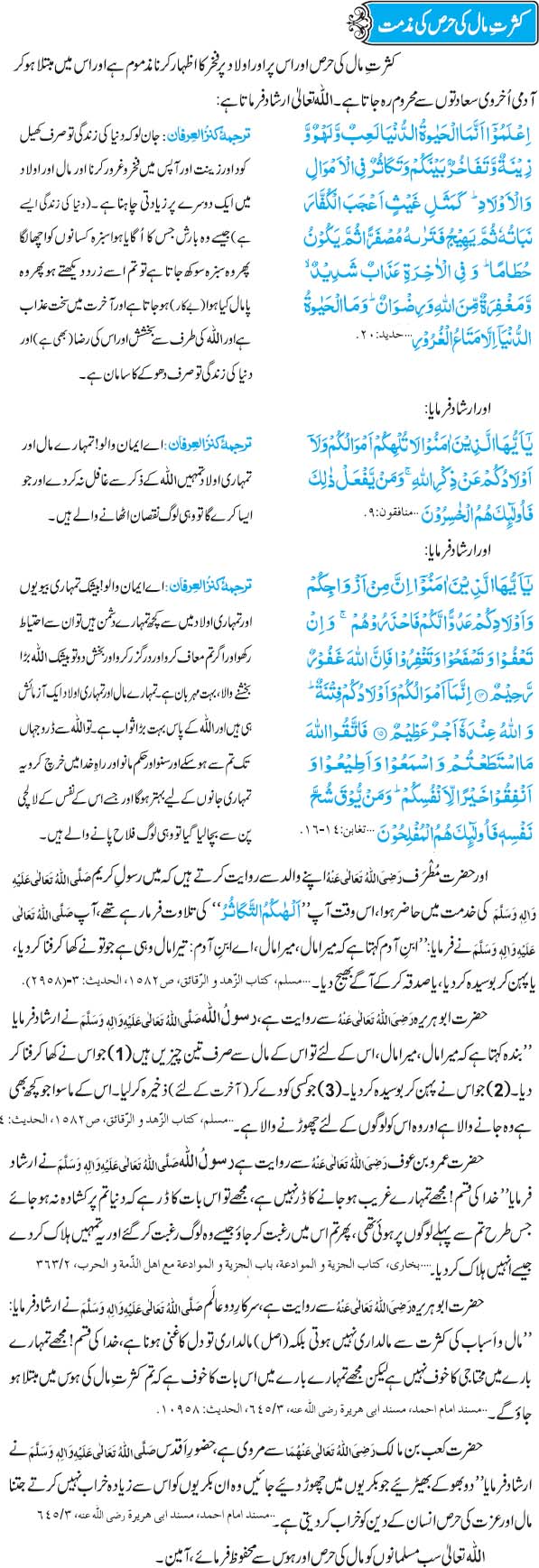
Kasrat e Maal Ki Hirs Ki Muzammat
ALLAH’S Beautiful Name: AL-MUHEE – The Giver Of Life
He gives life and causes to die, and you will be returned to Him. (Surah Yunus, 10:56)
Giving life to all beings, creating them from nothing, and surrounding them with the proper conditions for their survival is a feature unique to Allah, who has infinite power.
Allah makes a sperm unite with an ovum, both of which are invisible to the naked eye. As soon as the sperm destined to fertilize the egg enters the ovum, a membrane covers the egg, and a new life begins. Allah divides this tiny cell first into two and then into four. This process proceeds rapidly, and the result is a miraculous life starting in the mother’s womb. After some time, these cells change in order to form the embryo’s brain, nervous system, bones, and cartilage. This way, within only nine months, Allah creates from nothing a human being who sees, hears, speaks, and uses his or her intelligence. He then grants life. Obviously, an egg and a sperm cannot accomplish this series of miraculous events, for only Allah causes them to unite and then protects the embryo within the mother’s womb for nine months. This is the first creation and the first bringing to life.
Allah grants life to each human being and destines each one to die on a particular day. Until then, He tests them in the life of this world. At the appointed time, He takes their lives and, on the Day of Judgment, resurrects them, just as He first created them from nothing, to repay them for what they did in the world. No doubt, this is easy for Allah, the Almighty. Yet those who ignore this resurrection say:
He makes likenesses of Us and forgets his own creation, saying: “Who will give life to bones when they are decayed?” (Surah Ya Sin, 36:78)
Allah promises that the Resurrection will occur, as the following verses indicate:
Say: “He Who made them in the first place will bring them back to life. He has total knowledge of each created thing.” (Surah Ya Sin, 36:79)
So look at the effect of Allah’s mercy, how He brings the dead earth back to life. Truly, He brings the dead to life. He has power over all things. (Surat ar-Rum, 30:50)
Among His Signs is that you see the earth laid bare, and then, when We send down water on it, it quivers and swells. He who gives it life also gives life to the dead. Certainly, He has power over all things. (Surah Fussilat, 41:39)
Gunnah Aur Bura Khatma: Hazrat Usman Ghani (radi Allahu anhu) Ka Irshad
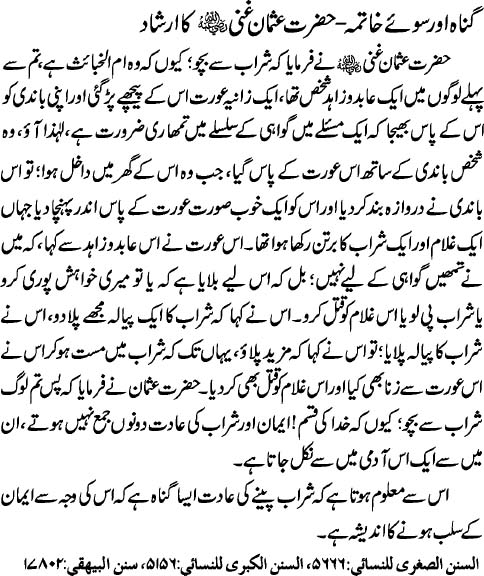
Gunnah Aur Bura Khatma: Hazrat Usman Ghani (radi Allahu anhu) Ka Irshad
The Blessings Of Gratitude And Shukr
Narrated Ibn Abbas (Radi Allahu anhu): The Prophet (SallAllahu alaihi wasallam) said, “You will be gathered (on the Day of Resurrection) and some people will be driven (by the angels) to the left side (and taken to Hell) whereupon I will say as the pious slave [Isa (Jesus)] said:
“Never did I say to them aught except what You (Allah) did command me to say: ‘Worship Allah, my Lord and your Lord.’ And I was a witness over them while I dwelt amongst them, but when You took me up, You were the Watcher over them; and You are a Witness to all things.” “If You punish them, they are Your slaves, and if You forgive them, verily You, only You, are the All-Mighty, the All-Wise.” [Surat Al-Maeda (Table Spread) Ayat – 117:118]
Sahih Al-Bukhari 6:4626
The Blessings of Gratitude and Shukr
Gratitude (shukr) is about expressing thanks and appreciation to those who do any favor to us. Obviously, none can come close to our creator, Allah, who gave us everything. As the Quran states: “Who created you, fashioned you perfectly, and gave you due proportion” [Infitar 82:7]. As humans, Allah has bestowed on us the nature to be grateful, and we should thus express that gratitude not just to Allah but to the people with whom we deal as well. In many places in the Quran, Allah divides people as being grateful and as ungrateful to motivate us to join the camp of those who are grateful. In one of such verses, Prophet Sulaiman said, as stated in the Quran, “. . . then when (Sulaiman (Solomon)) saw it placed before him, he said: ‘This is by the Grace of my Lord to test me whether I am grateful or ungrateful! And whoever is grateful, truly, his gratitude is for (the good of) his own self, and whoever is ungrateful, (he is ungrateful only for the loss of his own self). Certainly! My Lord is Rich (Free of all wants), Bountiful” [An-Naml: 40]
Qurani Duain
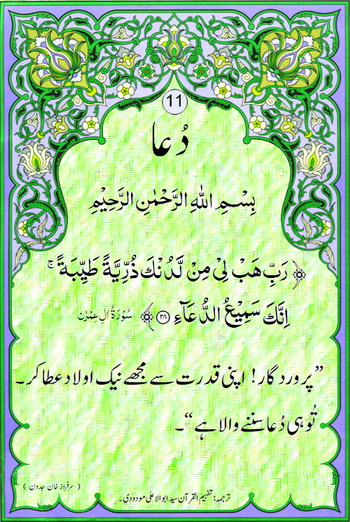
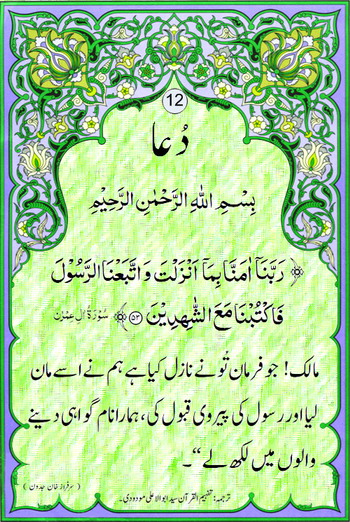
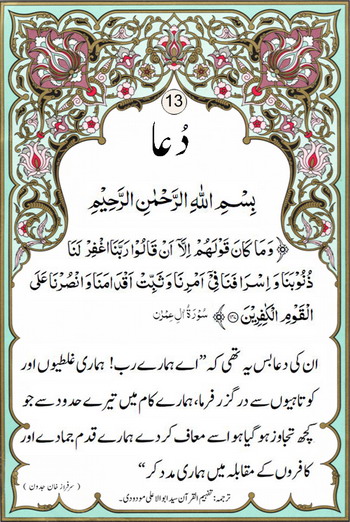
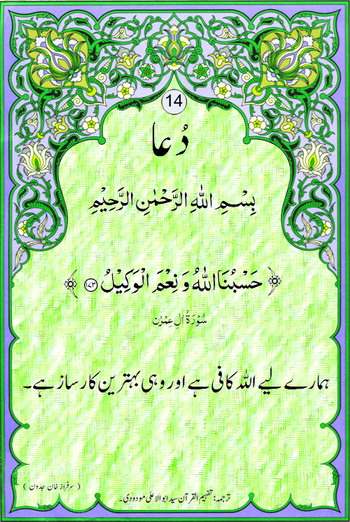
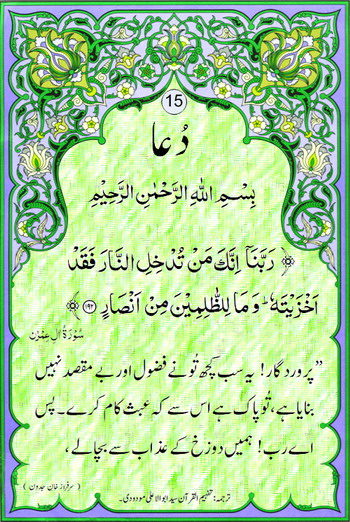
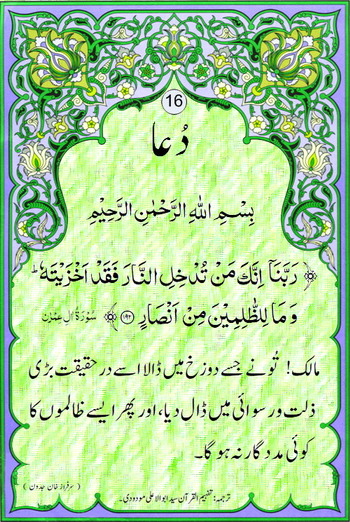
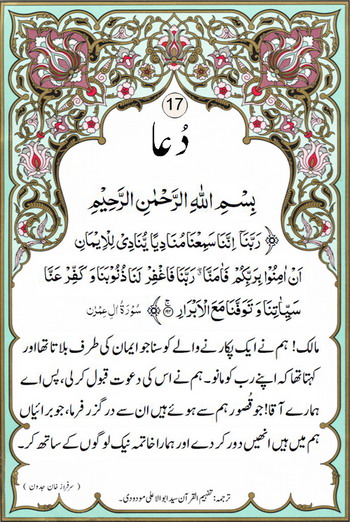
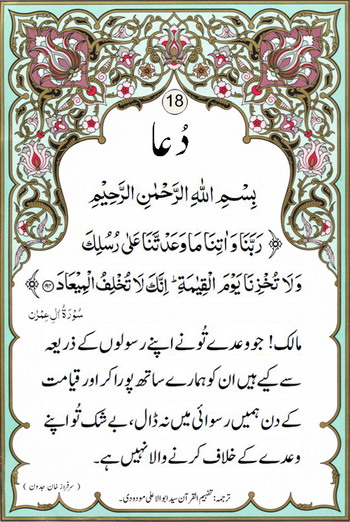
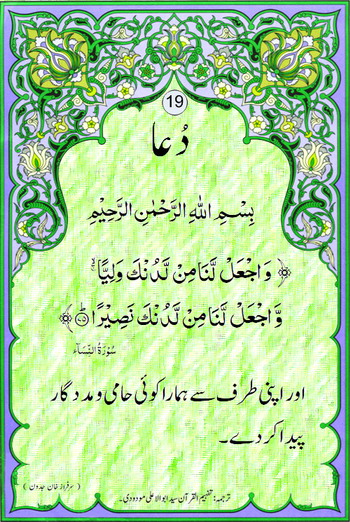
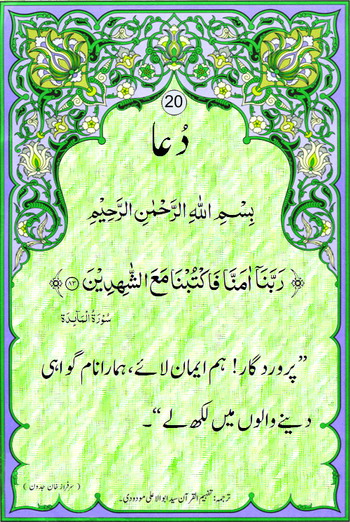
Qurani Duain. Prayers and supplications found in the Holy Quran
Al-Shahid – Allah Is The Witness
The Qur’an refers to Allah by this name eighteen times.
In the following verse, Jesus (peace be upon him) addresses Allah by this name: “I was a witness over them while I dwelt among them; when You took me up, you were Ever-Watchful over them, and You are a Witness to all things.” [Surah al-Ma’idah: 117]
We also read verses like: “Allah is Witness over all things.” [Surah al-Mujadilah: 6]
And: “Allah is sufficient as Witness.” [Surah al-Nisa’: 79]
Allah is the Witness, for whom nothing escapes His sight and nothing eludes His knowledge. And He is the just Witness, a Witness for truth. He is the Witness for the oppressed and downtrodden against those who wrong them.
This name reminds us that what may go unseen by human eyes is still witnessed by Allah.
Allah says: “So wait patiently for your Lord’s decree, for surely you are in Our sight.” [Surah al-Tur: 48]
Another meaning of this name is that Allah is a Witness to faith.
In this context, Allah says: “Allah (Himself) is witness that there is no god save Him. And the angels and the people of knowledge (too are witnesses).” [Surah Al Imran: 18]
The belief that Allah is the Witness makes us more aware that Allah witnesses whatever we do.
Allah says: “And you are not engaged in any affair, nor do you recite concerning it any portion of the Quran, nor do you do any work, but We are witnesses over you when you enter into it.” [Surah Yunus: 61]
Tib-e-Nabvi: Shehad
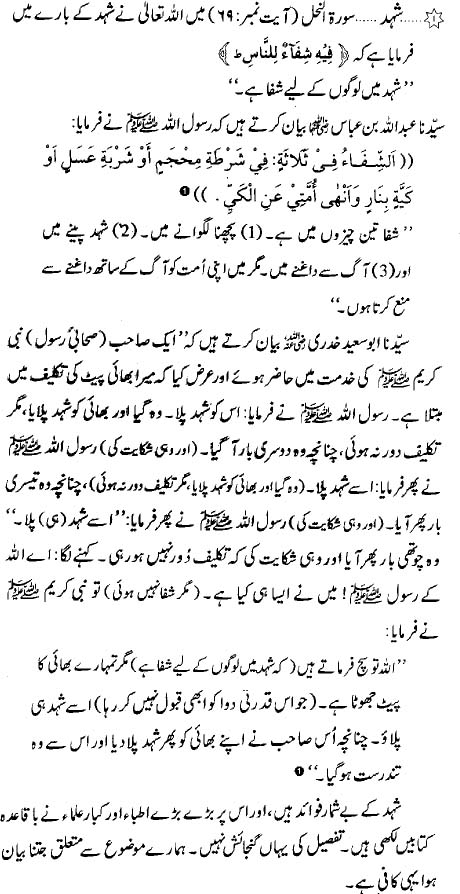
Tib-e-Nabvi: Shehad
How The Prophet Taught Moral Lessons
In Madinah, Prophet Muhammad (peace be upon him) used to set aside time every morning to teach his Companions. He was renowned for his eloquence and clarity of speech. He did not speak too quickly, and although his phrasing was precise, he did not speak slowly or in fragments with numerous pauses. It was easy for everyone to follow what he said.
A’ishah described his way of speaking as follows: “Allah’s Messenger did not ramble on the way you do these days. His speech was clear and precise. Those who listened to him easily remembered what he said.” [Sahih al-Bukhari (3568) and Sahih Muslim (2493)]
Almost every day, he would sit in the mosque in Madinah with his Companions gathered around him. He would often start a discussion by posing a question. Once, he asked: “Might I inform you of the gravest of major sins?” When his Companions replied in the affirmative, he said: “The gravest of major sins are to associate partners in worship with Allah, to disrespect your parents, and to bear false witness.” [Sahih al-Bukhari (2654)]
Sometimes, he posed questions to open their eyes to a new idea or perspective that they had not considered before. For instance, once he asked, “Do you know what it means to be bankrupt?” They replied that it means to possess neither money nor goods. He said: With respect to my followers, the one who is bankrupt is one who is brought forth on the day of judgment with prayers, fasts, and charity to his credit, but he had spoken ill of some people, falsely accused some people, misappropriated the wealth of others, and assaulted people or shed their blood. Those he had wronged will be compensated from his good deeds until he has no more to his credit. Then the remainder of those he had wronged will be compensated by having some of their sins placed on him. As a consequence, he is consigned to Hell. [Sahih Muslim (2581)]
Khana Khanay Ki Sunnatien
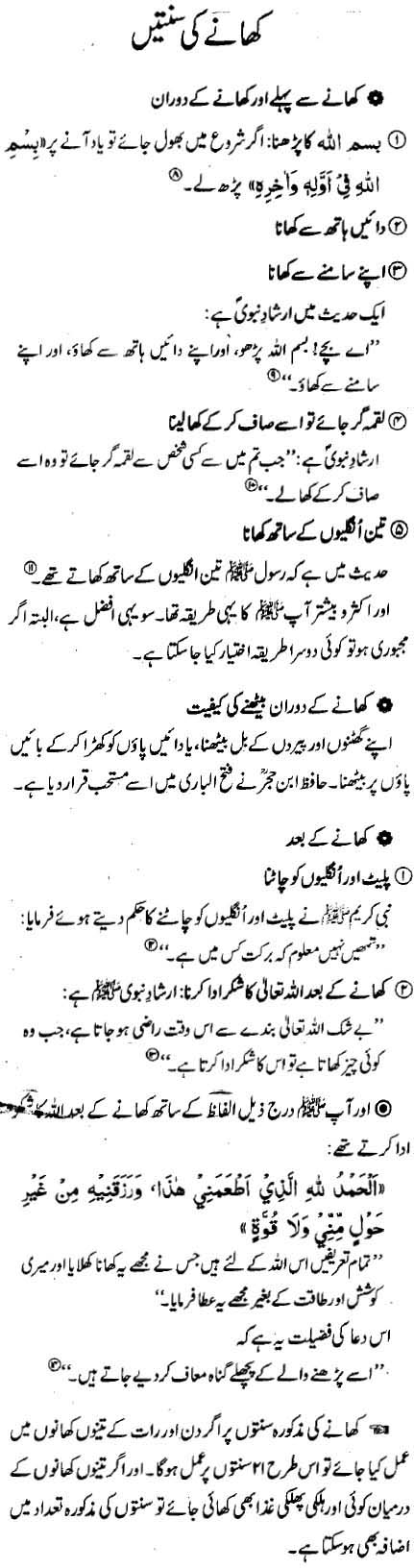
Khana Khanay Ki Sunnatien
Whoever Relies On Allah (Has Tawakkul), He Is Sufficient For Him
Abu Hurayra said that the Messenger of Allah said, “Allah Almighty said, ‘I have declared war on anyone who shows enmity to a friend of Mine. My slave does not draw near to Me with anything I love more than what I have made obligatory on him. And my slave continues to draw near to Me with supererogatory actions until I love him. When I love him, I become his hearing with which he hears, his seeing with which he sees, his hand with which he strikes, and his foot with which he walks. If he were to ask me for something, I would give it to him. If he were to ask me for refuge, I would give him refuge.'” (Al-Bukhari)
Tawakkul
Whoever relies on Allah (has Tawakkul), He is sufficient for him. (At-Talaaq 65:3)
Tawakkul is another attribute that results from a genuine Eeman in Allah Subhaanahu wa Ta`aala, as well as the hereafter and continual remembrance of both. It is an attitude that emanates from the conviction that: