

Truthfulness In Qur’an And Sunnah
“O you who believe! Be afraid of Allah, and be with those who are true (in words and deeds.)” (Qur’an, 9:119)
“Obedience (to Allah) and good words (were better for them). And when the matter (preparation for Jihad) is resolved on, then if they had been true to Allah, it would have been better for them.” (Qur’an, 47:21)
Prophet Muhammad (peace be upon him) said, “A true action leads to the path of virtue and good deeds, and virtue paves the way for a person to Paradise. A person continues to speak the truth till in the sight of Allah he is named Siddiq or Truthful. Lying leads to vice, and vice leads to indecent acts. A person continues to lie till in the sight of Allah he is named a liar.” (Bukhari and Muslim)
Prophet Muhammad (peace be upon him) said: “Leave alone that which puts thee in doubt, and adhere to that which is free from doubt, for truth is comforting and falsehood is disturbing.” (Tirmidhi)
The Prophet (peace be upon him) said about business transactions: “A sale agreement is revocable till the buyer and seller part company. If they tell the truth and disclose everything relevant to the transaction, it becomes full of blessings for both of them; but if they speak falsely and conceal what should be disclosed, the blessing of the transaction is withheld.” (Bukhari and Muslim).
Time: The Precious Asset
In one of the shortest and most powerful surahs, we are reminded that our whole existence in this life would be utterly wasted, futile, and pointless unless we have faith in Allah, act righteously, and join with others in encouraging truthfulness, patience, and perseverance (Al-Asr, 103).
During our lifetime, we will encounter hardship and prosperity, grief and happiness. Allah will test us, with success and with suffering, to see who is best in faith, to test our iman. To the believer, time is a wonderful asset, it is a chance to seek Allah’s mercy, to ask forgiveness, and to do more good deeds.
We must use our time wisely, because wasted time can never be recovered. Time and tide wait for no man. Time passes on, used or abused. And the two angels on our shoulders write down every action in our book of deeds.
Don’t we often wish that we could live our lives again from the start, so that we could put right the wrong things we did? And that our successes could be repeated over and over again? The very fact that we now want to forget our mistakes, or, we want to repeat our good deeds, shows that we have learnt from our experiences in time. Yes, Allah has placed Time at our service as our teacher: it is a teacher that allows good and bad things to happen. But the decision is made by our own free will.
If we look back in history, we will see that, in time, every unjust oppressor was destroyed. In time, good prevails over evil. But this comes only with effort and sacrifice. Thus the hard work, suffering, humility and perseverance of all the Prophets of Allah, helped justice to prevail over oppression.
Just think of Prophet Musa (Moses) and Pharaoh, or Prophet Muhammad (peace be upon him) and the tribe of Quraish. Thus Allah Almighty reminds us in the Qur’an:
Whoever does righteous good deeds, it is for (the benefit of) his own self: and whosoever does evil, it is against his own self…. (Fussilat 41: 46)
Time wears out and destroys all material things. But time itself was created by Allah. Allah Alone is the Master of time, and He punishes and rewards us in relation to how we use our time.
We have the power to use time to make our world a better place. But are we truly aware of the value of time? Does our use of the time show that we understand the purpose for which we were created? Do we fully realize that we cannot escape Allah’s judgment? Allah created us to serve Him and Him Alone, and all our actions must reflect this. Our actions must be in harmony with all other creatures, and must follow with the Divine Plan of Allah.
Certain forms of ibadah (worship) need to be observed at definite, prescribed times, such as our prayers, fasting, haj, and Jumu’ah. We cannot perform Jumu’ah at any time, according to our convenience, like on a Saturday or Sunday afternoon! Our daily routines must fit in with our Islamic duties that are time-related. This way, all our good actions will become an extension of our ibadah.
Time is valuable. Let s not waste it on vain conversations and petty arguments. Let s use our time creatively, to move forward, as individuals and as an Ummah. Every moment in time is a favor Allah bestows on us, and surely we must repay honor with honor.
We must express our gratitude to Allah Almighty by using every moment in His service, by teaching others, inviting others to good and, serving our less fortunate brothers and sisters in distress.
The Virtues of Umrah
In the Name of Allah Most Gracious Most Merciful Allah (swt) says: And complete the Hajj and Umrah in the service of Allah… (Al Baqarah, 196) Nabi (saw) has stated in a hadith: ‘The performance of Hajj and Umrah increase a person’s life span and eradicates poverty and sins just as rust is removed from the iron when placed in the furnace.’ (Targhib)
For this very same reason Imam An-Nawawi (rah) has written that if Allah (swt) grants the ability and guidance to a servant of His, it is Mustahab (preferred) to perform umrah frequently. (Sharah Manasik)
Hazrat Amar ibn Abassa (ra) relates: ‘Rasulullah (saw) stated that the best of deeds is the performance of Hajj or Umrah.’ (Musnad Ahmad)
It is also related in a hadith: ‘Umrah is the lesser Haj.’ (Duri Manzoor)
Abu Hurairah (ra) relates that Rasulullah (saw) stated: ‘One Umrah is expiation for the sins committed between that and the previous Umrah’ (Bukhari/Muslim) Meaning that the performance of one Umrah is the means of forgiving the sins and faults that may have been committed by an individual between that Umrah and the previous one.
Allah (swt) has determined for his servants the fact that Hajj can only be performed at its specified time, in the particular days of Dhil Hijjah. It is not possible for one to perform the rites of Hajj outside this time in any way, shape or form. However, Allah (swt) has blessed His servants with the fact that, aside from the 5 days of Hajj, there is no restriction on the performance of Umrah throughout the year.
It is narrated from Abu Hurairah (ra) Rasulullah (saw) stated: ‘The performers of Hajj and Umrah are guests of Allah (swt), if they seek something from Him, He will grant them, if they seek forgiveness He will forgive them.’ (Ibn Majah)
In another hadith it is related: ‘The performers of Hajj & Umrah are the special guests of Allah (swt), whatever they ask for they are granted and what they pray for it is granted to them and what they spend of they are rewarded for it. They are granted a recompense of 1,000,000 dirhams for the sake of 1 dirham spent.’ (Targhib)
It is for this very reason that we should, in the spare time that we have, endeavor to take our families to the blessed House of Allah (swt) and perform Umrah, stay in the blessed vicinity of the Haramain Sharifain and make it a means of attaching ourselves to Allah (swt) and his Prophet (saw), which is the foundation of our deen.
It is with these trips that one’s attention is directed towards the Akhirah and children are given the motivation to do good deeds and strive to improve their understanding of deen.
It is however unfortunate that in this day and age, due to not being aware of the blessings of such actions as Umrah, we prefer to take our families to the seaside where there is nudity and immodesty. The viewing of which removes hayah (modesty & bashfulness) from our wives, children and loved ones.
My friends, take heed, that those for whom you are responsible, who you take to/allow to go to places of immodesty, it is a right upon you that you teach them correct manners and etiquettes, in accordance with the Qur’an & Sunnah. The propagation and calling towards avenues other that those which are permitted in Shariah is against the orders of Allah (swt) and the teachings of his final Messenger (saw).
Allamah Mahmood Aalosi Baghdadi (rah) has related a hadith in his book: ‘On the day of Qiyamah, a few people (on whom the decision of Jahannum will be manifest) will be in such a state that by looking at them, the others will say… ‘these were those who did great feats of worship, but their loved ones devoured their deeds.’ (Roohul Ma’ani)
May Allah (swt) protect our Iman and grant us the guidance to do good deeds, Aameen Al –Kauthar
Mufti Yusuf Danka Al-Kauthar
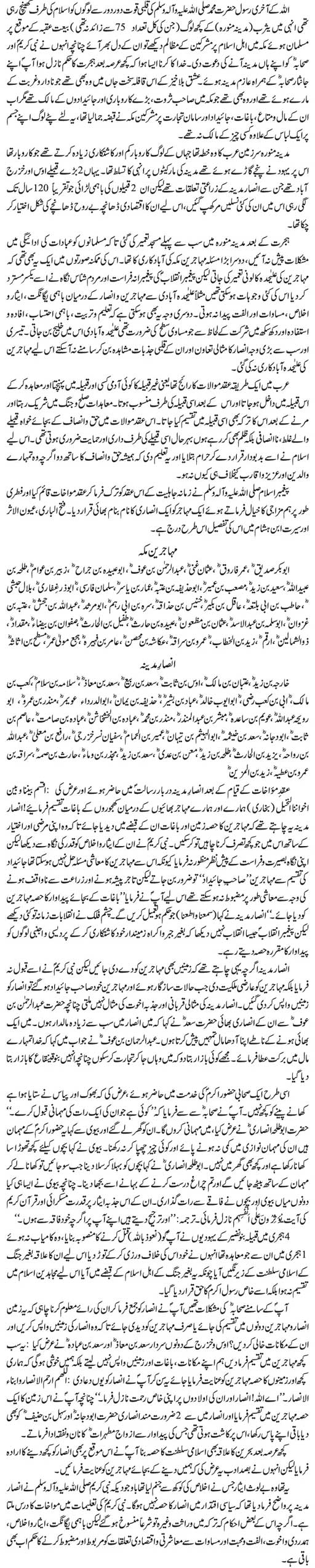
Akad Mawakhat
10 Tips To Be A Successful Husband
1. Dress up well for one’s wife:
Dress up for your wife, look clean, and smell good. When was the last time we men looked good to please our wives? Just like the husband wants his wife to look nice to him, she also wants her husband to dress up for her too. Remember that Rasulullah (sallallaahu alayhi wa sallam) – would always start with Miswak when returning home and always loved the sweetest smells.
2. Use likable names for your wife:
Use the cutest names for your wife. Rasul Allah – sal Allahu alayhi wa sallam – had nicknames for his wives, ones that they loved. Call your wife by the most beloved names to her, and avoid using names that hurt their feelings.
3. Recognize the good & focus on that:
Don’t treat her like a fly. We never think about a fly in our daily lives until it ‘bugs’ us. Similarly, a wife will do well all day – which brings no attention from the husband – until she does something to ‘bug’ him. Don’t treat her like this; recognize all the good that she does and focus on that.
4. Be silent on the wrongs:
If you see wrong from your wife, try being silent and do not comment! This is one of the ways Rasullullah( sallallaahu alayhi wa sallam) – used when he would see something inappropriate from his wives – radi Allahu ‘anhum. It’s a technique that few Muslim men have mastered.
5. Smile at your wife:
Smile at your wife whenever you see her and embrace her often. Smiling is Sadaqah and your wife is not exempt from the Muslim Ummah. Imagine life with her constantly seeing you smiling. Remember also those Ahadith when Rasullullah( sallallaahu alayhi wa sallam)- would kiss his wife before leaving for Salah, even if he was fasting.
6. Thank her:
Thank her for all that she does for you. Then thank her again! Take for example a dinner at your house. She makes the food, cleans the home, and does a dozen other tasks to prepare. And sometimes the only acknowledgment she receives is that there needed to be more salt in the soup. Don’t let that be; thank her!
7. Make her happy:
Ask her to write down the last ten things you did for her that made her happy. Then go and do them again. It may be hard to recognize what gives your wife pleasure. You don’t have to play a guessing game, ask her and work on repeating those times in your Life.
8. Comfort her:
Don’t belittle her desires. Comfort her. Sometimes the men may look down upon the requests of their wives. Rasullullah( sallallaahu alayhi wa sallam) set the example for us in an incident when Safiyyah – radi Allahu ‘anha – was crying because, as she said, he had put her on a slow camel. He wiped her tears, comforted her, and brought her the camel.
9. Be humorous:
Be humorous and Play games with your wife. Look at how Rasul Allah – sal Allahu alayhi wa sallam – would race his wife Aisha -radi Allahu ‘anha – in the desert. When was the last time we did something like that?
10. Try to be the Best:
Always remember the words of Allah’s Messenger – sal Allahu alayhi wa sallam: “The best of you are those who treat their families the best. And I am the best amongst you to my family.” Try to be the best!
In conclusion: Never forget to make Dua to Allah – azza wa jall – to make your marriage successful.
And Allah ta’ala knows best !!
Good Deeds That We Can Do Every Day To Increase Our Hasanaat
Praise be to Allah.
If Allah helps him to do righteous deeds, the Muslim can earn a great deal of reward.
There are many different kinds of righteous deeds that can be done by rich and poor, old and young, male and female, depending on each person’s circumstances, ambition and energy, after the help of Allah.
Allah says (interpretation of the meaning):
“Whoever works righteousness — whether male or female — while he (or she) is a true believer (of Islamic Monotheism) verily, to him We will give a good life (in this world with respect, contentment and lawful provision), and We shall pay them certainly a reward in proportion to the best of what they used to do (i.e. Paradise in the Hereafter)”
[al-Nahl 16:97]
It was narrated from Abu Hurayrah that the Messenger of Allah (peace and blessings of Allah be upon him) said: “Hasten to do good deeds before there come tribulations like pieces of a dark night, when a man will be a believer in the morning and a kaafir by evening, or he will be a believer in the evening and a kaafir by morning, selling his religious commitment for worldly gain.” Narrated by Muslim, 118.
The kinds of good deeds that a person can do every day include the following:
1 – Praying in congregation in the mosque
It was narrated from Abu Hurayrah that the Prophet (peace and blessings of Allah be upon him) said: “Whoever goes to the mosque in the morning and evening, Allah will prepare for him an honorable place in Paradise every time he goes and comes.”
Narrated by al-Bukhaari, 631; Muslim, 669.
2 – Attending funerals and offering the funeral prayer
It was narrated that Abu Hurayrah (may Allah be pleased with him) said: The Messenger of Allah (peace and blessings of Allah be upon him) said: “Whoever attends a funeral until he offers the (funeral) prayer will have one qiraat (of reward) and whoever attends until the burial is done will have two qiraats.” It was said: “What are the two qiraats?” He said: “Like two great mountains.”
Narrated by al-Bukhaari, 1261; Muslim, 945
Parenting: Islam’s Positive Approach
One of the greatest challenges a Muslim will ever face is being a parent. This is one challenge, however, many of us are least prepared for. Allah tells us in the Qur’an that our children are our trial and as such we should take the task of parenting seriously, and start learning from each other. In my experience in dealing with my own family and counseling other Muslim families, a model has developed based on what I call “The Positive Approach”.
Compassion (Rahmah)
Prophet Muhammad (peace be upon him) stated: “He is not of us who does not have compassion for his fellow beings.” It is interesting to note that when it comes to Hadith like this or Qur’anic quotes dealing with human behavior, we never stop to think that our children and family members are also our fellow human beings and that these golden rules must also be applied to them. Compassion is only one component of the concept of mercy (rahmah) — the others being kindness, respect, and of course love. Remember the displeasure of Prophet Muhammad (peace be upon him) when Al-Aqra Ibn Habis told him how he had never kissed any of his 10 children. Upon hearing that Prophet Muhammad (peace be upon him) told him, “You have no mercy and tenderness at all. Those who do not show mercy to others will not have God’s mercy shown to them.”
Consultation (Shoura)
The Prophet (peace be upon him) has related that Allah says: “Oh My servant. I look on high-handedness as something not permissible for Myself, and I have forbidden it for you. So do not oppress each other”. When we consult with each other in the domestic realm, both husband and wife must show respect for each other. This is one of the best ways to bond and to learn and listen to each other and to resolve conflicts. However, the consultation will only be fruitful if it is sincere and not merely a formality. Imposition of one’s ideas with scant regard to the welfare of the whole family unit defeats the purpose of the most important Qur’anic principle.
Cooperation
The concept of cooperation in Islam is most beautifully illustrated in Surah Al-Asr : “… counsel each other to the truth (haq), and counsel each other to patience and fortitude (sabr)”. When a family unit cooperates in this manner, they truly capture the spirit of Islam — the welfare of each member of the family becomes the concern of the other.
Commitment
It is extremely important that our families commit themselves as a unit to Allah and His Prophet (peace be upon him ): “Obey Allah and His Prophet and those in authority over you” (Surah An-Nisa). This collective commitment gives us an identity and maps out our purpose — namely that we all belong to Allah and are accountable and responsible to Him.
Musalmano Kay Chand Haqooq

The Excellence Of Reciting The Qur’an
Quran as an Intercessor
Abu Umamah (May Allah be pleased with him) reported: I heard the Messenger of Allah (PBUH) saying, ” Read the Qur’an, for it will come as an intercessor for its reciters on the Day of Resurrection .”
[Muslim].
Commentary: This Hadith tells the excellence of reciting the Qur’an and acting upon its injunctions. Intercession (in this Hadath) means that the Qur’an will be endowed with the power of speech by Allah and it will request Allah to forgive the sins of its reciters who acted upon its teachings. Allah will accept the request of the Qur’an, as signified in other Ahadith.
Quran on the day of Resurrection
An-Nawwas bin Sam`an (May Allah be pleased with him) reported: I heard the Messenger of Allah (PBUH) saying, ” The Qur’an and its people who applied it, will be brought on the Day of Resurrection preceded with Surat Al-Baqarah and Surat Al-`Imran arguing on behalf of those who applied them .”
[Muslim].
Commentary: This Hadith means that on the Day of Requital, the Qur’an, with Surat Al-Baqarah and Al-`Imran in the forefront, will intercede before Allah for those who used to recite and act upon them in the life of the world.
`Abdullah bin `Amr bin Al-`As (May Allah be pleased with them) reported: The Prophet (PBUH) said, ” The one who was devoted to the Qur’an will be told on the Day of Resurrection: `Recite and ascend (in ranks) as you used to recite when you were in the world. Your rank will be at the last Ayah you recite .”’
[Abu Dawud and At-Tirmidhi].
Commentary: This Hadith mentions the merit of those who commit the Qur’an (whole or part thereof ) to memory ( Huffaz). The word `ascend’ here means to rise in ranks in the Jannah. The more one remembers the Qur’an, the more clear and distinct is his recitation of it, the higher would be the status that he will go on attaining through its blessings. Thus, this Hadith provides inducement for the remembrance of the Qur’an and tells us that its frequent recitation is a means to attain higher ranks in Jannah.