

TAG: Halal
Rizq-e-Halal
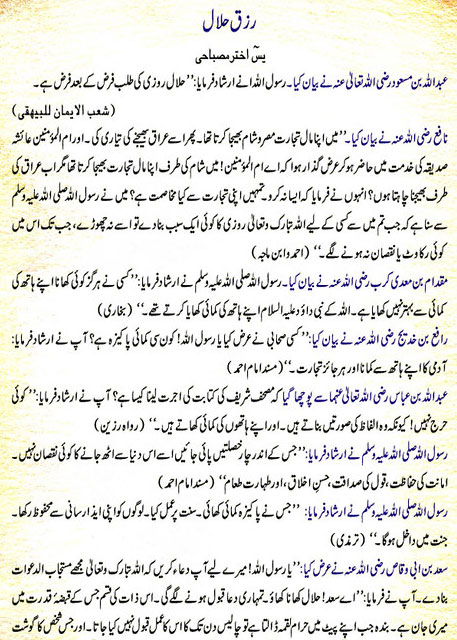
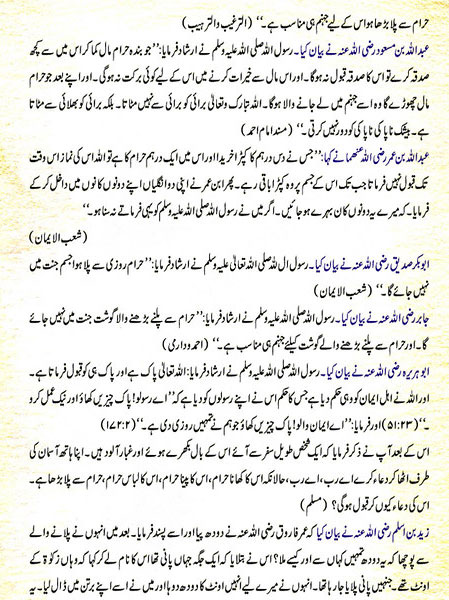
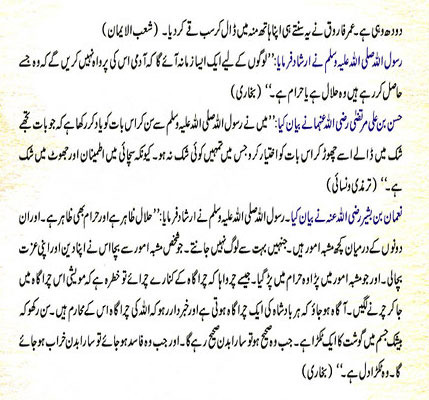
Halal Ki Targheeb Aur Haram Ki Muzammat
حلال کی ترغیب اور حرام کی مذمت
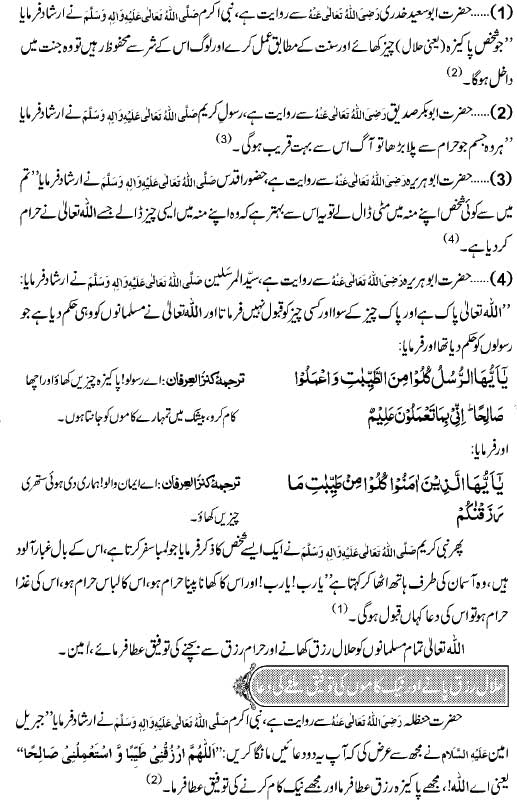
Rizq-e-Halal Kay Fazail
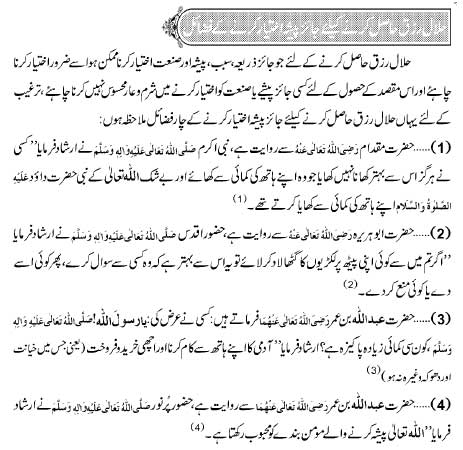
حلال رزق حاصل کرنے کے لۓ جائز پیشہ اختیار کرنے کے فضائلِ
Rizq-e-Halal Kay Fawaid
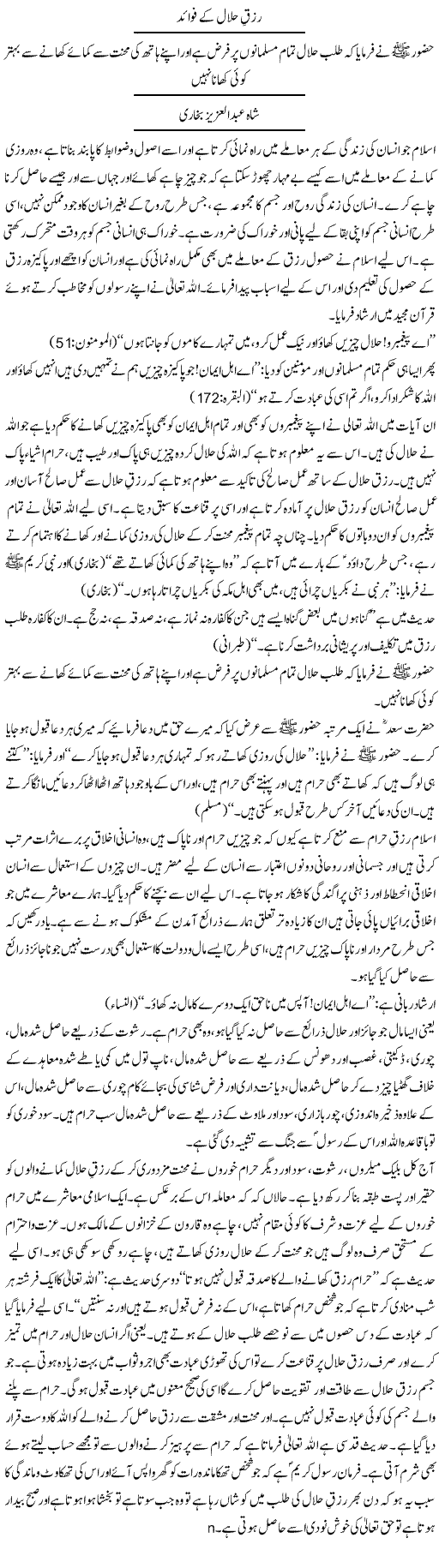
Seeking Halal Earning
According to Abdullah ibn Masud (Allah be pleased with him), the Prophet Muhammad (peace be upon him), said: ‘Seeking halal earning is a duty after the duty.’ In other words working to earn a halal living is itself a religious obligation second in importance after the primary religious obligations like prayers, fasting and Hajj.
This brief Hadith contains three very important messages. First, it points to the Islamic way out of the apparent dichotomy between the material and the spiritual worlds. We often see them working in opposite directions. Indulgence in the material world does lead one away from the spiritual world. Spiritual uplifting seems to accompany a tendency to distance oneself from the material pleasures. There is a conflict, but is there a contradiction also? Is it possible to resolve the conflict in a way that one can take care of both? Or are they mutually exclusive? This has been a central question for all religions and many in the past suggested the second answer, making hermits as the ideal for the humanity. Unfortunately not much humanity is left when one moves too far in this direction. One can read today the horror stories of monks, among others, who tried to seek spiritual purification this way.
As a reaction, others took the other course, making material pleasures the goal of this life. The Western civilization today is the prime example of that. Its toll on human spirit and morality is well known and is a constant reminder that something is wrong here as well.
In between the two extremes Islam points out the Straight Path. Man is both a material and a spiritual being. The solution does not lie in denying the material needs and desires but in denying their claim to primacy. They are part of being but not the reason or goal of being. As long as they are kept in place, they are an important part of our life. The problem is not money but the love of it. Wealth itself is not bad. In fact Qur’an refers to it as ‘ … your property which Allah has made for you a means of support for you . ..’ [Al-Nisa, 4:5]. And another Hadith praises the merits of ‘the halal wealth of a pious person.’ The effort to earn a living is not only not against spirituality, it is a religious obligation!
But this earning must be through halal means. This is the second message of this Hadith. Our obligation is not just to make money but to make halal money. This is a broad statement that is the basis for Islamization of a society’s economic life. Not every business idea or possible business enterprise is good for the society. And the decision regarding right and wrong here cannot be left to the so-called market forces. Right and wrong in the economic life, as in all life, must be determined by a higher source. Shariah guides us as to the halal and haram business enterprises and practices, and at both individual and collective levels we must follow that guidance.