TAG: Masjid
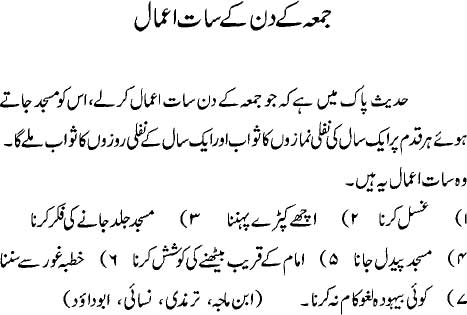
Jumma Kay Din Kay Saat Aamal

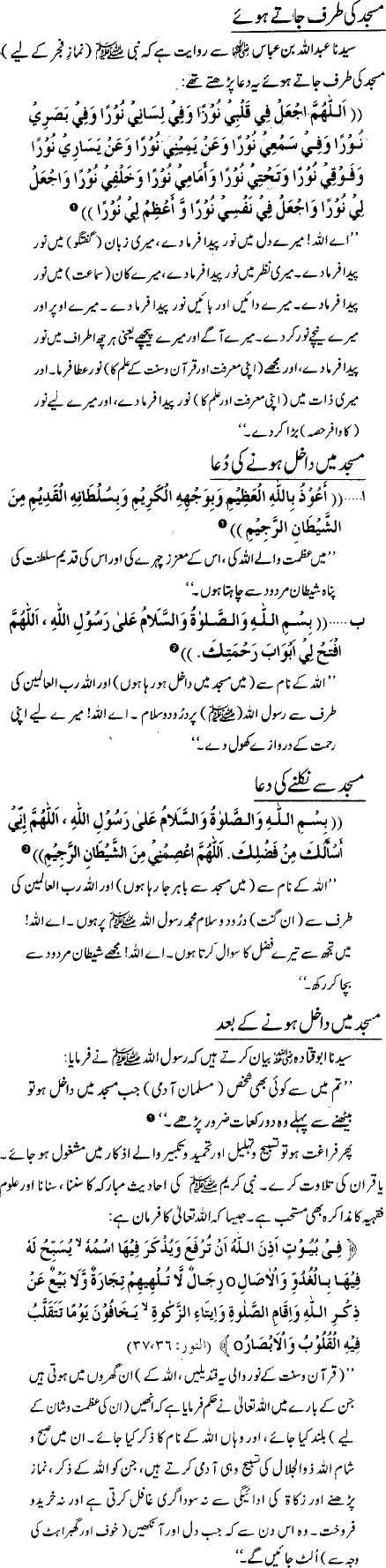
Masjid Mein Dakhil Hone Aur Bahar Aane Ki

Masjid

Khulfa-e-Rashideen Ki Namaz

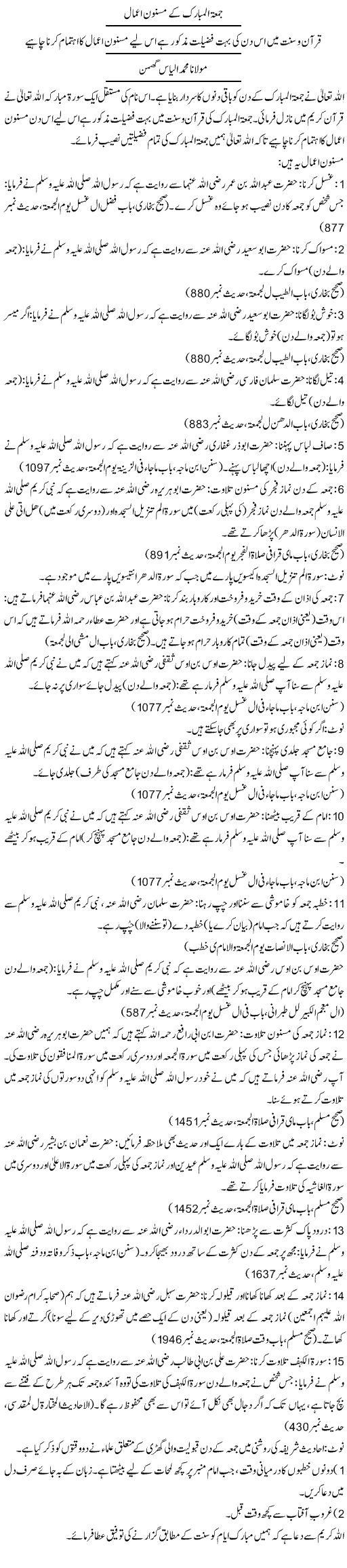
Jumma Mubarak Kay Masnoon Amaal

Namaz Aur Masjid Kay Aadaab

Occasions On Which To Recite Durood Sharif
It should be remembered that it is compulsory to write or recite Durood when writing the name of Rasulullaah صلى الله عليه وسلم,
or when saying his name. This is greatly emphasized in the Hadith and there are grave warnings for the person who goes against this teaching. Also, it is necessary to write the entire Durood after the name of Rasulullaah صلى الله عليه وسلم. The command of Durood will not be fulfilled by writing (saw) or any other shortened form, nor will a person get reward.
يَا رَبِّ صَلِّ وَ سَلَّمِ دَائِمًا اَبَدًا عَلٰى حَبِيْبِكَ خَيْرِ الْخَلْقِ كُلِّهِمْ
1. When passing by a Masjid.
2. When seeing a Masjid.
3. After completing Azaan.
4. On the night of Jumu’ah.
5. On the day of Jumu’ah.
6. On the day of Jumu’ah after Asr.
7. On Monday.
8. In the khutbah of Jumu’a and Eid.
9. During the Takbeeraat of Eid.
10. After the second Takbeer of Janazah Salaah.
11. When placing the deceased into the grave.
12. In the Salaah of Istisqaa-for rain.
13. In the khutbah of Kusoof and Khusoof.
14. When seeing the ka’bah.
15. During Hajj.
16. On Safa and Marwa.
17. When making istilaam of the Hijr e Aswad.
18. At the Multazam.
19. After Zuhr on the day of ‘arafah.
20. In Masjid e Khayf.
21. After completing Talbiyah.
22. When seeing Madinah Munawwarah.
23. When visiting the blessed grave.
24. When completing and leaving the visiting of the blessed grave.
25. When witnessing the signs of Madinah Munawwarah.
26. At Badr.
27. At Uhud etc.
28. In all conditions and at every time.
29. In order to be free from something grave.
30. When meeting relatives and those beloved to one.
31. When going to a gathering.
32. When leaving and separating from a gathering.
33. When completing the Qur’an (at the time of Du’aa).
34. In the Du’aa for memorizing the Qur’an.
35. When getting up from a gathering.
36. Every time when Allah is remembered.
37. When beginning every speech.
38. When mentioning and remembering Rasulullaah e.
39. At the time when spreading and teaching knowledge.
40. When delivering a lecture.
41. When reciting Ahadith.
42. When writing a fatwa.
43. When writing the name of Rasulullaah صلى الله عليه وسلم
The Virtues Of Sitting In The Masjid
The Prophet (saas) Said:
“… Then when he enters the Masjid, he is in (the state of) prayer as long as it is the only thing keeping him from leaving (i.e., the only reason why he is staying in the Masjid is to wait for the next prayer). And the Angels send prayers upon one of you as long as he is in the seat (spot) that he prayed in; they say, ‘O Allah, have mercy on him; O Allah, forgive him; Allah, accept his repentance,’ as long as he does not harm anyone (with speech or deed) while he is in it , and as long as he does not nullify his state of purity (i.e., by passing wind, etc..)..”” 1
From Allah’s vast mercy to His slaves, He (swt) gives them a reward similar to the person who is praying, just for sitting in the Masjid and waiting for the next congregational prayer; furthermore, He (swt) makes His angels supplicate for them.
We must keep in mind that, as the Hadith informs us, certain conditions must be fulfilled if you are to achieve the aforesaid reward and honor. First, nothing other than the prayer should be preventing you from going back to your home or work or elsewhere. Second, for the angels to supplicate for you, you must remain seated in the spot you prayed in. However, another view is that their supplication encompasses both those who wait for the prayer anywhere in the Masjid and those who remain seated in the spot they prayed in. The Phrasing of the Hadith points to the first view being correct. If you harm Muslim worshipers with speech or deed, or if you do something to nullify your state of purity (i.e., pass wind,etc.), you will not gain the reward of a person who waits for prayer, and the angels will not make the aforementioned supplication for you.
Related Issue: Many people fail to take advantage of a blessed time – the time between the Adhaan (the call to prayer) and the Iqaamah. You will find some people who spend that time looking around at worshipers who are praying or reciting the Qur’an; others who stare idly at the carvings in the Masjid; and yet others who daydream. They would all do much better were they to use that time by reciting the Qur’an, remembering Allah (swt), and supplication to Allah (swt) especially considering the fact that it is a time wherein one is likely to have his supplications answered.
________________________
1) Related by Bukhaaree (176), Muslim (649), Ahmad (7382), An-Nassaaee (733), Abu Daawood (559), and Maalik (382). And the wording mentioned above is from Muslim’s narration of the Hadith
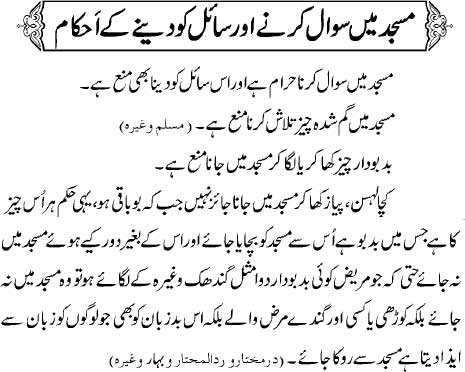
Masjid kay Fazail Aur Adaab