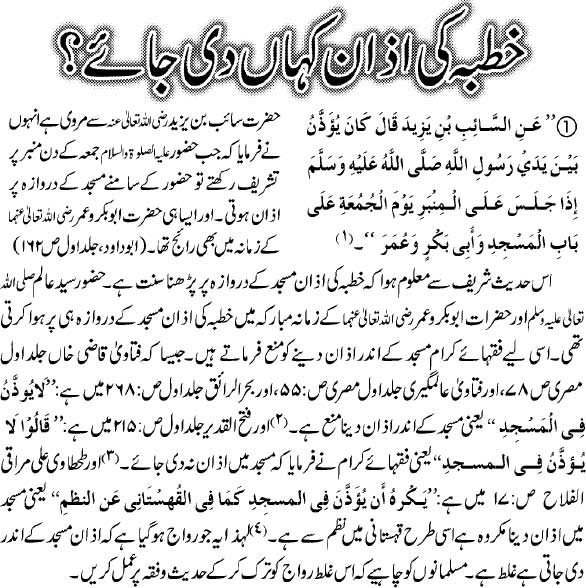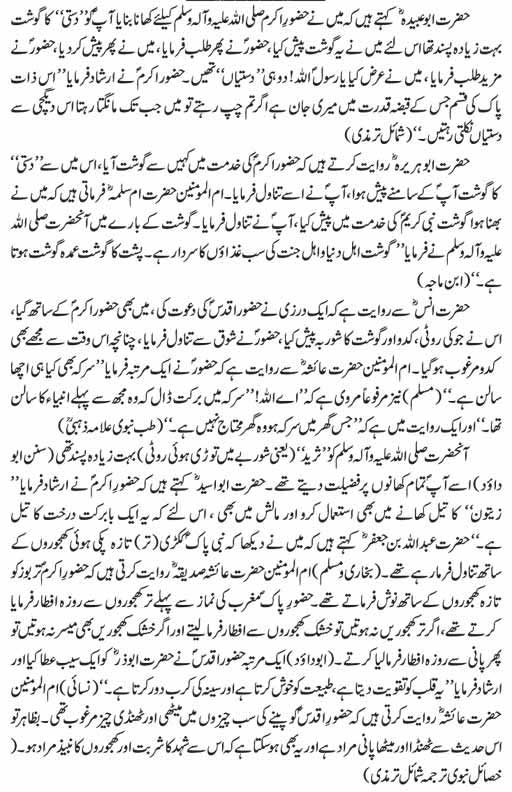
Jumah: Khutba Ki Azan


The wisdom is that by shaving off one’s hair, one demonstrates one’s sincerity and humility to Almighty Allah without caring for one’s physical appearance.
This practice of shaving or clipping the hair is affirmed by the Qur’an, the Sunnah of the Prophet, and the consensus of the Muslim scholars.
Almighty Allah says: “Indeed Allah shall fulfill the true vision which He showed to His Messenger (peace be upon him) [ i.e. the Prophet saw a dream that he has entered Makkah along with his Companions, having their (head) hair shaved and cut short] in very truth…” (48:27)
Both Al-Bukhari and Muslim quote the Prophet (peace be upon him) as saying, “May Allah bless those who shaved (their head during Haj).” The Companions asked, “O Messenger of Allah, what about those who cut their hair short?” Thereupon the Prophet (peace be upon him) said, “May Allah bless those who shaved.” They repeated their question the third time, and again the Prophet said, “May Allah bless those who shaved.” When they asked him for the fourth time, “O Messenger of Allah, what about those who clip their hair short?” He said, “And (may Allah bless) those who clip their hair short.”
Shaving here means removing hair of the head with a razor, etc., or plucking them out. It suffices, however, to remove only as many as three hair. And cutting the hair short means cutting the length of one fingertip of the head’s hair.
However, the issue of which one is obligatory, between shaving or cutting hair short, is controversial among jurists. Most scholars hold that shaving or cutting the hair short is obligatory, and one failing to do so is to slaughter an animal in order to atone for this omission.
According to the Shafi’i school, it is an integral part of Haj.
The companions of the Prophet (peace be upon him) were keen to give us a full picture of the Prophet’s actions, practices, and habits, knowing that this is all part of the guidance he was sent to deliver. They realized that some of his actions were no more than a personal approach and that we have free choice in these. Nevertheless, they wanted to transmit a full picture of his behavior. They realized that even in personal matters, his choices were good ones. God made his nature always inclining toward what is good and beneficial. Moreover, they told us how they behaved in his presence in order to transmit a picture of what life was like in the community he established, which was fundamentally different from the tribal society that prevailed in Arabia before the advent of Islam.
Jabir ibn Abdullah reports: “When we had a meal with the Prophet, we would not start unless he was the first to start.” (Related by Ahmad, Al-Hakim and Abu Al-Shaykh). This Hadith tells us of the good manners of the Prophet’s companions and the respect they showed to the Prophet. They might be hungry and the food is placed before them, but they would not touch it until he started. Indeed, this sort of manner continued to be practiced in the Muslim community. Children would not start eating before their parents, particularly when they are grown up. When some people are having dinner, the most distinguished personality is normally the one to start. When he begins to take food into his plate, others would follow.
During the Prophet’s lifetime, the Arabs normally ate with their hands. They did not have the sort of cutlery we use nowadays. They held a piece of bread in their fingers and scooped some food to lift it to their mouths, eating it with the piece of bread. Some of the sauce or the fat might stick to their fingers during the meal. Hence, it is important to wash one’s hands before eating. People also wiped or washed their hands after the meal. The Prophet’s companions told us how he ate. Thus, Kaab ibn Malik tells us: “The Prophet used to eat his food using three fingers. He did not wipe his hand until he had licked it.” (Related by Ahmad, Muslim, Abu Dawood and Al-Tirmidhi). There are other Hadiths confirming this practice. Anas reports: “When the Prophet had finished eating, he would lick his three fingers.” (Related by Ahmad, Muslim, Abu Dawood and Al-Tirmidhi)
Kaab ibn Ujrah reports: “I saw the Prophet eating with his three fingers, his thumb, the one next to it and the middle finger, and I saw him licking his three fingers before wiping them.” (Related by Abu Al-Shaykh, Al-Tabarani and Ibn Saad).
These Hadiths give us a picture of a proper approach to food. Using three fingers means that one scoops a small amount. This is better than using one’s whole hand, taking a rather large piece of bread, and lifting more of the food in one bite. People who do that show an unsightly appearance, with their mouths being too full, like gluttons. On the other hand, licking one’s fingers is another aspect of being grateful to God for providing us with the food we need to survive. It means that we do not wash away or waste any portion of food, however small.
The Prophet’s food was always very simple. It was placed on the floor, and no elaborate means were used to give it a refined taste. This is clear from the following Hadiths: Anas ibn Malik reports: “The Prophet never ate at a high table, nor did he eat in small plates. Never was thin bread baked for him.” Someone asked: “On what did they serve their food, then?” The answer was: “On mats placed on the floor.” (Related by Ahmad, Al-Bukhari, Al-Tirmidhi and Ibn Majah). This Hadith shows how simple the Prophet’s life was. He could have had all the luxuries he wanted, but he never looked for any standard higher than what was easily affordable by ordinary people in his community.
Anas said: “The Prophet (peace be upon him) never ate thinly baked bread; nor did he eat of a sheep whose hair was removed by boiling water .” (Related by Ahmad, Al-Bukhari and Ibn Majah). Such elaborate preparations were not used in cooking the Prophet’s food. He preferred a simple life, with no refinements. This does not mean that he did not like what was comfortable, or refined or tasty. His approach was that whatever was easily available and simply prepared, giving no trouble to anyone, was good enough for him.
Sahl ibn Saad, a companion of the Prophet, was asked by Abu Hazim whether the Prophet ate bread made with refined flour. He answered: “The Prophet never saw refined flour from the day God sent him with His message to the day when God gathered his soul.” Abu Hazim asked: “Did you have sieves during the Prophet’s lifetime?” He said: “Never did the Prophet see a sieve from the first day of his mission to the day when God gathered his soul.” Abu Hazim asked: “How did you, then, eat barley without using sieves (to remove the outer skin and dirt)?” He said: “We used to grind it and blow the dirt away. Much of that was blown off, and we then used water to remove more before we prepared it to eat.” (Related by Ahmad, Al-Bukhari, Al-Tirmidhi and Ibn Majah).
Such a simple and contented approach to food needs no comment from us. While we enjoy a great variety of foods today, with fruits and other products brought from all over the world to make everything available in all seasons, we need to show our gratitude to God for blessing us with such plenty. We must never forget that many millions of people hardly find enough to eat. Many suffer from poor diet and from famine. We must always remember this, thank God for what He has given us, and ensure that we try our best to relieve the suffering of those who do not have enough. Otherwise, we will be questioned by God and we have to account to Him for our failure to help those in need of help.

Narrated by Abu Huraira, The Prophet (sallallahu alaihe wa-sallam) said “Avoid the seven great destructive sins” the people asked O Allah Messenger ! what are they? He said, “To join others in worship along with Allah, to practice sorcery, to kill the life which Allah has forbidden except for a just cause, to eat up Riba (usury, interest), to eat up an orphan’s wealth, to show one’s back to the enemy and fleeing from the battlefield at the time of fighting and to accuse chaste women, who never even think of anything touching their chastity and are true believers”.[19]
Narrated by Abdullah bin Amr that the Prophet (sallallahu alaihe wa-sallam) said “Whoever has the following four (characteristics) will be a pure hypocrite and whoever has one of the following four characteristics will have one characteristic of hypocrisy unless and until he gives it up.
1. Whenever he is entrusted, he betrays (proves dishonest).
2. Whenever he speaks, he tells a lie.
3. Whenever he makes a covenant, he proves treacherous.
4. Whenever he quarrels, he behaves in a very imprudent, evil, and insulting manner.” [20]
Narrated by ‘Aishah that the Prophet (sallallahu alaihe wa-sallam) said “The most hated person to Allah is the one who is most quarrelsome of the opponents” [21]
Narrated by Abu Huraira that Allah’s Messenger (sallallahu alaihe wa-sallam) said “Part of a man’s good observance of Islam is that he leaves the things which do not concern him” ( i.e. avoiding interference with other’s matters).[22]
Narrated by Ibn Abbas that Allah Messenger (sallallahu alaihe wa-sallam) passed by two graves and said “Both of them are being tortured, and they are not being tortured for a major sin. This one used not to save himself from being soiled with his urine, and the other used to go about with calumnies” [23]
The Qur’an: Narrated by Uthman, The Prophet (sallallahu alaihe wa-sallam) said: “The best among you (Muslims) are those who learn the Qur’an and teach it (to others).” [24]
Ibn Masood reported that the Prophet (sallallahu alaihe wa-sallam) once said: “Whoever reads a single letter from Allah’s Book will receive a blessing and each blessing is worth ten times its value.”[25] Abu Umaamah reported that the Prophet (sallallahu alaihe wa-sallam) said “Recite the Qur’an for verily on the Day of Resurrection it will act as an intercessor for its companions (those who read it often).[26]
Prayer ( Salat ) [27] To offer salat at its appointed time as narrated by Abdullah ibn Masud ‘I asked the Prophet (sallallahu alaihe wa-sallam) Which deed is the dearest to Allah? He said, “To performs-Salat at their early fixed times……. “[28] Bearing in mind salat is to performed as the prophet ordered us to pray “Perform your salat the way you see me performing them” [29]
Fasting (Saum) and Charity (Sadaqah)[30] Mu’adh bin Jabal narrates: “The Prophet (sallallahu alaihe wa-sallam) said to him “May I show you the gates of goodness? (They are) Fasting is a screen from hell, As-Sadaqah extinguishes the sins as the water extinguishes the fire, Standing in prayer by a slave of Allah during the last third part (Tahajjud) of a night” Then the Prophet (sallallahu alaihe wa-sallam) recited (V.32:16) “Their sides forsake their beds”.[31]
Abu Huraira narrates that the Prophet (sallallahu alaihe wa-sallam) said “Every day two angels come down from heaven and one of them says ‘O Allah! Compensate every person who spends in your cause,’ and the other (angel) says, ‘O Allah! Destroy every miser.'” [32]
Seeking Knowledge
Reported by Anas “Seeking knowledge is obligatory on every Muslim” [33]
Reported by Abu ad-Dardaa that he heard the Prophet (sallallahu alaihe wa-sallam) say “If anyone travels on a road in search of knowledge, Allah will cause him to travel on one of the roads of paradise. The angels will lower their wings because of their pleasure with one who seeks knowledge, and forgiveness will be asked for him by the inhabitants of the heavens and earth and the fish in the depth of the oceans…” [34]
Adhering to the Sunnah
Reported by Abu Huraira that the Prophet (sallallahu alaihe wa-sallam) said “I have left with you two things, if you hold on firmly to them, you will never go astray; Allah’s Book and my Sunnah.” [35] Abu Huraira narrates that Allah’s Messenger (sallallahu alaihe wa-sallam) said, “All my Ummah will enter paradise except those who refuse” They asked O Allah’s Messenger! who will refuse? He Said “Whoever obeys me will enter paradise, and whoever disobeys me is the one who refuses (to enter paradise)” [36]
Avoiding Bidah (Innovation)
Abdullah ibn Masoud relates that Allah’s Messenger (Pubh) drew a line for them one day and then Said “This is Allah’s path”, then he drew several lines (branching off) to the right and to the left and said, “These are the paths (of Misguidance) on each of which is a devil inviting people to follow it” and then he recited (the verse) “Verily this is my path, leading straight, so follow it. And do not follow the (other) paths for they will scatter you about from (Allah’s) path. This is His Command to you in order that you may be conscious of Allah.[37]”[38]
Aisha reported that the Prophet (sallallahu alaihe wa-sallam) said “Whoever introduces something new into this religion of ours which does not belong in it will have it rejected” [39] (i.e., it will not be accepted by Allah.
Imitating the Kufaar
The Prophet (sallallahu alaihe wa-sallam) has warned us in regards to imitating the Kufaar, Abu Saeed al-Khudree reported that Allah’s Messenger (sallallahu alaihe wa-sallam) said: “You will follow the practices of your predecessors, inch by inch and yard by yard, so much so that if they were to enter a lizard’s hole you would also follow them.” He then asked if he meant the Jews and the Christians and He replied “Who Else?” [40] The Prophet (sallallahu alaihe wa-sallam) also warned us saying: “Whoever resembles a people, he is one of them” [41] The Prophet (sallallahu alaihe wa-sallam) also cursed men who tried to resemble woman and women who tried to resemble men.[42]
We ask Allah, the Highest, that He turns the misguided of this Ummah back to the guidance, and that he makes us all support one another and aid one another in carrying out good and righteousness until we return to this Ummah its lost glory and honor, Indeed He is fully able and have the power to do that.
The time for celebration is here. The Prophet (peace be upon him) said, “There is an Eid for every nation and this is our Eid.” (Al-Bukhari)
Here are some of the Sunnah acts of Eid:
Doing Ghusl before going out to the prayer
It was narrated in a Saheeh Hadeeth in Al-Muwatta’ and elsewhere that Abdullah Bin Umar used to do Ghusl on the day of Al-Fitr before going out to the prayer-place in the morning. (Al-Muwatta’ 428)
Al-Nawawi said Muslims were unanimously agreed that it is Mustahabb (recommended) to do Ghusl for Eid prayer.
Eating after the prayer on Eid Al-Adha
On Eid Al-Adha it is recommended not to eat anything until one comes back from the prayer, so as to eat from the sacrifice if he has offered one. If he is not offering a sacrifice then there is nothing wrong with eating before the prayer.
As for Eid Al-Fitr, it is recommended to eat some dates before going to the prayer.
Takbeer on the day of Eid
This is one of the greatest Sunnahs on the day of Eid.
Al-Daraqutni and others narrated that on the morning of Eid Al-Fitr and Eid Al-Adha, Ibn Umar would be excessively engaged in reciting Takbeer until he came to the prayer place, then he would recite Takbeer until the Imam came out.
Saying Takbeer when coming out of one’s house to the prayer place and until the Imam came out was something that was well known among the early generations. This has been narrated by a number of scholars.
In the case of Eid Al-Adha, the Takbeer begins on the first day of Dhul-Hijjah and lasts until sunset on the last of the days of Tashreeq.
Description of Takbeer
It was narrated in the Musannaf of Ibn Abi Shaybah with an authentic chain from Ibn Mas’ood (may Allah be pleased with him) that he used to recite the following Takbeer during the days of Tashreeq:
Allahu Akbar, Allahu Akbar, Laa ilaha illAllah, wa Allahu Akbar, Allahu Akbar, Wa Lillaahil-Hamd
Meaning: Allah is Most Great, Allah is Most Great, there is no god but Allah, Allah is Most Great, Allah is Most Great, and to Allah be praise.
Al-Mahamili also narrated the following with an authentic chain from Ibn Mas’ood:
“Allahu Akbar Kabeera, Allahu Akbar Kabeera, Allahu Akbar Wa Ajall, Allahu Akbar Wa Lillaahil-Hamd.” (Al-Irwa’, 3/126)
Greeting each other
The etiquette of Eid also includes congratulating and exchanging good wishes by people, with any permissible expressions of congratulations.
Jubayr Ibn Nufayr said when the companions of the Prophet (peace be upon him) met one another on the day of Eid, they would say to one another, “Taqabbal Allah Minna Wa Minkum,” which means, “May Allah accept (good deeds) from us and from you.” (Al-Fath, 2/446)
Adorning oneself on Eid
Jabir (may Allah be pleased with him) narrated that the Prophet (peace be upon him) had a cloak which he would wear on the two Eids and on Fridays. (Saheeh Ibn Khuzaymah, 1756) Al-Bayhaqi narrated with an authentic chain that Ibn Umar used to wear his best clothes on Eid.
Choosing different routes
Jabir Ibn Abdullah narrated that on the day of Eid, the Prophet (peace be upon him) used to vary his route. (Al-Bukhari, 986)
This was done so that the two routes would bear witness for him on the Day of Resurrection, as the earth will speak on the Day of Resurrection and say what was done on it, both good and bad.
And also to manifest the symbols of Islam on both routes, or to manifest the remembrance of Allah (Dhikr), or to cast fear in the hearts of the hypocrites and Jews, and to overwhelm them with a large number of people with him. Another reason was so that he could attend to people’s needs, answer their questions, set an example, give charity, or visit his relatives.