

Actions That Are To Be Avoided While Fasting
1. Actions that are to be Avoided While Fasting
Know that the fasting person is one whose limbs withhold from sins, his tongue from lies, foul speech and falsehood, his stomach from food and drink, and his private parts from sexual intercourse. So if he speaks he says that which will not harm his fast, and if he acts he does actions which will not spoil his fast – so his speech is good and his actions righteous.
This is the fasting that is prescribed; not merely withholding from food, drink, and desires. Just as food and drink render it invalid, similarly sins cut off its reward, spoil its fruit and make him the same as a person who has not fasted.
The prophet (peace be upon him) urged the fasting Muslim to display noble manners; to be far from foul speech and evil actions, and abstain from the rude and obscene talk. The Muslim is commanded to be far from these evil characteristics all the time, the forbiddance being even stronger whilst he is performing the obligation of fasting. So the Muslim who is fasting must avoid those actions which harm his fast, so that he can attain benefit from his fasting and attain Taqwaa which Allah mentioned: “O you who believe! Observing As-Saum (the fasting) is prescribed for you as it was prescribed for those before you, that you may become Al-Muttaqun (the pious).”[3]
Talq ibn Habeeb (a Taabiee – a student of a companion of the Prophet Muhammad (peace be upon him)) was asked to define Taqwaa, so he said, “Taqwaa is acting in obedience to Allah, hoping for His Mercy upon light from Him, and Taqwaa is leaving acts of disobedience to Allah, out of Fear of Him, upon light from Him.”[4]
Fasting is a means of attaining Taqwaa, since it prevents one from many sins that a person is prone to, Aboo Hurayrah (may Allah be pleased with him) reported Allah’s Messenger (peace be upon him) as saying: “Fasting is a shield.”[5]
1.1 Falsehood
Narrated Aboo Hurayrah (may Allah be pleased with him): The Prophet (peace be upon him) said, “Whoever does not give up forged speech and evil actions, Allah is not in need of his leaving his food and drink.”[6] The meaning of “no need” being that such as fast is not acceptable to Allaah.[7]
Telling false statements and doing evil deeds are prohibited and must be avoided. The fasting person must refrain from telling lies and engaging in vain arguments. For example, a shopkeeper tries to tell lies to his customers or trap them by cheating and deceiving them. Unfortunately, most shopkeepers have such habits. Such behavior is always forbidden (even more during the fast). How astonishing and incredible it is that people commit such grave sins and deceitful deeds while fasting! This is a dangerous sign of their heedlessness and irresponsible behavior. Warning those people, Allah’s Messenger (peace be upon him) said, “How many fasting people will perhaps get nothing from their fast but hunger, and how many who get up for night prayer will get nothing from their standing except sleeplessness.”[8]
The reason for this is that one who does these things does not understand the reality of fasting that Allah has made obligatory upon us, so Allah punishes him by refusing him the reward. Because of this our Pious Predecessors (as – Salafus – Saalih) make a distinction between the forbiddance that is due to something directly related to the worship[9] – which render it futile, and those things not related to it directly[10], which do no render it futile.[11]
1.2 Ignorant and Indecent Speech
Narrated Aboo Hurayrah (may Allaah be pleased with him): The Messenger of Allaah (peace be upon him) said, “Fasting is not just (abstaining from) eating and drinking, but fasting is also (refraining) from vain speech (Laghw) and foul (or obscene) language (Rafath). If one of you is being verbally abused or annoyed, he should say, ‘I am Fasting.’”[12]
Ibn Taymiyyah (may Allah have Mercy on him) said, “The one who is abused should say this (i.e. ‘I am Fasting) out loud, thereby clarifying the reason for his lack of response (to the abuse) and it will become a rebukement in itself for the one who started the trouble.”[13]
Laghw refers to anything that is irrational and unrealistic. Including (but not limited to) wasting time by listening and viewing Radio and TV programs. Playing card games and chess etc., romance novels and stories of sexual passion, magic, and dramas, etc., useless talking and conversations with friends; backbiting and slander; nonsensical jokes, mockeries and similar kinds of behavior. These all must be shunned.
Rafath implies every action and word expressing sexual desire or its connotations.
Both Laghw and Rafath are prohibited for the fasting person. Therefore, everyone must refrain from all of the above-mentioned deeds. Similarly, whoever attempts to quarrel, dispute, utter obscenities and foul words, or is harshly abusive, then a fasting person must show perseverance and patience towards such an evildoer. A fasting person must abstain from arguments, disputes and hostilities, and face those situations with a polite and moderate composure.
Among the things that can destroy one’s hasanaat (good deeds) and bring sayi’aat (bad deeds) is allowing oneself to be distracted by quiz-shows, soap operas, movies and sports matches, idle gatherings, hanging about in the streets with evil people and time-wasters, driving around for no purpose, and crowding the streets and sidewalks, so that the months of tahajjud, dhikr, and worship, for many people, becomes the month of sleeping in the day so as to avoid feeling hungry, thus missing their prayers and the opportunity to pray them in congregation, then spending their nights in entertainment and indulging their desires.
Some people even greet the month with feelings of annoyance, thinking only of the pleasures they will miss out on. In Ramadan, some people travel to Kaaffir lands to enjoy a holiday! Even the mosques are not free from such evils as the appearance of women wearing makeup and perfume, and even the Sacred House of Allah is not free of these ills. Some people make the month a season for begging, even though they are not in need. Some of them entertain themselves with dangerous fireworks and the like, and some of them waste their time in the markets, wandering around the shops, or sewing and following fashions. Some of them put new products and new styles in their stores during the last ten days of the month, to keep people away from earning rewards and hasanaat.[14]
The Prophet (peace be upon him) said: “It may be that a person attains nothing but hunger and thirst from his fasting.”[15]
And It is Only Allaah Who grants success. May Allah Exalt the mention of His slave and Messenger Muhammad (peace be upon him), and render him, his household and companion safe from Evil.
————————————————————
References:
‘Fasting In Ramadaan’, by Sheikh Saleem al – Hilaalee and ‘Alee ‘Abdul Hameed, al – Hidaayah Publishers, 1999
‘Ramadaan: Rules and Related Issues’, by Hafiz Salah – ud – Din Yusuf, Darussalam publishers, 199
‘The Month of Ramadaan: Problems related to Fasting’, by Abu Eesa Niamatullah http://www.islaam.net/main/display.php?id=941&category=7
‘Matters Related to Fasting’, by Sheikh Muhammad Saalih al – Munajjid, IIPH publishers, 1999
[1] ‘Fasting in Ramadaan’, p. 43 – 45
[2] ‘Ramadaan: Rules and Related Issues’, p. 15 – 17
[3] The Noble Qur’an, Soorah Al-Baqarah 2:183
[4] Ibn Abee Shaybah, Kitaabul – Eemaan, Number 99; Declared Saheeh by Sheikh al – Albaanee; as quoted in Fasting in Ramadaan’, p. 43
[5] Saheeh Muslim, Book 006, Number 2565
[6] Saheeh Bukhaari, Volume 3, Book 31, Number 127
[7] As occurs in Fathul – Baaree, 4/117 and Faidul – Qadeer, 6/223 – 224.
[8] Ad – Darimee; Classed Hasan by Sheikh al – Albaanee in Mishkat, Vol. 1, p. 626; as quoted in ‘Ramadaan: Rules and Related Issues’, p. 17
[9] E.g. eating and drinking
[10] E.g. Falsehood
[11] Refer to Jaami’ ul – ‘Uloom was – Hikam, p. 58, of Ibn Rajab; as quoted in Fasting in Ramadaan’, p. 45
[12] Sunan al – Bayhaqi; Sahih ibn Khuzaymah; al-Hakim; Classed Saheeh by Sheikh al – Albaanee in Saheeh al – Jami’ As – Saghir, Number 5376; as quoted in ‘Ramadaan: Rules and Related Issues’, p. 16
[13] ‘The Month of Ramadaan: Problems related to Fasting’, by Abu Eesa Niamatullah http://www.islaam.net/main/display.php?id=941&category=7
[14] Matters Related to Fasting, p. 16 – 17
[15] Sunan Ibn Maajah, 1/539; ad – Daarimee, 2/211; Musnad Ahmad, 2/441; Sunan al – Bayhaqee, 4/270; Its Isnaad is Saheeh, as quoted in ‘Fasting in Ramadaan’, p. 45
Batni Gunah Say Bacho
The Day Of Judgment Is Approaching
And the Hour is coming without any doubt, and Allah will raise up all those in the graves. (Surat al-Hajj, 7)
Death is coming closer by the day. Whether you are young or old, death is a little closer to you every day, even every minute. You cannot resist time or prevent death’s approach. Nothing you do can change the fact that you and those close to you are only “temporary” beings. Like every other living being, you are advancing toward the Day on which your life will end.
Humanity is not the only part of creation that is subject to death. All other creatures, Earth itself and the whole universe have a day of death fixed for them. The Day of Judgment is a day of terror and unimaginable fear. But at the same time, it is the most wondrous. Everything on Earth will be flattened, the stars will be extinguished and fall in rapid succession, and the Sun will be wrapped up in darkness. All human beings who have ever lived will be gathered and made to witness this Day. This Final Day will be dreadful for the unbelievers, and its Lord will be Allah, Who owns all that exists.
The Day of Judgment, contrary to many people’s beliefs, is approaching; it is not in the distant future. When it arrives, Earth and everything belonging to it will be destroyed. Ambitions, desires, anger, expectations, lusts, enmities, and pleasures will cease. Plans made for the future will become meaningless, for those who had forgotten that they will be returned to Allah, preferring this world over the eternal life and its misleading wealth, beauty, and pleasures, will have met their end. On this day, everyone will witness clearly Allah’s existence and will come face to face with the death that they had tried so hard to forget. Their attempt to forget Allah and the Hereafter is finished, and a new beginning, one which will be eternal and bring no happiness to the unbelievers, is awaiting them. From the very first moment of this eternal life, the punishment is so fearsome that those who experience it will beg for “death” and “annihilation.” The beginning of this life is the Day of Judgment and, “the Hour is coming without any doubt.”
Life On Earth Is Temporary, And Death Is A Certain Reality
From your earliest childhood onwards, you head for certain goals or are guided by others. You probably will have a family and a job, try to earn more in order to have a better life, educate your children, and hope that they will have a better life than you did. Once a week you meet the other members of your extended family. You take vacations, go to work, and spend the rest of your time at home. Except for a few hiccups on the way, your life progresses orderly and you usually encounter nothing outside the ordinary.
Everything in your life seems to be premeditated, and everyone’s life is like everyone else’s. You need to work to realize these goals, and you need to have a family to continue your lineage. According to this worldview, what else could you possibly want besides “a good job” and “a nice family?” Having achieved these goals, you expect to lead a happy life. In this way, everything is wonderful and you will live happily ever after.
However, some important changes are happening in your body and environment. Many cells with diverse functions fulfill their purpose and die. As you age, it becomes harder to replace them. Your body is aging visibly, as seen through your illnesses and weaknesses. Time moves fast, and the impossibility of reversing it becomes clearer every day. Thinking that you were going to live happily and comfortably forever, you are nevertheless nearing death. Thus, this worldly life can never give the sense of contentment and peace you expect. When this “satisfying” life ends, you will come face to face with the real truth.
Given this fact, none of your life ambitions should become your true purpose in life. This life is a temporary trial to separate the righteous from the evildoers. Allah reveals this reality in the following verse:
He Who created death and life to test which of you is best in action. He is the Almighty, the Ever-Forgiving. (Surat al-Mulk, 2)
The true purpose of life is not a decent job and a nice family. Rather, everybody has been created for one purpose: to serve Allah. We become attached to our children, rank, and status but with the first instance of death, these worldly pleasures lose their value and importance. Everybody knows this, but many choose to ignore it. And so such things should not be the ultimate goal of life. We must reflect carefully and realize what is the real purpose and the true gain. Allah reveals the true purpose of our creation, as follows: I only created jinn and man to worship Me. (Surat adh-Dhariyat, 56)
Only by fulfilling this responsibility can we expect the gifts of the Hereafter. Most people have some unfounded expectations and comfort themselves with them. But this is a great error. If one has nothing to expect from the Hereafter, there is only one possibility left: To become nothing with death, a possibility that is scarier than all the others. The unbelievers develop various methods of forgetting this possibility because they fear it so much.
Among these methods are not talking about, discussing, or remembering death, even though it is a certainty for everyone. Everybody acts as if it does not exist. That most people behave in such a way might be reassuring to some extent, but in reality, they are all misguided. People know about death, the Last Day, and the Hereafter, but refuse to ponder them. They are satisfied with this worldly life or at least make themselves believe that they are. However, Allah reveals that death will find everyone:
Say: “Death, from which you are fleeing, will certainly catch up with you. Then you will be returned to the Knower of the Unseen and the Visible, and He will inform you about what you did.” (Surat al-Jumua, 8)
The universe and all of its contents, not just humanity, will die on the Day of Judgment, for on that Day the trial will end. Many people will recognize its coming by its signs, and the events leading up to the universe’s death will be literally hair-raising. Finally, on that Day, Allah will raise up all those in the graves and all people on the Earth will be called to account. Those who did not expect to experience such a Day will no longer be able to deny it, and so will bow to Allah’s will whether they want to or not. Allah has prepared a spectacular end for the universe, and despite most people’s attempts to deny this reality, the Day of Judgment will come at its appointed time.
Fittrat Say Bagawat Ka Natija
Halfway Through Ramadan
RAMADAN is already half over. I know what almost every one of us will be saying, “It just started a couple of days back, 15 days can’t be over already?!!” That’s the reality, that’s time, and it passes by really quick.
The question is are we still stuck up with starting troubles for Ramadan? Have we utilized the days of fasting to earn reward and the blessed nights to cry to Allah for our forgiveness?
Angel Jibraeel (Gabriel) cursed the one who let the blessed month of Ramadan pass by without gaining forgiveness and our Prophet (peace be upon him) said Aameen. (Hakim and Bayhaqi)
Jibraeel cursed! – the mighty angel who brought down revelations to prophets. Prophet Muhammad (peace be upon him) pronounced Aameen! – the seal and leader of all prophets. Can such an invocation go without being accepted? All is not lost, 15 days remain. The most virtuous – last ten days of the month – have not passed us by. Layl-at-Al-Qadr (Night of Decree), the night whose worship is better than the worship of a thousand months, remains.
Past cannot be undone, we do not know if we will live to see the future, it is the present that we can make the best use of.
Are we going to stay wondering how the 15 days left us or are we going take the next 15 days head-on?
Shan e Risalat Maab
Hell
1. Hell is so deep that if a stone were to be dropped into it, it would travel for 70 years before reaching the bottom.
2. The breadth of each of the four walls around Hell is equivalent to a distance covered by a walking journey of 40 years.
3. Hell has 7 gates.
4. Hell had been lit for one thousand years until its flames became red. Again it was heated for another thousand years till its colour became white. Still again it was burnt for further thousand years and its white colour flames turned pitch black.
5. Even the most fierce fire of this world is 70 fold cooler than the fire of Hell.
6. The lightest punishment in Hell would be the wearing of ” Fiery Shoes ” which would cause one’s brain to boil.
7. Hell in infested with venomous snakes and scorpions of the size of donkeys and if they were to bite a person then he/she will suffer pain for 40 years.
8. For food, the dweller of Hell would be given Zaqqum which is a prickly tree, so bitter, that even if a single molecule of it were to spill onto this earth it would make all the foodstuff of the world bitter and unpalatable.
9. For drinking, the denizen of Hell would be provided with hot, boiling pus mixed with blood, matter, urine and tears etc. of the dwellers of Hell. If a bucket of this foul liquid were to be spilled onto this earth, the entire world would be upset and disrupted by its most foul stink.
10. Boiling water would be poured over Jahannami’s head and this will cause their internal organs to melt and leak out through their feet.
11. The inmates of Hell would be lashed with heavy clubs of iron. If one such club were to be placed upon this earth, the combined strength of all the human beings, as well as all the Jinns, would fail to lift it; and if a mountain is struck with one of these clubs it would cause the whole mountain to disintegrate.
12. The dwellers of Hell would be burnt daily for 70 thousand times. Every time, after the skin and flesh are burnt, they would be restored to life so that they can continuously taste this punishment.
13. A drunkard will be given blood, pus, sweat, filth, etc. to drink in Hell.
14. All the haughty people will be gathered in the Hereafter and driven towards Hell but their bodies would be reduced to the size of ants and they will be given to consume the excretions of the dwellers of Hell.
15. Some sinners would be made to climb ” SAUD ” which is a mountain of fire in Hell, and then dropped from its peak and this process would continue forever and ever.
16. The dwellers of Hell would be pound in chains which would be greater in length than the distance between the sky and the earth.
17. The clothes of sinners in Hell would be highly inflammable.
18. Besides physical torture, the dwellers of Hell would also be subjected to mental harassment through the taunting by the guardian of Hell who will remind them of their misdeed on earth and remark: Now taste the fire, etc.”
19. The sinners and disbelievers would be humiliated to such an extent that besides their revolting ugliness and pitch-black faces, their upper lips would be touching their foreheads and the lower lip dangling around the navel.
20. The dwellers of Hell would weep so much and shed so much of tears and blood that furrows would be formed on their cheeks.
21. The tongues of Hell-inmates would be so long and protruding from their mouths that others would trample and step on them.
22. Shaitaan will also rebuke the denizens of Hell.
23. The dwellers of Hell would display their rage and fury on those who led them astray.
24. The inhabitants of Hell would appeal to the guardians of Jahannam to intercede on their behalf in the court of Allah but their pleas would be rejected. They would make direct supplication to Allah but their prayers would not be granted.
25. They will then abide forever in Hell, continuously lamenting and braying like asses.
O, Allah! Save from punishment of Jahannam and grant us all the high stations of Jannah without reckoning. Ameen.
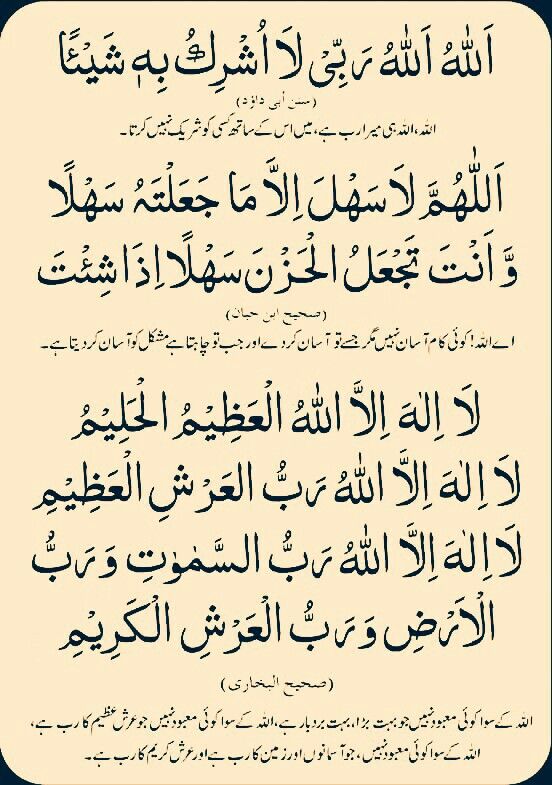
Mushkil Waqt Mein Asaani ki Dua
Those Saved From The Punishment Of Hell Fire
[ALLAH’S Quran – 3:16-17] “Those who say: Our Lord! Lo! we believe. So forgive us our sins and guard us from the punishment of Fire; The steadfast, and the truthful, and the obedient, those who spend (and hoard not), those who pray for pardon in the watches of the night.”
The Prophet (Peace Be Upon Him) has said:
[Bukhari, Book #46, Hadith #693] “Narrated Abu Huraira: The Prophet said, “Whoever frees a Muslim slave, Allah will save all the parts of his body from the (Hell) Fire as he has freed the body-parts of the slave.” Said bin Marjana said that he narrated that Hadith to ‘Ali bin Al-Husain and he freed his slave for whom ‘Abdullah bin Ja’far had offered him ten thousand Dirhams or one-thousand Dinars”
[Bukhari, Book #13, Hadith #30] “Narrated Abu ‘Abs: I heard the Prophet saying, “Anyone whose feet are covered with dust in Allah’s cause, shall be saved by Allah from the Hell-fire.”
[Bukhari, Book #76, Hadith #547] “Narrated ‘Adi bin Hatim: The Prophet said, “There will be none among you but will be talked to by Allah on the Day of Resurrection, without there being an interpreter between him and Him (Allah). He will look and see nothing ahead of him, and then he will look (again for the second time) in front of him, and the (Hell) Fire will confront him. So, whoever among you can save himself from the fire, should do so even with one half of a date (to give in charity).”
[Muslim, Book #009, Hadith #3605] “Abu Huraira (Allah be pleased with him) reported Allah’s Messenger (may peace be upon him) as saying: A Muslim who emancipates a Muslim (slave). Allah will save from fire every limb of his for every limb (of the slave). Sa’id b. Marjana said: When I heard this hadith from Abu Huraira (Allah be pleased with him), I went away and made a mention of it to ‘Ali b. Husain and he at once emancipated the slave for which Ibn ja’far was prepared to pay ten thousand dirhams or one thousand dinars.”