
Hell
1. Hell is so deep that if a stone were to be dropped into it, it would travel for 70 years before reaching the bottom.
2. The breadth of each of the four walls around Hell is equivalent to a distance covered by a walking journey of 40 years.
3. Hell has 7 gates.
4. Hell had been lit for one thousand years until its flames became red. Again it was heated for another thousand years till its colour became white. Still again it was burnt for further thousand years and its white colour flames turned pitch black.
5. Even the most fierce fire of this world is 70 fold cooler than the fire of Hell.
6. The lightest punishment in Hell would be the wearing of ” Fiery Shoes ” which would cause one’s brain to boil.
7. Hell in infested with venomous snakes and scorpions of the size of donkeys and if they were to bite a person then he/she will suffer pain for 40 years.
8. For food, the dweller of Hell would be given Zaqqum which is a prickly tree, so bitter, that even if a single molecule of it were to spill onto this earth it would make all the foodstuff of the world bitter and unpalatable.
9. For drinking, the denizen of Hell would be provided with hot, boiling pus mixed with blood, matter, urine and tears etc. of the dwellers of Hell. If a bucket of this foul liquid were to be spilled onto this earth, the entire world would be upset and disrupted by its most foul stink.
10. Boiling water would be poured over Jahannami’s head and this will cause their internal organs to melt and leak out through their feet.
11. The inmates of Hell would be lashed with heavy clubs of iron. If one such club were to be placed upon this earth, the combined strength of all the human beings, as well as all the Jinns, would fail to lift it; and if a mountain is struck with one of these clubs it would cause the whole mountain to disintegrate.
12. The dwellers of Hell would be burnt daily for 70 thousand times. Every time, after the skin and flesh are burnt, they would be restored to life so that they can continuously taste this punishment.
13. A drunkard will be given blood, pus, sweat, filth, etc. to drink in Hell.
14. All the haughty people will be gathered in the Hereafter and driven towards Hell but their bodies would be reduced to the size of ants and they will be given to consume the excretions of the dwellers of Hell.
15. Some sinners would be made to climb ” SAUD ” which is a mountain of fire in Hell, and then dropped from its peak and this process would continue forever and ever.
16. The dwellers of Hell would be pound in chains which would be greater in length than the distance between the sky and the earth.
17. The clothes of sinners in Hell would be highly inflammable.
18. Besides physical torture, the dwellers of Hell would also be subjected to mental harassment through the taunting by the guardian of Hell who will remind them of their misdeed on earth and remark: Now taste the fire, etc.”
19. The sinners and disbelievers would be humiliated to such an extent that besides their revolting ugliness and pitch-black faces, their upper lips would be touching their foreheads and the lower lip dangling around the navel.
20. The dwellers of Hell would weep so much and shed so much of tears and blood that furrows would be formed on their cheeks.
21. The tongues of Hell-inmates would be so long and protruding from their mouths that others would trample and step on them.
22. Shaitaan will also rebuke the denizens of Hell.
23. The dwellers of Hell would display their rage and fury on those who led them astray.
24. The inhabitants of Hell would appeal to the guardians of Jahannam to intercede on their behalf in the court of Allah but their pleas would be rejected. They would make direct supplication to Allah but their prayers would not be granted.
25. They will then abide forever in Hell, continuously lamenting and braying like asses.
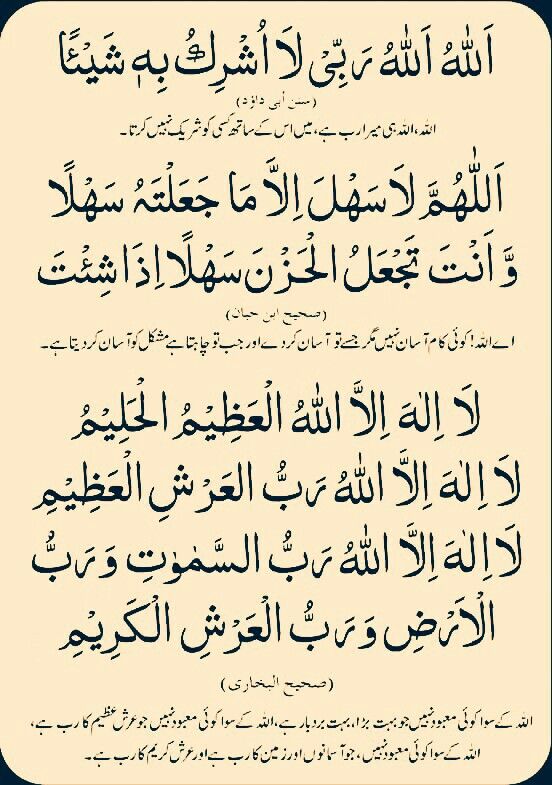
O, Allah! Save from punishment of Jahannam and grant us all the high stations of Jannah without reckoning. Ameen.
Mushkil Waqt Mein Asaani ki Dua
Those Saved From The Punishment Of Hell Fire
[ALLAH’S Quran – 3:16-17] “Those who say: Our Lord! Lo! we believe. So forgive us our sins and guard us from the punishment of Fire; The steadfast, and the truthful, and the obedient, those who spend (and hoard not), those who pray for pardon in the watches of the night.”
The Prophet (Peace Be Upon Him) has said:
[Bukhari, Book #46, Hadith #693] “Narrated Abu Huraira: The Prophet said, “Whoever frees a Muslim slave, Allah will save all the parts of his body from the (Hell) Fire as he has freed the body-parts of the slave.” Said bin Marjana said that he narrated that Hadith to ‘Ali bin Al-Husain and he freed his slave for whom ‘Abdullah bin Ja’far had offered him ten thousand Dirhams or one-thousand Dinars”
[Bukhari, Book #13, Hadith #30] “Narrated Abu ‘Abs: I heard the Prophet saying, “Anyone whose feet are covered with dust in Allah’s cause, shall be saved by Allah from the Hell-fire.”
[Bukhari, Book #76, Hadith #547] “Narrated ‘Adi bin Hatim: The Prophet said, “There will be none among you but will be talked to by Allah on the Day of Resurrection, without there being an interpreter between him and Him (Allah). He will look and see nothing ahead of him, and then he will look (again for the second time) in front of him, and the (Hell) Fire will confront him. So, whoever among you can save himself from the fire, should do so even with one half of a date (to give in charity).”
[Muslim, Book #009, Hadith #3605] “Abu Huraira (Allah be pleased with him) reported Allah’s Messenger (may peace be upon him) as saying: A Muslim who emancipates a Muslim (slave). Allah will save from fire every limb of his for every limb (of the slave). Sa’id b. Marjana said: When I heard this hadith from Abu Huraira (Allah be pleased with him), I went away and made a mention of it to ‘Ali b. Husain and he at once emancipated the slave for which Ibn ja’far was prepared to pay ten thousand dirhams or one thousand dinars.”
Hazrat Abdullah-Bin-Salam
Taqwa: Valuable Fruit Of Fasting
THE Islamic fast is unique and different from other types of fasting observed in other religions. It is obligatory, for a specific period of time from dawn to dusk, and in a specific lunar month called Ramadan.
It involves a voluntary renunciation of all appetites and desires of the flesh during that month for defined hours, with cheerful and willing acceptance of this beneficial divine mandate.
Sunset signifies the achievement of one s victory over himself during the day.
This blessed month of Ramadan inculcates a spirit of fortitude and gratitude. The atmosphere of the month is such that positive thoughts are automatically invoked on a 24-hour basis. Such thoughts, which wish the welfare of one and all, Muslims as well as non-Muslims, including those who have wronged us!
A stable monotonous environment of eating three times daily tends to produce stereotyped reactionary patterns. Fasting gives a variable environment with rigid strategies and sufficient degrees of freedom to cope with the changing conditions.
Some of us may be habituated to a particular type of vice or wrong-doing – e.g. gambling, smoking, drinking, backbiting, fraud, hot temper, domestic violence, etc.
Whatever foul we are habituated to, becomes our routine and it becomes difficult to resist. Fasting helps to overcome such habits either gradually for some of us or immediately for those with stronger will power, especially if supported by constant supplications seeking Allah s assistance. The usual antidote is to put an entirely opposite thought in the mind to displace the negative trend.
This act of self-restraint in Ramadan strengthens the will and hence, the will power. This extra will power helps to overcome obsessions and addictions. In fact, fasting also reduces a criminal’s urge to commit dangerous crimes.
During the Islamic fast, every organ in the body that has been given to us as a trust by Allah is put to a critical test.
A hunger strike is not an Islamic fast. We must not see evil, hear evil, utter evil nor act evil. This is a training session for us to develop Taqwa (God-consciousness) and piety, as well as to show gratitude for the great favor of the revelation of the Holy Qur’an during the month of Ramadan in the night called Lailatul-Qadr.
Taqwa is the most valuable fruit of fasting. Just as plants have their own season of flowering, so is Ramadan the season of the year for blossoming of goodness, virtue and piety in the Muslim ummah (nation). Not one, but millions of people jointly water the garden of virtue in the same lunar month, all over the world.
The purpose of the Islamic fast is to obey Allah’s command. Through this exercise, Muslims can develop a balanced personality and a strong sense of a community of believers. It trains all those who volunteer for service to Allah, before allowing them to take on the job of His vicegerency and establish Allah’s message of mercy on Earth.
The fasting Muslim is continuously tied with rules and regulations for one full month and then released for 11 months to see whether the training has been adequate and effective and if not, any deficiency found in the personality and will power could be corrected and made up in the following year s refresher course, in the Ramadan program. This is because Allah wants us to make the choice and behave well when left alone and unattended. The personality develops when a person is free to do any wrong as he would like, but does not do it under unrestricted conditions; e.g. during the 11 months following the Ramadan fast.
If we have passed this first part of the examination, then as Muslims who adhered to the five pillars of Islam and fasted, we are entitled to celebrate Eid Al-Fitr (Feast of breaking the fast), also called Eid Al-Saghir (the Minor Feast).
Then Allah gives us two months and 10 days to prepare for Eid Al-Adha (Feast of Sacrifice), also called Eid Al-Kabir (the Major Feast).
The Minor Feast will entitle us to climb up the ladder one step toward becoming mu’mineen (believers), because we must now learn to sacrifice our time, money, leisure, pleasure, skill, along with other talents, God-given gifts, and bounties, then be prepared to share them with our fellow human beings.
As believers adhering to the seven branches of iman (faith and belief) we must not only think of but actually perform good deeds.
This, in turn, will now prepare us for the second examination of higher spiritual achievement. And, if successful, we will be entitled to celebrate the Major Feast as believing men and believing women then go up one more rung on the ladder up Sirat Al-Mustaqim (the Straight Path).
During Ramadan, we get up for suhoor before dawn, then stop eating and drinking at the break of dawn, abstain from such and such actions during the day and take Futoor (break the fast) in the evening, at the exact time of sunset. This is precise timing. The month of fasting teaches us to respect the time and be precise in our dealings and timings and to be punctual at all times.
The exact timing of initiating of the fast at the break of dawn and breaking it at sunset with the right countdown to the last minute, teaches us the limits between right and wrong, between halal (permitted) and haram (prohibited), which is so essential for the elevation of the soul to a higher level on the spiritual scale.
A person who can rule his/her desires and make them function as he likes, has attained true moral excellence! A 425-hour of intensive study in any particular subject of one’s choice in any university would qualify one in that particular subject.
Similarly, 425 hours of intense devotion in Ramadan should certainly uplift a practicing Muslim to a state of higher spiritual achievement and earn him a reward from Allah.
During Ramadan, we also learn to inculcate in ourselves the art of patience. This, together with lessons and reminders to forgive all those who wronged us, add their own quota of enhancing our personality and outlook on life, with multiple benefits, not only in this life but also in the Hereafter.
Abdul-Qadir Gilani

Mufti Muneeb-ur-Rehman
Ramadan: The Month of the Qur’an
THE Noble Qur’an was revealed in the month of Ramadan (Al-Qur’an, 97:1-3.). Because of this strong relationship between the Qur’an and the month of Ramadan, Prophet Muhammad (peace be upon him) used to read the Qur’an to Archangel Jibreel every Ramadan. I think this is the right place to discuss the purpose and objective of the revelation of the Qur’an, its importance, the campaigns against it, and the dos and don’ts of the Qur’an.
The Qur’an represents the culmination of all other earlier Revealed Books. The Qur’an is the last of the Revealed Books. The Qur’an is the first religious book in the world, which requires the belief in other revelations, a part of its Faith. This Sacred Book was revealed to the last Messenger, Prophet Muhammad (peace be upon him) in the month of Ramadan. Allah Himself said in the Qur’an: “Ramadan is the (month) in which was sent down the Qur’an, as a guide to mankind, also clear (Signs) for guidance and judgment (between right and wrong).” (2:185). Allah the Most High has especially mentioned the exact date and month of the revelation: “We have indeed revealed This (Message) in the Night of Power.” (97:1) So the purpose of the revelation of the Qur’an was for guidance of Mankind.
Its originality and authenticity have been guaranteed by no other than Allah the Almighty himself. The world is challenged to produce a Book like it. It is the only Revealed Book whose text stands pure and uncorrupted even after 14 centuries. Allah says, “Say: “if the whole of mankind and jinns were to gather together to produce the like of this Qur’an, they could not produce the like thereof, even if they backed up each other with help and support.” (17:88)
Since the revelation of the Qur’an, the enemies of Islam have been trying to distort it. Firstly, they said, it is not revelation, it is written by Prophet Muhammad (peace be upon him). Then they started attacking its authenticity and originality. In spite of their conspiracy, the teachings of Islam have been preserved in its original form.
The Qur’an is the only Book in the world that would remain so till the Last Day as Allah has guaranteed its purity.
The purity, preservation, and propagation of the Qur’an were maintained by two methods: memorization of Qur’an in Qur’anic schools and the recitation of the complete Qur’an in Ramadan.
In the month of Ramadan every year, the Noble Prophet (peace be upon him) was asked by Archangel Jibreel to recite the whole of it twice. It was a Muzakira between the two. Abu Huraira reported that Jibreel used to repeat the recitation of the Qur’an with the Prophet once a year, but he repeated it twice with him in the year the Prophet (peace be upon him) demised. The Qur’an was recited in the Taraweeh for the first time during the era of Caliph Omar.
So far as the memorization of the Qur’an in Qur’anic schools is concerned, many Huffaz and Islamic scholars have been killed in different parts of the world at different times. But still, there is no dearth of Islamic scholars who can recite the complete Qur’an from memory. Severe campaigns have been launched against the Qur’anic schools, which teach the study, recitation, and memorization of the Qur’an. The Qur’an is the main Book of the Muslims; it is the duty of the Muslims to learn the Qur’an, which contains their code of life and ethical values whose benefits have been experienced by mankind throughout the ages.
The Qur’an is the basis of the religion of Islam, and on the preservation and propagation of the Qur’an depends the very existence of this Faith. Hence the virtue of learning and teaching the Qur’an is self-evident and does not need further elucidation. The Prophet (peace be upon him) said, “The best amongst you is he who learns the Qur’an and teaches it.” (Bukhari, Daud, and Tirmidhi).
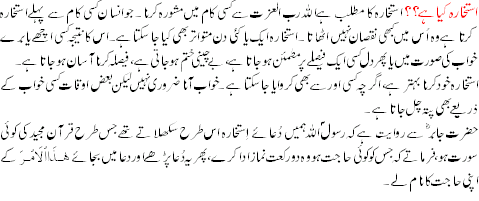
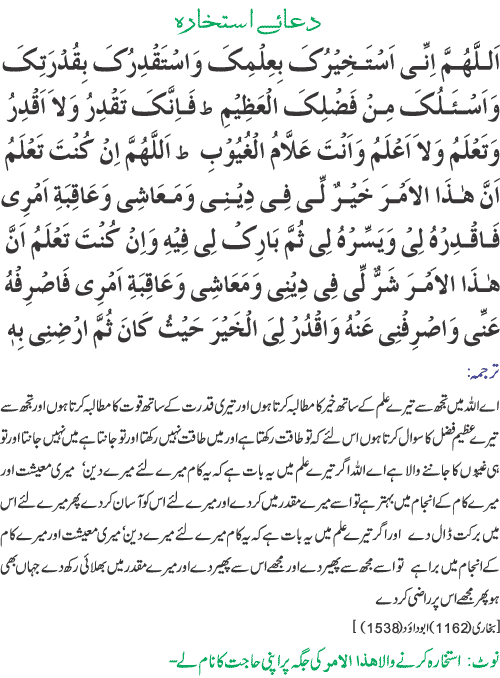
Istikhara

Breaking The Fast (Iftaar)
1. When does the Fasting person Break his Fast?
Allah, the Most High, says: “…then complete your Sawm (fast) till the nightfall…”[2]
Allah’s Messenger (peace be upon him) explained this to mean the approach of the night, the passing away of the daylight, and the disappearance of the sun below the horizon.[3]
Narrated Umar bin Al-Khattab (may Allaah be pleased with him): Allah’s Apostle (peace be upon him) said, “When night falls from this side and the day vanishes from this side and the sun sets, then the fasting person should break his fast.”[4]
Narrated Amr ibn Maimoon al – Awdee (may Allaah be pleased with him): The Companions of Muhammad (peace be upon him) were the earliest of people in beginning the Iftaar and the lastest in taking Suhoor.[5]
2. Hastening to Break the Fast
A Muslim should break the fast as soon as the sun sets and do not be bothered by the bright redness remaining upon the horizon. In this, he would be following the Sunnah of your Messenger (peace be upon him) and differing from the Jews and Christians since they delay breaking the fast until the stars start to appear.[6]
2.1 Hastening to Break the Fast brings about good.
Narrated Sahl bin Sad (may Allaah be pleased with him): Allah’s Apostle said, “The people will remain on the right path as long as they hasten the breaking of the fast.”[7]
Narrated Aboo Hurayrah (may Allaah be pleased with him): The Prophet (peace be upon him) said, “The Deen will not cease to be uppermost as long as the people hasten to break the fast since the Jews and Christians delay it.”[8]
2.2 Breaking the Fast before praying the Maghrib prayer
Narrated Anas (may Allaah be pleased with him): “The Prophet (peace be upon him) used to break his fast with fresh dates before Salaat al-Maghrib. If fresh dates were not available, he would eat dried dates and if dried dates were not available, he would break his fast by drinking a little water.”[9]
2.3 A Warning to Those who Break the Fast Before the Time of Iftaar
Although we should hasten to break the fast, breaking the fasting before the correct time is sinful. Even though only a part of the following hadith is relevant here, I thought I would add the full hadeeth so that we can reflect on some of the horrors of some of our actions.
Narrated Aboo Umaamah al – Baahilee (may Allaah be pleased with him): Allah’s Messenger (peace be upon him) said, “While I was sleeping, two men (angels) came to me, held my upper arms and took me to a rough mountain. They said,” Climb.” I said,” I cannot climb it.” They said, ” We will make it easy for you.”
He (peace be upon him) continued: “We moved on until I saw some people who were suspended by their Achilles’ tendons, their cheeks cut and gushing blood. I asked, “Who are those?” The replied, “Those are the ones who break their fast when it is not permissible.” 10]
3. With what should one break his fast?
Narrated Anas (may Allaah be pleased with him): “The Prophet (peace be upon him) used to break his fast with fresh dates before Salaat al-Maghrib. If fresh dates were not available, he would eat dried dates and if dried dates were not available, he would break his fast by drinking a little water.”[11]
Giving something sweet to an empty stomach leads to its acceptance and that the body takes benefit from it, especially a healthy body which will be strengthened by it. As for water, then the body becomes somewhat dehydrated through fasting and so if it is moistened with water then it can take completed benefit from the food. And know that the dates and water contain various blessings and specially qualities which have an effect upon the hearts and in purifying them, which will be known only to those who follow (the Sunnah).[12]
Consider how far our practice is from that of our Prophet (peace be upon him)! In our fast-breaking menu, there are all kinds of fruits and additional items. These items are fried or cooked with a lot of herbs and spices. This may result in causing an upset stomach, which may eventually result in ill health. Instead, we have to adopt a more moderate and comfortable way of breaking our fast by which a rich reward in the Hereafter and a physical advantage in this world will also be achieved.[13]
4. Times of Responding to the Supplication
Those believers who strive and control themselves, abstaining from those things restricted, such as food, drink, and sexual desire, all day long, to obtain the pleasure of Allah, will definitely have a special status with Allah. This responding to his invocation when breaking his fast is more likely to occur.[14] So seize this opportunity and call upon Allah being sure that it will be answered, and know that Allah does not respond to a heedless and inattentive heart. Call upon Him with supplications for anything good, and hopefully, you will attain the good of this like and the Hereafter.[15]
Narrated Abdullah ibn Amr ibn al – Aas (may Allaah be pleased with him): Allah’s Messenger (peace be upon him) said, “Indeed there is for the fasting person when he breaks his fast, a supplication which is not rejected.”[16]
5. What should a person say when breaking the fast?
There is a well-known invocation related in the hadith in this respect:
“Allaahumma laka sumtu wa – ala Rizqika Aftartu”
(O Allaah! For You I have observed fasting and with Your provisions do I break my fasting)
However, this hadeeth is NOT AUTHENTIC.[17] This shows you that you should not trust everything you find on things like Islamic calendars. As much as we hope that the people printing these would do some research on what they put, it seems like they are more concerned with advertising products than anything else! And to make things worse, some people turn a blind eye to the truth and ignorantly follow the unauthentic hadith over the authentic!
The authentic hadith is as follows:
“Dhahaba adh – dhamau wab – tallatil – urooqa wa thabatal – ajru in shaa Allaah”
(The thirst has gone, the arteries are moist, and the reward is set, Allaah willing)[18]
6. Providing food for the fasting person to break his fast.
The Prophet (peace be upon him) said: “Whoever gives food to a fasting person with which to break his fast, will have a reward equal to his, without it detracting in the slightest from the reward of the fasting person.”[19]
The rich reward of helping others break their fast can be achieved to one’s best ability and is not required for people to overburden themselves in this regard.[20]
And It is Only Allah Who grants success. May Allah Exalt the mention of His slave and Messenger Muhammad (peace be upon him), and render him, his household and companion safe from Evil.
Compiled by Imran Ayub[1]
References:
× Fasting In Ramadaan by Sheikh Saleem al – Hilaalee and ‘Alee ‘Abdul Hameed, al – Hidaayah Publishers, 1999
× Islamic Studies Book 3, by Dr. Abu Ameenah Bilal Philips, IIPH publishers, 2005
× Ramadaan: Rules and Related Issues, by Hafiz Salah – ud – Din Yusuf, Darussalam publishers, 199
× The Fragile Vessels – Rights and Obligations between the Spouses in Islam, by Muhammad Mustafaa al – Jibaaly, al – Kitaab and as-Sunnah Publishing, 2005
[1] From, ‘Fasting in Ramadaan’, p. 56 – 67 and ‘Ramadaan: Rules and Related Issues’, p. 12 – 15
[2] The Noble Qur’an, Soorah Al-Baqarah 2:187
[3] ‘Fasting in Ramadaan’, p. 56
[4] (Agreed Upon); Saheeh Bukhaari, Volume 3, Book 31, Number 175; Saheeh Muslim, Book 006, Number 2421
[5] ‘Abdur – Razzaq, al – Musannaf, Number 7591; Declared Saheehvby Hafidh Ibn Hajaar in al – Fath, 4/199; and al – Haithumee in Majma’ uz – Zawaaid, 3/154; as quoted in ‘Fasting in Ramadaan’, p. 56
[6] ‘Fasting in Ramadaan’, p. 57
[7] (Agreed Upon); Saheeh Bukhaari, Volume 3, Book 31, Number 178; Saheeh Muslim, Book 006, Number 2417; Sunan Aboo Daawood, Vol. 2, Number 2346
[8] Sunan Aboo Daawood, 2/305; Ibn Hibaan; Its Isnaad is Hasan; as quoted in ‘Fasting in Ramadan’, p. 58
[9] Sunan at – Tirmithee, 3/70; Sunan Aboo Daawood, 2/306; Ahmad, 3/163; Saheeh Ibn Khuzaymah, 3/277, 278; through two chains from Anas, and its isnaad is Saheeh; as quoted in ‘Fasting in Ramadaan’, p. 61; Classed Saheeh by Sheikh al – Albaanee in al-Irwa’, Number 922; as quoted in ‘Ramadaan: Rules and Related Issues’, p. 13
[10] Saheeh Ibn Khuzaymah, Number 1986; Ibn Hibbaan and others. Verified to be Saheeh by Sheikh al – Albaanee in Saheeh ut – Targheeb, Number 991; as quoted in ‘Fasting in Ramadaan’, p. 91 – 92
[11] Sunan at – Tirmithee, 3/70; Sunan Aboo Daawood, 2/306; Ahmad, 3/163; Saheeh Ibn Khuzaymah, 3/277, 278; through two chains from Anas, and its isnaad is Saheeh; as quoted in ‘Fasting in Ramadaan’, p. 61; Classed Saheeh by Sheikh al – Albaanee in al-Irwa’, Number 922; as quoted in ‘Ramadaan: Rules and Related Issues’, p. 13
[12] ‘Fasting in Ramadaan’, p. 61
[13] ‘Ramadaan: Rules and Related Issues’, p. 13
[14] ‘Ramadaan: Rules and Related Issues’, p. 13 – 14
[15] ‘Fasting in Ramadaan’, p. 61
[16] Sunan Ibn Maajah, 1/557; al – Haakim, 1/422; Ibn as – Sunnee, Number 128; at – Tayaalisee, Number 299; through two chains of narration from him and al – Boosairee said: 2/81: This isnaad is Saheeh, its narrators are reliable; as quoted in ‘Fasting in Ramadaan’, p. 61. Classed Saheeh by Sheikh al – Albaanee in Saheeh Sunan ibn Maajah, Number 1432; as quoted in ‘Ramadaan: Rules and Related Issues’, p. 14
[17] It is rated as Da’eef by Sheikh al – Albaanee in Irwaa al – Ghaleel, Vol. 4, Number 919; as quoted in ‘Islamic Studies Book 3’, p. 198
[18] Sunan Aboo Daawood, Vol. 2, Number 2350; al – Baihaqee, 4/239; al – Hakakim, 1/422; Ibn Sunnee, an – Nasaa’ee in Amalul – Yawm, 269; Daraqutnee, who declared its isnaad to be Hasan, and it is as he said (as quoted in ‘Fasting in Ramadaan’, p. 62); Graded Hasan by Sheikh al – Albaanee in Saheeh Sunan Aboo Daawood, Vol. 2, Number 2066 (as quoted in ‘Islamic Studies Book 3’, p. 198) and in Irwaa al – Ghaleel, Number 920 (as quoted in ‘Ramadaan: Rules and Related Issues’, p. 15).
[19] Sunan at – Tirmithee, Number 804; Ahmad, 5/192; Sunan Ibn Maajah, Number 1746; ibn Hibbaan, Number 895; Imam Tirmithee declared it Saheeh and it is as he said; as quoted ‘Fasting in Ramadaan’, p. 62.
[20] ‘Ramadaan: Rules and Related Issues’, p. 15