Winter: Best Season For A Believer
The righteous people of the past would rejoice with the approach of winter. Ibn Rajab Al-Hanbali mentions its virtues in his book Lata’if Al-Ma’arif (pg. 276)
Winter is the best season for the believer because Allah strengthens his practice by making worship easy for him. The believer can easily fast during the day without suffering from hunger and thirst. The days are short and cold, and he doesn’t feel the hardship of fasting.
As for praying at night, due to winter’s long nights, one can have his share of sleep and then wake up to pray. He can recite the Qur’an that he usually does in a day while having enough time to sleep. So, it becomes possible to fulfill the interests of both – his religion and the comfort of his body.
Abdullah Bin Mas’ud said: “Welcome to winter! Blessings descend in it. Its nights are long to pray, and its days are short to fast.”
When it was winter, Ubayd Bin Umayr would say: “O people of the Qur’an! Your nights are now long for you to recite. So, recite! Your days are now short for you to fast. So, fast! Night prayer in the winter equals fasting during the day in the summer.” This is why Mu’adh wept on his deathbed. He said: “I weep because I will miss the thirst I felt when I fasted, praying at night during the winter, and sitting knee to knee with the scholars during the gatherings of knowledge.”
Moderation in Charity
Charity is amongst the most virtuous deeds in Islam. Some forms of charity are obligatory, others optional, yet, all forms of charity are highly meritorious. However, even when giving in charity, moderation has been prescribed so that the one who gives in charity may not harm himself in the process, nor does he cause harm to his dependents and inheritors after death. The following Hadeeth explains this matter perfectly.
Narrated Sa’d bin Abi Waqqas (radhi allahu anhu), ‘I was stricken by an ailment that led me to the verge of death. The Prophet (s.a.w.s) came to pay me a visit. I said, ‘O Allah’s Messenger! I have much property and no heir except my single daughter. Shall I give two-thirds of my property in charity?’ He said, ‘No.’ I said, ‘Half of it?’ He said, ‘No.’ I said, ‘One-third of it?’ He said, ‘You may do so though, one-third is also too much, for, it is better for you to leave your off-spring wealthy than to leave them poor, asking others for help. And whatever you spend (for Allah’s sake) you will be rewarded for it, even for a morsel of food which you may put in the mouth of your wife.’?’ [Saheeh al-Bukharee, vol.8, no. 725]
Monastic religions often teach their followers, that the only way to God or the only way to inner enlightenment, is that one does away with all his worldly possessions leading a life of hermits and ultimately depending on begging and the charity of others for sustenance. Islam, on the other hand, teaches its followers to ?
(a) Earn an honest bread (1)*
(b) Spend on oneself and on the family
(c) Spend in charity and we have seen earlier the broad definition of charity in Islam
(d) To be the upper hand rather than the lower (2)
(e) The extreme undesirability of begging without a need (3)
Footnotes:
1. Anas (radhi allahu anhu) said that when a man of the Ansar came to Prophet Muhammad (sallallahu ‘aliahi wa-sallam) and begged from him, he asked him whether he had nothing in his house. When he said that he had a piece of cloth, which he used for wearing as well as for spreading on the ground, and a wooden bowl from which he drank water, he told him to bring them to him, and when he did so he took them in his hand and asked, ‘Who will buy these?’ When a man offered a dirham he asked twice or thrice. ‘Who will offer more than a dirham?’ and he gave them to a man who offered two dirhams. He then took the two dirhams and giving them to the Ansari he said, ‘Buy food with one of them and hand it to your family, and buy an axe with the other and bring it to me.’ When he bought it, Allah’s Messenger (sallallahu ‘aliahi wa-sallam) fixed a handle on it with his own hands and said, ‘Go gather firewood and sell it, and don’t let me see you for a fortnight.’ The man went away and gathered firewood and sold it. When he had earned ten dirhams, he came to him (r) and bought a garment with some of them (i.e. dirhams) and food with the others. Then Allah’s Messenger (sallallahu ‘aliahi wa-sallam) said, ‘This is better for you than that begging should come as a spot on your face on the Day of Resurrection. Begging is right for only three people; one who is in grinding poverty, one who is seriously in debt, or one who is responsible for blood-wit that he finds difficult to pay.’ [Abu Dawood]
2. Ibn Umar (radhi allahu anhu) reported, ‘While the Messenger of Allah (sallallahu ‘aliahi wa-sallam) was on his pulpit (in the mosque) delivering a Khutbah (religious talk) about Sadaqah (charity) and begging, he said, ‘the upper hand is better than the lower hand, the upper hand is the one which gives and the lower hand is the begging one.” [Saheeh al-Bukharee and Saheeh Muslim]
Thauban (radhi allahu anhu) reported, ‘The Messenger of Allah (sallallahu ‘aliahi wa-sallam) said, ‘He who guarantees me that he will not beg anything from anyone, I will guarantee him (to enter) Jannah.” I said, ‘I give you the guarantee.’ Then Thauban (radhi allahu anhu) never begged anything from anyone. [Abu Dawood]
3. Abdullah bin Umar (radhi allahu anhu) reported that Allah’s Messenger(s.a.w.s) said, ‘When a man is always begging from people, the result will be that he will come on the Day of Resurrection with no flesh on his face.’ [Saheeh al-Bukharee and Saheeh Muslim]
Jhooti Gawahi Aur Galat Ilzaam Ki Muzammat

Our Lord Grant Us What Is Good
[Quran 2:201] “And among them are those who pray, “Our Lord, grant us in the world what is good, and in the Hereafter what is good, and protect us from the punishment of the Fire.”
The Prophet (Peace Be Upon Him) has said:
[Bukhari, Book #75, Hadith #398] Narrated Anas: The most frequent invocation of The Prophet was: “O Allah! Give to us in the world that which is good and in the Hereafter that which is good, and save us from the torment of the fire.”
Amaal Mein Aitadal
Your Wife And Kids
Abu Saeed Khudri (radhiyallahu anhu) reported that Rasullullah (The Messenger of Allah) has said that whosoever spends anything on his family members for reward, will enjoy the divine credit of charity. (Bukhari, Muslim)
It is described by Abu Huraira(radhiyallahu anhu) that Mohammed (sallallahu alaiyhi wassallam) has said that, to spend on one’s wife, has great merit than giving charity to male and female slaves and beggars. (Muslim)
Abdullah bin Masood (radhiyallahu anhu) reported that the greatest preference is to spend on one’s wife and children which is necessary and then it should be spent on close relatives. (Tibrani)
It is narrated in the extract of Arbez bin Saarya(radhiyallahu anhu) that even to give water to one’s wife is charity.
Abu Huraira (radhiyallahu anhu) reported that someone asked Rasullullah(sallallahu alaiyhi wassallam) that he had one gold coin with him, where should he spend it ? Rasullullah(sallallahu alaiyhi wassallam) said that he should spend it on himself. The man said that he had one more and Mohammed(sallallahu alaiyhi wassallam) said that he should spend it on his wife. The man again said that he had yet another and Rasullullah(sallallahu alaiyhi wassallam) said ,that he should spend on his servants. The man said that he had a fourth and Rasullullah(sallallahu alaiyhi wassallam) said that he should spend it, on whatever he preferred. (Ibn Habban)
Sa’ad bin Waqqas(radhiyallahu anhu) reported that Mohammed (sallallahu alaiyhi wassallam) said that whosoever spends his money to gain Allah’s pleasure and goodwill, gets the credit of charity so much that even a morsel which he puts in the mouth of his wife, has the credit of charity. ( Bukhari, Muslim)
The Manners Of Going To The Bathroom
Salmaan (ra) said, (One of) the disbelievers said to us, Verily, we see that your companion (the prophet sallallahu alaihi wasallam) even teaches you how to relieve yourselves. Salmaan (ra) answered him, Yes, he forbids each of us from cleaning himself (after urinating or defecating) with his right hand and from facing the Qiblah (during the act of urinating or defecating). And he prohibited the use of manure or bones (for cleaning). And he (sallallahu alaihi wasallam) said.
Let no one from you clean himself (after having a bowel movement) with less then three Stones. (Related by Muslim (262) Ahmad (23191)
It Is Disliked To Take Into The Toilet (Or Any Place That Is Commonly Used For The Same Purpose) Anything That Has The Remembrance Of Allah (swt) In It.
To preserve Allah’s Name from abuse and debasement, you should not take into the toilet anything that has the remembrance of Allah (swt) in it, unless you have a valid Islamic excuse, in which case doing so is not Makrooh (disliked). So for example, if in your pocket, you have paper money that has Allah’s Name written on it, and if you are about to enter a public washroom, you most likely have no choice but to take the money with you inside. By leaving the money outside of the washroom, you might later forget, and if the door to the washroom is on the outside of a building, the money might blow away. Furthermore, if there are other people around, there is a chance of theft. All of these reasons apply to money or to anything else that has Allah’s Name written on it.
As of a Mushaf (compy of the Quran), it is without a doubt forbidden to take it inside of a place that is regularly used as a toilet. Scholars agree on this point, though they ruled that it is permissible to take it inside if one fears that, left outside, it will be stolen. Nonetheless, a Muslim must fear (swt) and try his best to keep Allah’s Speech safe from debasement. He should try his best to find an alternative solution, such as giving the Mushaf as a trust to someone until he comes out. But if there is no alternative, then Allah (swt) does not charge a soul with more than it can bear.
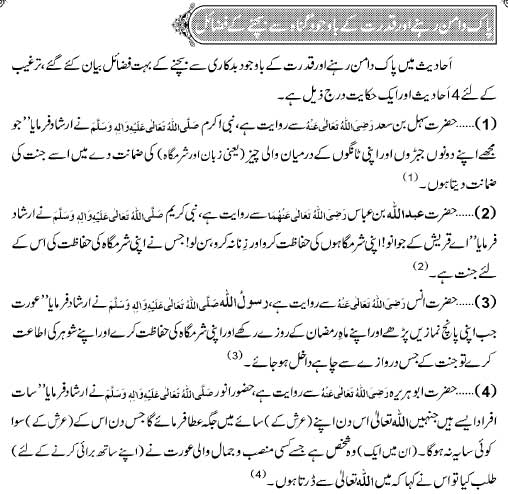
Pak Daman Rehnay Aur Gunnah Say Bachney Kay Fazail
Deen Tu Naam Hi Ikhlas Ka Ha