
Cure For Arrogance
In continuation of the earlier topic “Hues of Arrogance” here are Islamic remedies for this disease of the heart with the steps one can take to develop humility towards Allah and His creation to stem the disease of arrogance and to increase humility:
Know Allah
What has knowing Allah got to do with arrogance? Everything. The one who truly recognizes his Creator, and learns about His exalted names and attributes, embraces reality. He knows with conviction how great his Lord is, and how absolutely insignificant his own self is.
He knows that Allah created him, fashioned him, brought him into this world, gave him sustenance and bestowed upon him strength after the frailty of infancy and childhood. Allah has revealed about Himself in the Qur’an and once someone truly knows Allah, he cannot harbor arrogance in his heart for long.
Allah’s signs
The most powerful people who ever lived – with extraordinary physical or mental strength – all become weak with the passage of time. Great scholars or professors can one day suffer from amnesia or Alzheimer’s. Even the man who played the fictional “Superman” – the idol of many young boys – suffered a crippling fall, withered and died before their very eyes.
Allah’s Messenger (peace be upon him) said, “Allah looks neither at your figures, nor at your outward appearance, but He looks at your hearts and your deeds.” (Sahih Muslim)
This should remind us that each and every little blessing we have – from our looks, to our wealth, to our abilities and talents – is solely from Allah. Our achievements are not the product of our own selves, they are a result of whatever talent Allah blessed us with combined with the effort He guided us to undertake. Not only that, He can take them away whenever He wants, even in a split second.
A beauty queen can lose her perfect body and beauty to a disease (just a passing reference to the recent death of a 20-year-old Brazilian model, who died within two months of contracting a mysterious disease).
A strong wrestler might suffer an accident that could render him invalid. Taking lessons from these will In Sha Allah bring humility in us.
“Did they then feel secure against the Plan of Allah. None feels secure from the Plan of Allah except the people who are the losers.” (Qur’an, 7:99)
Hues Of Arrogance
‘ARROGANT? Who, me?! Never. I’m a Muslim.’
Any Muslim who has studied Qur’an and Sunnah in depth and detail would strive to stay away from one of the most disliked vices: Arrogance. Be it vanity, conceit, standoffishness, haughtiness, acting holier-than-thou, or “high-and-mighty” – they are careful of being tainted by any color from the spectrum of arrogance or Kibr. These negative personality traits were present in those on whom Allah’s wrath descended in the past, and about whom the followers of Islam have been duly warned in the Qur’an and Sunnah.
The crux of the matter is: how do we check ourselves in practical life if we are becoming arrogant or not? What actions, qualities or behavior constitutes the hallmarks of “arrogance”? It is so much easier to nod our heads in unison when listening to warnings targeted at arrogant individuals at a lecture, than to actually purge ourselves from traces of arrogance within our own behavior; in our social interactions; in our dealings with family members; in our very intimate thoughts and feelings. What can we do to hold up a magnifying glass to our own face, in order to pick out the microscopic, self-emulating zits that are missed by that first cursory glance at our personalities?
Rejecting Islam
The Prophet (peace be upon him) said: “No one who has an atom’s-weight of arrogance in his heart will enter Paradise.”
A man said, “O Messenger of Allah, what if a man likes his clothes and his shoes to look good?”
He said, “Allah is beautiful and He loves beauty. Arrogance means rejecting the truth and looking down on people.” (Sahih Muslim)
Rejecting any part of the Qur’an or Prophetic narrations silently (i.e. not saying anything outwardly, but obstinately refusing to obey Allah’s commands over time) or by open antagonism – verbally declaring Kufr and rejection – is indicative of arrogance. Pharaoh, who is repeatedly quoted in the Qur’an for his arrogance, said: “O my people! Is not mine the dominion of Egypt, and these rivers flowing underneath me. See you not then? Am I not better than this one (Moses), who is Mahin (i.e. has no honor nor any respect, and is weak and despicable) and can scarcely express himself clearly?” (Qur’an, 43:51-52)
“O chiefs! I know not that you have an ilah (a god) other than me…” (Qur’an, 28:38)
“I am your lord, most high.” (Qur’an, 79:24)
Our Goal In Life
All Praise is for Allah, and peace and blessings of Allah be upon His beloved Messenger Muhammad sallallahu alayhi wa sallam.
We are grateful to Allah subhana wa ta’ala for giving us the opportunity to sit in His remembrance. For truly it is a great favor indeed that despite all worldly distractions He has brought us to His House (mosque). Then sat us in His dhikr. And by sitting in His dhikr Allah subhana wa ta’ala helps us to get closer to Him and for every Muslim the true goal in life is to attain the pleasure of Allah subhana wa ta’ala.
Apart from that we all have a common interest, that we would all like to love Allah subhana wa ta’ala and we ourselves would like to be loved by our Lord Most High.
Now is it not strange that a person has a certain desire or goal in life but doesn’t make any effort to achieve it?
Surely it is a basic rule in this world that when a person has a particular interest or hobby, he does not waste any time. He spends most of his time in an activity that will help him achieve his goal. For example if a person wants to be good at a particular sport, he would play that sport very regularly and often spend a lot of money and time on trying to achieve his objective.
So truly if our objective in life is to be loved by Allah, and we also know that this can happen through doing His dhikr in abundance, then why is it that we not make ourselves busy in His remembrance?
The formula for achieving this is straightforward, Allah subhana wa ta’ala has stated in the Qur’an ‘Fadhkurooni adhkurkum’ (Remember Me and I will remember you). It is stated in a Hadeeth that Allah remembers His servant as soon as he remembers Allah.
Subhan Allah, can you imagine the Lord Most High, The creator of the Heavens and the Earth remembering you? Indeed that is great thing. And this method for achieving our objective is so easy that it almost defies belief.
In a Hadeeth transmitted by Bukhari it is stated that Abu Hurayrah radhiallah anhu narrated that Allah’s Messenger sallallahu alayhi wa sallam said “Allah Almighty says, ‘I am towards My servant as he is towards Me. I am with him when he remembers Me. If he remembers Me alone, I remember him alone. If he remembers Me in a gathering, I remember him in a gathering better than it.”
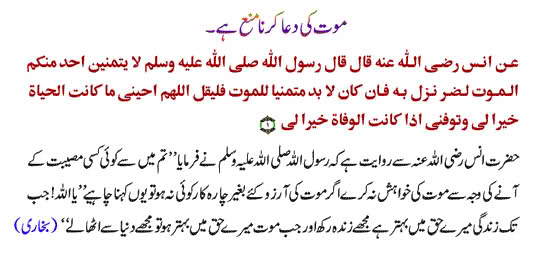
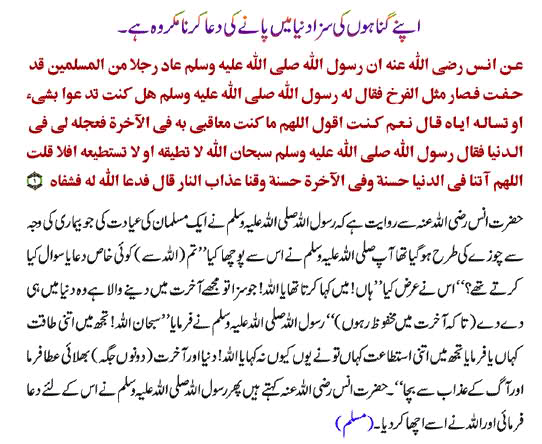
Kon Konsi Dua Nahi Mangni Chahiye
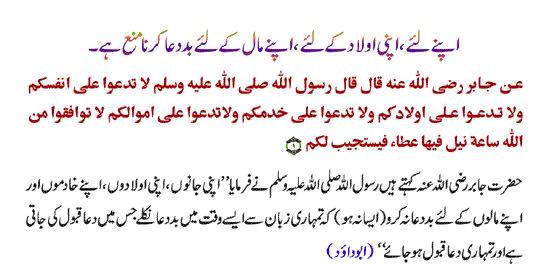
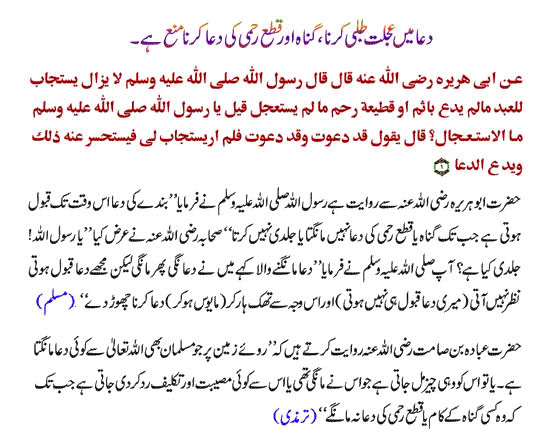
Allah’s Attribute Of Forgiveness
This is the first of seven surahs that all begin with the two separate letters, Ha. Mim. In one of these seven surahs three other separate letters, Ayn Sin Qaf, are added after the initial two. Some surahs start with these separate letters, thereby indicating that the Qur’an, which defies imitation, is composed of such letters which the Arabs used every day, orally and in writing, in their language.
This is followed by a statement of a fact that is frequently used in Makkan surahs given these seek to establish faith: the fact of revelation: “The revelation of this book is from God, the Almighty, the All-Knowing.” A number of God’s attributes are then stated. These are directly relevant to the subject matter of the surah and the issues it discusses: “the Almighty, the All-Knowing, who forgives sins, accepts repentance, is severe in retribution and limitless in bounty. There is no deity other than Him. To Him is the ultimate return.” (Verses 2-3) In fact all the issues the surah raises relate to these attributes of God, powerfully stated at the outset to give an impression that they are well and firmly established.
Limitless in His glory, God outlines to His servants these of His attributes that have a profound effect on their lives. Thus, He raises their hopes and fears, making them feel that they are within His grasp and can never elude what He wills. The attributes highlighted here are:
The Almighty: He is overpowering. No one can get the better of Him, while He has power over all things. When He decides something, nothing can stop this from occurring.
The All-Knowing: He conducts all affairs on the basis of perfect knowledge. Nothing is hidden from Him.
He forgives sins: He grants His forgiveness on the basis of His knowledge about those servants who deserve to be forgiven.
He accepts repentance: When sinners repent, He accepts their repentance and bestows His grace on them, opening the door for them to address Him directly.
He is severe in retribution: He punishes the arrogant who are hardened in sin, unwilling to show regret or seek forgiveness.
Limitless in bounty: He bestows His limitless grace, multiplies the reward for good deeds and gives without reckoning.
There is no deity other than Him: He alone is the Godhead who has no partners or equals.
To Him is the ultimate return: None can evade meeting Him or escape accountability.
These attributes provide a clear outline of the interrelation between Him and His servants. They should be clear in their feelings, thoughts and understanding of how to deal with Him. Then, they will have no ambiguity about what pleases Him or incurs His anger.
In the past, those who held beliefs based on legends were at a loss in knowing how to deal with their deities, because they had no clear idea of what pleased or angered them. They pictured them as impulsive, having no clear aim or purpose, demonstrating violent reactions and causing people much worry and confusion. They resorted to charms and sacrifices in their attempts to please such deities, but could only guess about whether they were satisfied or not. By contrast, Islam provides a very clear concept, establishing a relationship between people and their true Lord, outlining His attributes, defining His will, and instructing them on how to draw closer to Him, fear His punishment and pray for His mercy, always following a straight and clear path.
Having established the truth of God’s oneness and His divine attributes, the surah makes clear that this truth is accepted by all creatures. It is, in fact, firmly rooted in their nature and directly related to the nature of the universe. All creation is entirely convinced by the signs testifying to God’s oneness. Only the unbelievers dispute these signs and argue about God’s revelations. Thus they are a class apart, choosing to be at odds with the universe and all other creatures within it.
“None but the unbelievers dispute God’s revelations.”
Throughout the entire expanse of the universe, only the unbelievers stand apart, deviating from the true path. In relation to the whole universe, they are weaker and less significant than an ant in relation to planet earth. When they stand on their own disputing God’s revelations and denying His signs, the rest of the universe declares its acceptance of Him and recognizes His oneness, deriving its strength from Him. With their odd attitude, the unbelievers’ fate is sealed, no matter how powerful, affluent and mighty they may appear to be: “Let it not deceive you that they seem to be able to do as they please on earth.” They may be able to move about, gather wealth, enjoy their power and revel in easy living. However, they are ultimately doomed. The battle, if there could ever be a battle between them and the Creator of the universe, will lead to its inevitable end.
-by Adil Salahi
Building A Happy Family In Islam
THE Prophet (peace be upon him) gave many recommendations concerning women, to the extent that he described the man who treats his wife well as being one of the best and among the elite of his Ummah:
“The believer who has the most perfect faith is the one whose behavior is best, and the best of you are the ones who are best to their women-folk.”
Some women came to the family of the Prophet (peace be upon him) complaining about their husbands. So the Prophet (peace be upon him) announced to the men:
“Many women have visited the family of Muhammad, complaining about their husbands. Verily those are not the best among you.”
True Islam is preeminent in its fairness and respect towards women, and in its recommendation to husbands to treat their wives well even if they dislike them. This is something which women have never enjoyed throughout history, except in this religion. Allah says in the Qur’an:
“…live with them on a footing of kindness and equity. If you take a dislike to them it may be that you dislike a thing, and Allah brings about through it a great deal of good.” (Qur’an, 4:19)
This verse touches the heart of every true Muslim, so that his anger is soothed and his dislike towards his wife is lessened. In this way Islam protects the sacred marriage bond from being exposed to the danger of turbulent emotions and the folly of changing moods.
When a man came to ‘Umar Bin Al-Khattab (may Allah be pleased with him) and told him that he wanted to divorce his wife because he disliked her, ‘Umar said, “Woe to you! Are families only built on love? Where is your consideration and care?”
The marriage bond in Islam is of greater importance than emotional whims and rises above the pressures of wild natural passion. The true Muslim possesses enough chivalry, nobility, courtesy, perseverance, generosity and strength of character to make him rise above any dislike for his wife in his dealings with her. Far be it from him to be guided by only mindless animal instincts or for making a profit!
The true Muslim doesn’t but obey his Lord; so he treats his wife well even if he dislikes her, because he understands the injunctions of his All-Wise Lord about matters that are hidden from him, and they are far too many. A man may dislike something and try to distance himself from it, when in fact it is full of goodness and blessing. The true Muslim knows how to love and how to hate. Love is not blind for him, neither does he go to extremes of dislike and hatred, but in either case his attitude is moderate and balanced.
The Prophet (peace be upon him) explained that even if a husband dislikes his believing Muslim wife, she will still have some favorable characteristics which will please him, so he should not ignore the good side of her character and focus only on the negative aspects:
“No believing man should hate a believing woman. If he dislikes one of her characteristics, there will be others that would please him.” (Muslim)
– Published by International Islamic Publishing House, Riyadh, Saudi Arabia
The Quran On Fasting
“O you who believe! Fasting is prescribed for you as it was prescribed for those before you, that you may become Al-Muttaqun (the pious).
(Fasting) for a fixed number of days, but if any of you is ill or on a journey, the same number (should be made up) from other days. And as for those who can fast with difficulty, ( i.e. an old man, etc.), they have (a choice either to fast or) to feed a poor person (for every day). But whoever does good of his own accord, it is better for him. And that you fast, it is better for you if only you know.” (2:183-84)
“The month of Ramadan in which was revealed the Quran, a guidance for mankind and clear proofs for the guidance and the criterion (between right and wrong). So whoever of you sights (the crescent on the first night of) the month (of Ramadan), he must fast that month, and whoever is ill or on a journey, the same number (of days which one did not fast must be made up) from other days.
Allah intends for you ease, and He does not want to make things difficult for you. (He wants that you) must complete the same number (of days), and that you must magnify Allah for having guided you so that you may be grateful to Him” (2: 185).
“It is made lawful for you to have sexual relations with your wives on the night of the fasts. They are garments for you and you are the same for them. Allah knows that you used to deceive yourselves, so He turned to you and forgave you. So now have sexual relations with them and seek that which Allah has ordained for you, and eat and drink until the white thread (light) of dawn appears to you distinct from the black thread (darkness of night), then complete your fast till the nightfall.
And do not have sexual relations with them (your wives) while you are in Itikaf in the mosques. These are the limits (set) by Allah, so approach them not. Thus does Allah make clear His signs to mankind that they may become Al Muttaqun (the pious)” (2:187).
“Verily! We have sent it (this Quran) down in the night of Al-Qadr.
And what will make you know what the night of Al-Qadr is?
The night of Al-Qadr is better than a thousand months
Therein descend the angels and the Ruh (Gabriel) by Allah’s Permission with all Decrees,
Peace! until the appearance of dawn (97:1-5).
Ramadan ul Mubarik Rehmat O Magfirat Ka Maheena
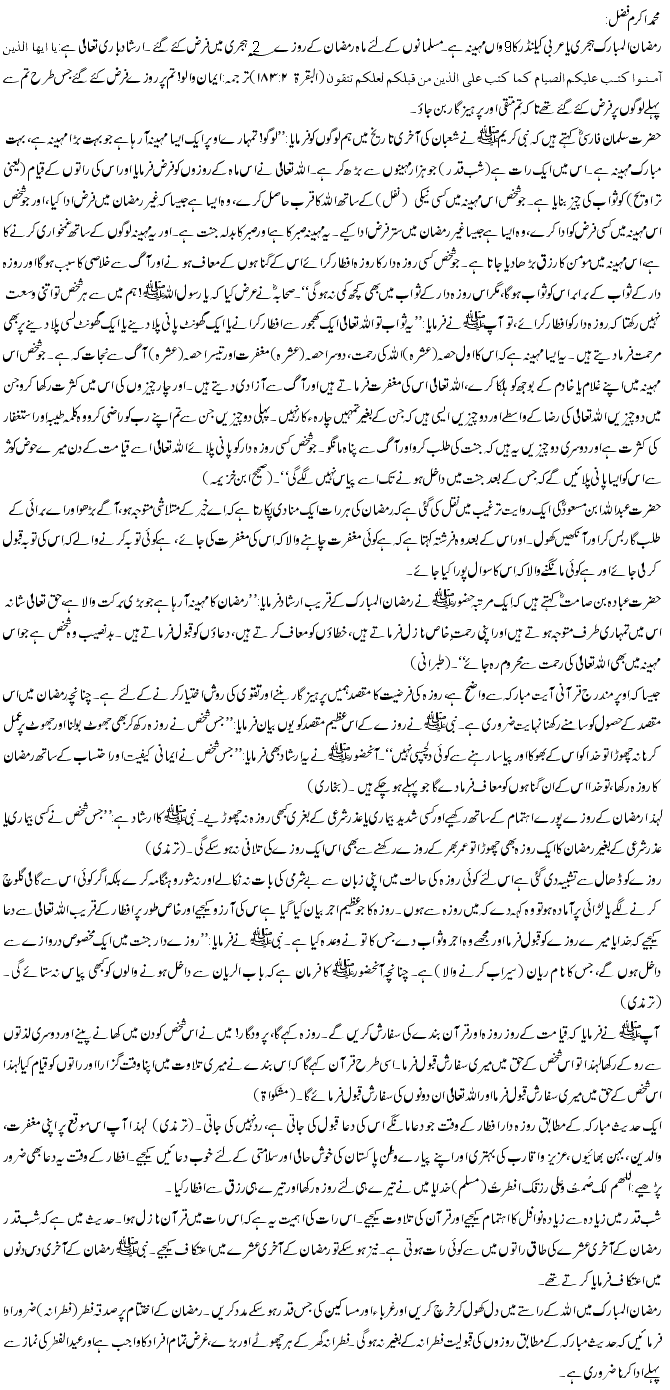
Why Do Muslims Fast in Ramadan?
Fasting in the month of Ramadan is one of the pillars of Islam. Muslims observe the fast happily in obedience to Allah and to seek His reward. Ramadan is a great chance for Muslims to be united and maintain their faith. It teaches Muslims spiritual discipline, self-control, patience, and perseverance.
Muslims fast in order to obey the order of Allah, their Creator. Being All-Wise and All-Knowing, He alone knows what ails humans and what benefits them. As Muslims we believe that God Who created us has provided for our spiritual welfare even as He has provided for our physical needs. He did so by sending prophets and messengers who guided us unto the straight path, and by adhering to it, humans can realize their full humanity and attain ultimate felicity in this world and the next. Fasting in Ramadan, together with prayer, Zakah and pilgrimage to Makkah, is part of a comprehensive program whose purpose is to inculcate in humans true consciousness of their mission in life as God’s servants and develop the right attitude.
Among the many benefits of fasting are the following:
1) It deepens our spiritual awareness by inculcating God-consciousness.
2) It helps our bodies to recuperate and renew; it is comparable to the state of hibernation that all creatures in nature go through.
3) It helps us train in patience.
4) It creates empathy for the poor who are starving.
5) The month of Ramadan gives us a month-long training course to enable us to break free of our bad habits and develop new positive habits.
6) Through fasting we discover true spiritual identity, for too often our entanglements in the physical cares and concerns make us forget our true destiny: We proceed from God and we are ever journeying unto Him.