

Now Before Any Change in Us Can Take Place,
We Need To Reexamine Our Outlook On Prayer.
Ask Yourself:–
Why Do I Pray?
Is it Just Because I Have T?
Is it Just To Get This Daily Duty Out Of The Way And Over With?
Or May Be it is Because Everyone Just Does it So I Do it Too?
It’s Time To Make A Change.
We Need To Start Praying Out Of Sincere Love.
Pray Out Of Longing To Be With The One You Love.
Pray.. For The Peace And Comfort That Comes From Being With The One, You Love.
There Are 3 Reasons Which Make You Love Someone :
1. Either Because That Someone is Beautiful!
2. Or Because Someone Always Deals Kindly With You
3. Or Because That Someone Has Done Many Favors For You…..
Think Of Allah Now.
He is All Of The Above And More,
isn’t He?
Doesn’t He Then Deserve To Be The Most Worthy Of Our Love Over Everything And Anyone Else?
To Truly Love Allah is To Truly Taste The Greatest Love in Existence!
It is To Truly Taste The Beauty Of Faith
Shohar Biwi Ke Huqooq or Faraiz

Shohar Biwi Ke Huqooq or Faraiz by Allama Syed Shah Turab ul Haq Qadri
Inna Lillahi wa inna ilayhi Raji un
The Ayah and its Meaning
Inna Lillahi wa inna ilayhi Raji un
Truly, to Allah, we belong, and truly, to Him, we shall return.
[Noble Quran 2:156]
The translation of the verses mentioned before and after this ayah is:
And certainly, We shall test you with something of fear, hunger, loss of wealth, lives, and fruits, but give glad tidings to As-Sabirin (the patient). [Noble Quran 2:155]
Who, when afflicted with calamity, say: “Truly, to Allah we belong and truly, to Him we shall return.” [Noble Quran 2:156]
They are those on whom are the Salawat (i.e, who are blessed and will be forgiven) from their Lord, and (they are those who) receive His mercy, and it is they who are the guided ones.
[Noble Quran 2:157]
When do we recite this Ayah?
A prevalent perception in our society is that the words Inna Lillahi wa inna ilayhi Raji un are only recited at the time of someone’s death. However, this perception is not correct.
This ayah is to be said in cases where a person has suffered any kind of loss, be it the death of a person (Muslim or non-Muslim) or any living creature, loss of wealth or property, deterioration of health, etc.
There is one Hadith where the Prophet (peace and blessings be upon him) is quoted to have said “Inna Lillahi wa inna ilayhi Raji un” when the lamp went off at night.
Ayesha (May Allah be pleased with her) asked him, “O Messenger of Allah. Is this also a calamity?”
Allahs Messenger replied, “Yes. Whatever hurts or causes difficulty to a Muslim is a calamity and on bearing it patiently, it carries Allah’s promise of reward.”
The Virtues of reciting the Ayah
As mentioned before, Allah asks us to be those who are patient [As-Sabirun] during calamities by reciting the ayah “Inna Lillahi wa inna ilayhi Raji un”.
In the very next ayah Allah tells us of the reward for this practice:
They are those on whom are the Salawat (i.e., who are blessed and will be forgiven) from their Lord, and (they are those who) receive His mercy, and it is they who are the guided ones.
[Noble Quran 2:156]
Muslim narrated in his Sahih that Umm Salamah said:
I heard the Messenger of Allah (peace and blessings be upon him) say: “There is no person who is afflicted with a calamity and says, “Verily to Allah we belong and unto Him is our return. O Allah, reward me for my affliction and compensate me with something better” – but Allah will reward him for his affliction and compensate him with something better.”
She said: When Abu Salamah died, I said: Who is better than Abu Salamah, the companion of the Messenger of Allah? Then Allah caused me to say it and I said it. She said: Then I married the Messenger of Allah (peace and blessings be upon him).
Alhamdulillah (praise be to Allah), who could be a better husband than the Prophet (peace and blessings be upon him)?
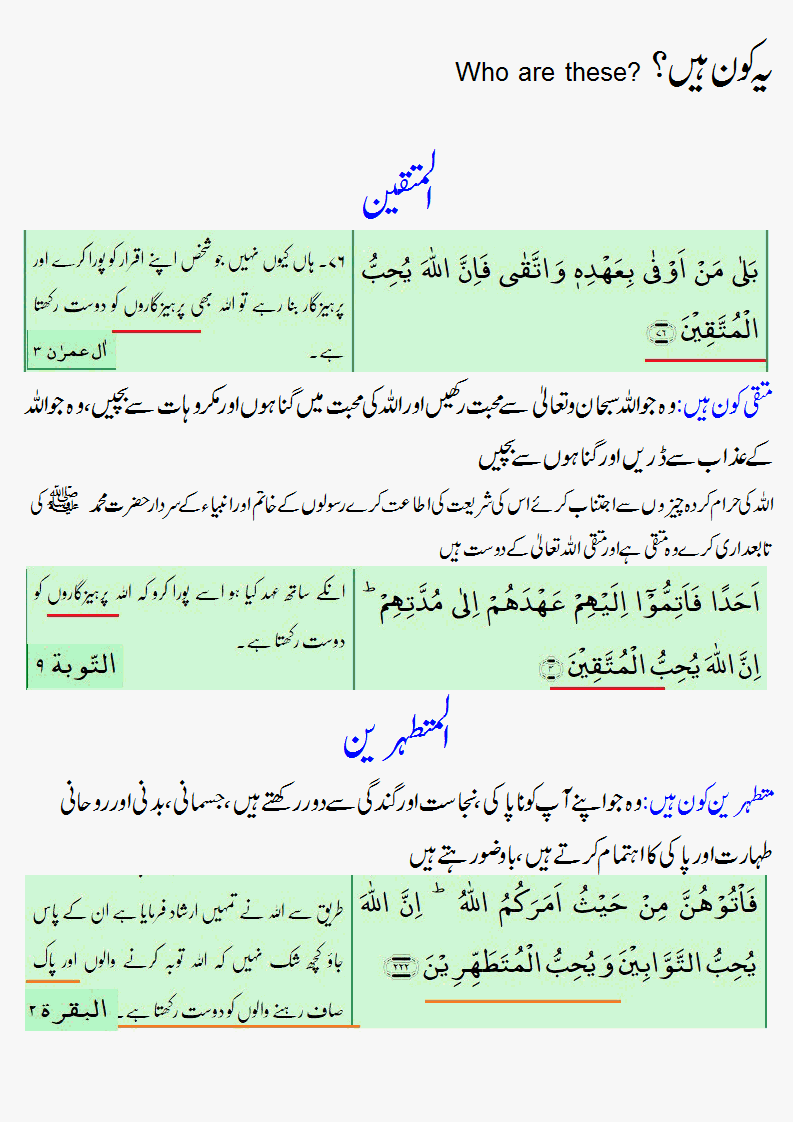
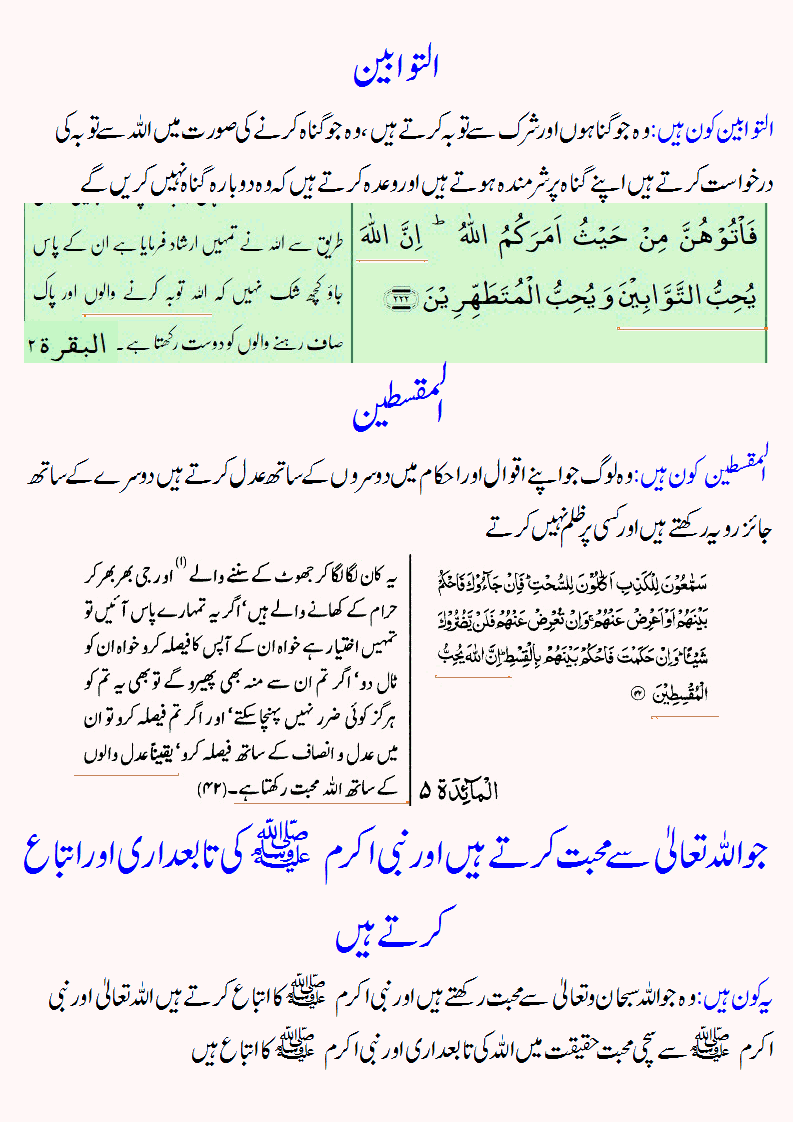
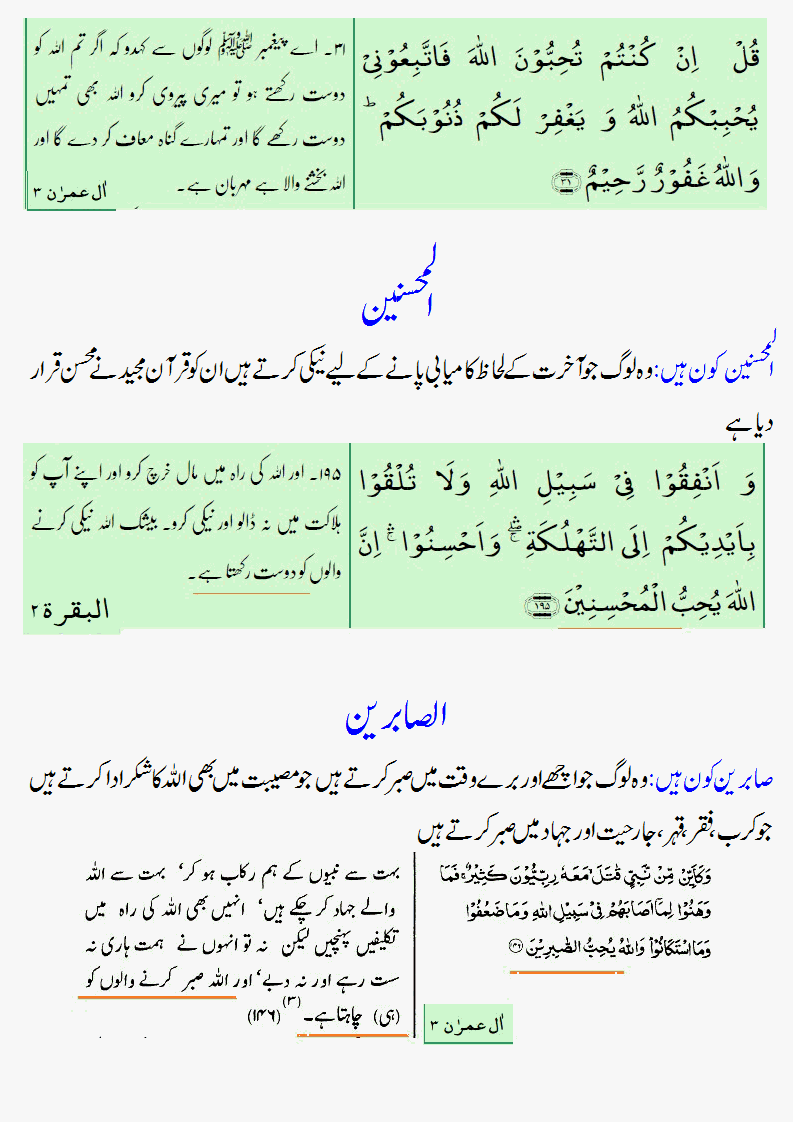
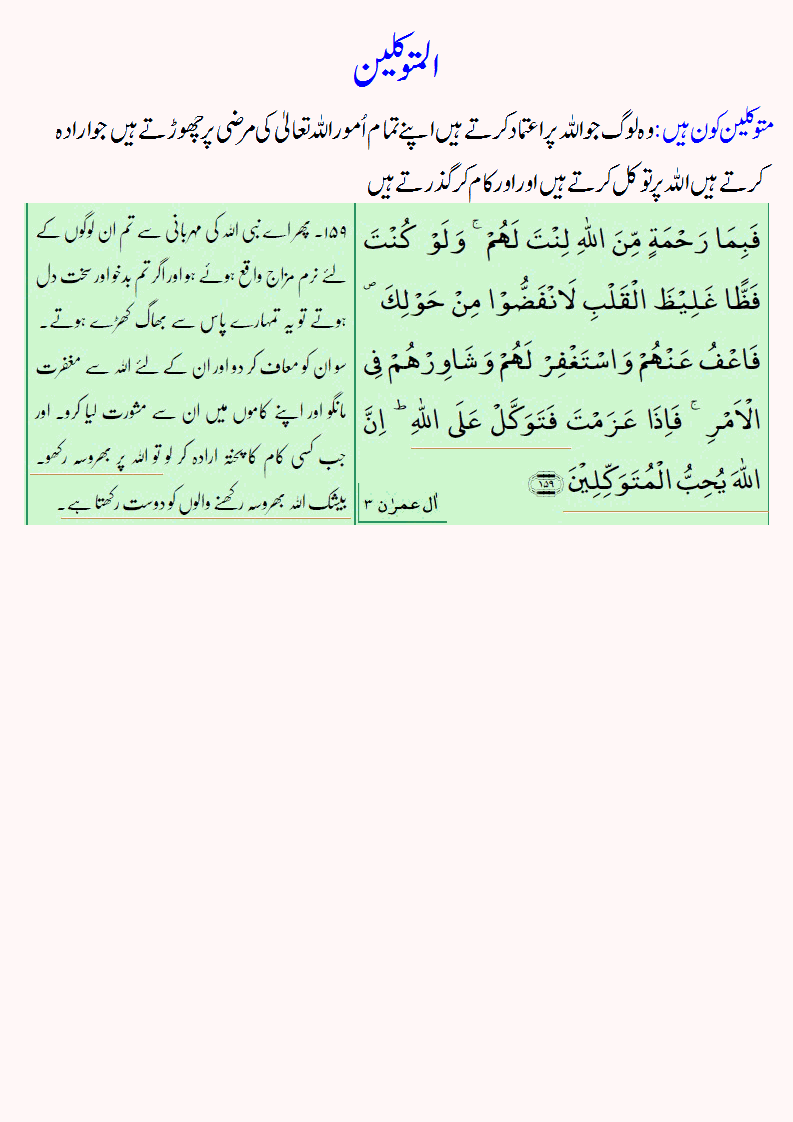
Who Are These
Are you jealous of what others have?
Hasad (jealousy and envy) is among the most destructive emotions which a man may develop toward his fellow human being. With Hasad, a person will wish evil for others and will be happy when misfortune befalls them. The Prophet (peace be upon him) warned against envy by comparing it to fire that completely burns the wood. He (peace be upon him) said: “Beware of jealousy, for verily it destroys good deeds the way fire destroys wood.” (Abu Dawood)
The Prophet (peace be upon him) said: “There has come to you the disease of the nations before you, jealousy and hatred. This is the ‘shaver’ (destroyer); I do not say that it shaves hair, but that it shaves (destroys) faith.. (Al-Tirmidhi, No. 2434)
Hasad can take a person into disbelief because he may conclude that Allah has not been fair with him, while Allah is the Most Just. The person may forget all of Allah’s mercy and blessings bestowed upon him. The Messenger of Allah (peace be upon him) said: “They are enemies of Allah’s bounties.” When asked, “Who are they?” , he replied: “Those who envy people for what Allah has given them of Bounty.” (At-Tabarani)
Allah through His Absolute Wisdom gave some people more wealth, intelligence, beauty, strength, and children than others. Discontentment comes from the slave’s ignorance of his Lord. If he recognizes his Lord with the attributes of Perfection, he would not be discontent and as a result would not develop Hasad. A believing Muslim should be content with what Allah has destined for him. Imam Ibn Qayyim said: “It (contentment) opens the door of peace and security for the slave.
“Allah favored some of you over others with wealth and properties- Do they deny the favors of Allah?” (Qur’an, 16:71)
“Do they envy men for what Allah has given them of His Bounty?” (Qur’an, 4:54)
“It is We Who portion out between them their livelihood in this world, and We raised some of them above others in ranks, so that some may employ others in their work. But the mercy of your Lord is better.” (Qur’an, 43:32) This means that the mercy of Allah is better than the convenience of the world. Material things of this life do not make one superior over another. True superiority lies in Taqwa (righteousness and fear of Allah).
Allah said: “Surely, the most noble of you to Allah is the most God-fearing.” (Qur’an, 49:13)
“And the Hereafter with Your Lord is (only) for those who have Taqwa.” (Qur’an, 43:35)
What belongs to the transient world is of no significance at all before Allah. The Prophet (peace be upon him) said: “If this world were worth a mosquito’s wing before Allah, He would not give a disbeliever a drink of water.” (Al-Tirmidhi)
In order to discourage envy, the Prophet (peace be upon him) said: “Do not look to those above you. Look to those below you, as it will more likely remind you of Allah’s favors bestowed on you.” (Al-Bukhari and Muslim)
Zakat-Ul-Fitr
[Sahih Bukhari : Volume 2, Book 25 Zakat ul Fitr, Number 579]
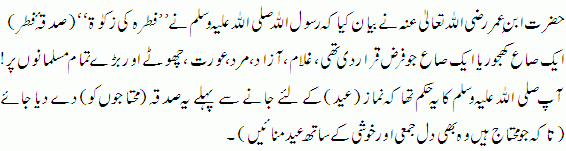
Narrated Ibn Umar ( RadiAllah Anhu) Allah’s Apostle (sal-Allahu-alleihi-wasallam) Enjoined The Payment Of One Sa’ Of Dates Or One Sa’ Of Barley As Zakat-Ul-Fitr On Every Muslim Slave Or Free, Male Or Female, Young Or Old, And He Ordered That it Be Paid Before The People Went Out To Offer The ‘Id Prayer.
[Sahih Muslim : Book 5 Kitab Al-Zakat, Number 2153]
Abdullah bin Umar (Radi Allah Anhu) reported that the Messenger of Allah (sal-Allahu-alleihi-wasallam) Prescribed Zakat-Ul-Fitr Of Ramadan One Sa’ Of Dates Or One Sa’ Of Barley for Every individual Among The Muslims (whether) Free Man Or Slave, Male Or Female, Young Or Old.

[Sahih Bukhari : Volume 2, Book 25 Zakat ul Fitr, Number 588]
Narrated Ibn ‘Umar (Radi Allah Anhu): Allah’s Apostle (sal-Allahu-alleihi-wasallam) has made Sadaqatul-Fitr obligatory, (and it was),
Either One Sa’ Of Barley Or One Sa’ Of Dates (and its payment was obligatory) on young and old people, and on free men as well as on slaves.

[Sahih Muslim : Book 5 Kitab Al-Zakat, Number 2159]
Ibn ‘Umar (Radi Allah Anhu) reported that the Messenger of Allah (sal-Allahu-alleihi-wasallam) ordered that the Sadaqat-ul-Fitr should be paid before the people go out for prayer.

[Sahih Bukhari : Volume 2, Book 25 Zakat ul Fitr, Number 587]
Narrated Nafi’: Ibn ‘Umar (Radi Allah Anhu) said, “The Prophet (sal-Allahu-alleihi-wasallam) made incumbent on every male or female, free man or slave, the payment of One Sa’ Of Dates Or Barley As Sadaqat-Ul-Fitr (or said Sadaqa-Ramadan) .”
The People then substituted half Sa’ of wheat for that. Ibn ‘Umar used to give dates (as Sadaqat-ulFitr) . Once there was scarcity of dates in Medina and Ibn ‘Umar gave barley. ‘ And Ibn ‘Umar used to give Sadaqat-ul-Fitr for every young and old person. He even used to give on behalf of my children. Ibn ‘Umar used to give Sadaqatul-Fitr to those who had been officially appointed for its collection. People used to give Sadaqat-ul-Fitr (even) a day or two before the ‘Eid.

Never Forget To Pray To ALLAH
[Quran – 2:45] “And seek assistance through patience and prayer, and most surely it is a hard thing except for the humble ones,”
The Prophet (Peace Be Upon Him) has said:
[Bukhari, Book #21, Hadith #263] “O Allah! I ask guidance from Your Knowledge, And Power from Your Might and I ask for Your great blessings. You are capable and I am not. You Know and I do not and You Know the unseen. O Allah! If You Know that This job is good for my religion and my subsistence and in my Hereafter–(or said: If it is better for my present and later needs)–Then You ordain it for me and make it easy for me to get, And then bless me in it, and if You Know that This job is harmful tome In my religion and subsistence and in the Hereafter–(or said: If it is worse for my present and later needs)–Then keep it away from me and let me be away from it. And ordain for me whatever is good for me, And make me satisfied with it). The Prophet added that then the person should name (mention) his need.”
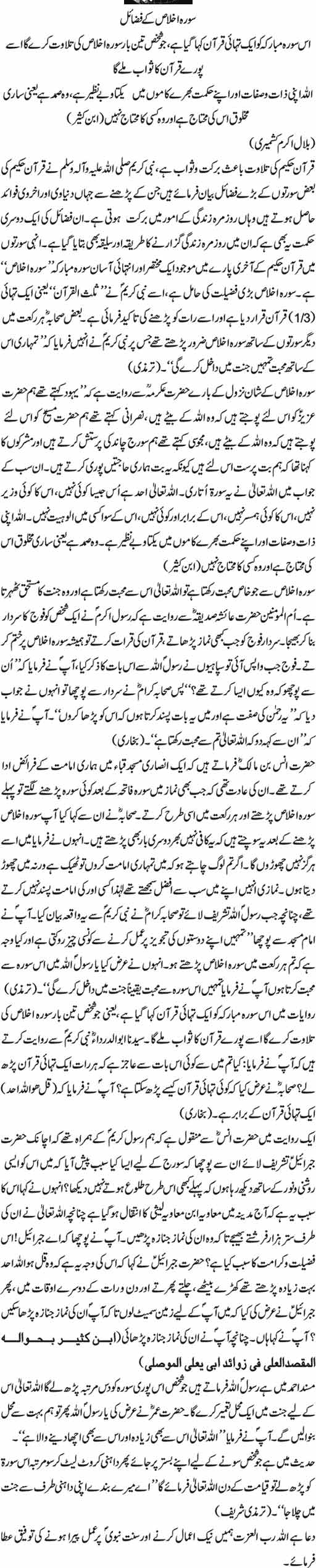
Surah Ikhlas k fawaid
Allah’s Command- Be Just
[ALLAH’S Quran – 4:58] “…And exercise justice when you sit in judgement upon people, and be consonant with the principles of moral right and in accordance with reason and fact. Allah enjoins only what is right and sound; how morally excellent is what He exhorts you to do; Allah has always been Sami’un with (unlimited audition), and Bassirun, (He sees all that you do).”
The Prophet (Peace Be Upon Him) has said :
[Muslim, Book #020, Hadith #4493] “It has been narrated on the authority of ‘Abdullah b. ‘Umar that the Messenger of Allah (may peace be upon him) said: Behold! the Dispensers of justice will be seated on the pulpits of light beside God, on the right side of the Merciful, Exalted and Glorious. Either side of the Being is the right side both being equally meritorious. (The Dispensers of justice are) those who do justice in their rules, in matters relating to their families and in all that they undertake to do.”
[Sunan Abudawud, Book #24, Hadith #3568] “Narrated Abu Hurayrah: The Prophet (peace_be_upon_him) said: If anyone seeks the office of judge among Muslims till he gets it and his justice prevails over his tyranny, he will go to Paradise; but the man whose tyranny prevails over his justice will go to Hell.”
Masjid k Aadaab
