
Allah Guides Whom He Likes To The Straight Path
[002.142] The fools (pagans, hypocrites, and Jews) among the people will say: “What has turned them (Muslims) from their Qiblah [prayer direction (towards Jerusalem)] to which they used to face in prayer.” Say (O Muhammad [sal-Allâhu ‘alayhi wa sallam]): “To Allâh belong both, the east and the west. He guides whom He wills to a Straight Way.”
The Prophet (PBUH) has said:
[Bukhari, Book #8, Hadith #392] “Narrated Bara’ bin ‘Azib: Allah’s Apostle prayed facing Baitul-Maqdis for sixteen or seventeen months but he loved to face the Ka’ba (at Mecca) so Allah revealed: “Verily, We have seen the turning of your face to the heaven!” (2:144) So the Prophet faced the Ka’ba and the fools amongst the people namely “the Jews,” said, “What has turned them from their Qibla (Bait-ul-Maqdis) which they formerly observed” (Allah revealed): “Say: ‘To Allah belongs the East and the West. He guides whom he will to a straight path.” (2:142) A man prayed with the Prophet (facing the Ka’ba) and went out. He saw some of the Ansar praying the ‘Asr’ prayer with their faces towards Bait-ul-Maqdis, he said, “I bear witness that I prayed with Allah’s Apostle facing the Ka’ba.” So all the people turned their faces towards the Ka’ba.”
[Muslim, Book #004, Hadith #1694] “’Abd al-Rahman b. ‘Auf reported: I asked ‘A’isha, the mother of the believers, (to tell me) the words with which the Apostle of Allah (may peace be upon him) commenced the prayer when he got up at night. She said: When he got up at night he would commence his prayer with these words: O Allah, Lord of Gabriel, and Michael, and Israfil, the Creator of the heavens and the earth, Who knowest the unseen and the seen; Thou decidest amongst Thy servants concerning their differences. Guide me with Thy permission in the divergent views (which the people) hold about Truth, for it is Thou Who guidest whom Thou wilt to the Straight Path.”
[Sunan Abu Dawud, Book #11, Hadith #2113] “Narrated Abdullah ibn Mas’ud: The Apostle of Allah (peace be upon him) taught us the address in case of some need: Praise be to Allah from Whom we ask help and pardon, and in Whom we take refuge from the evils within ourselves. He whom Allah guides has no one who can lead him astray, and he whom He leads astray has no one to guide him. I testify that there is no god but Allah, and I testify that Muhammad is His servant and Apostle. “You who believe,…fear Allah by Whom you ask your mutual rights, and reverence the wombs. Allah has been watching you.” …”you who believe, fear Allah as He should be feared, and die only as Muslims” ….”you who believe, fear Allah as He should be feared, and die only as Muslims”…..” you who believe, fear Allah and say what is true. He will make your deeds sound, and forgive your sins. He who obeys Allah and His Apostle have achieved a mighty success.” The narrator, Muhammad ibn Sulayman, did mention the word “inna” (verily).”
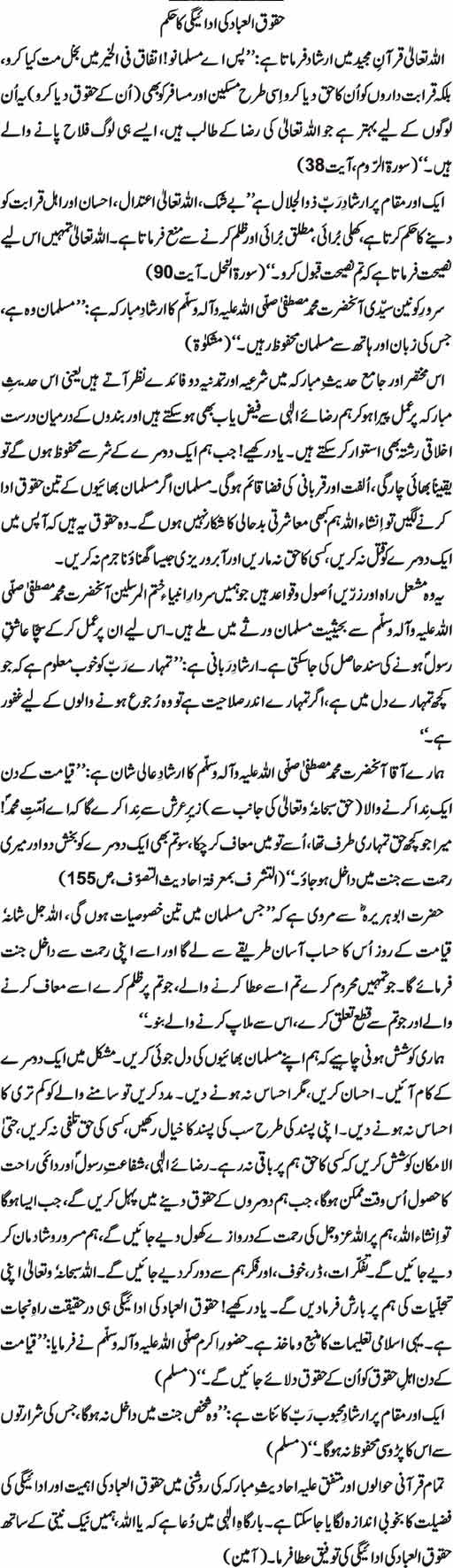
Haqooq Ul Ibad
Sacrificing Animals – In Light of Sacred Traditions of the Beloved SallAllaho Alaihi wa Sallam
All Praises is due to Almighty Allah SubHanuhu wa Ta’ala, Peace and Blessings be upon the most perfect of creations, His Beloved Habeeb, Sayyiduna Rasoolullah SallAllaho Alaihi wa Sallam his noble Family and the illustrious Sahaba Ridwanullahi Ta’ala Alaihim Ajma’een and all the pious servants of Almighty Allah SubHanuhu wa Ta’ala.
SACRIFICING ANIMALS
I. Hadrat Zaid ibn Arqam Radi Allahu Ta’ala Anhu reported that the companions of the Messenger of Allah SallAllaho Alaihi wa Aalihi wa Sallam asked:
“O Messenger of Allah! What is this sacrifice?” He said, “It is the practice of your father Abraham.” They asked, “What is the reward for us in it?” He said, “For every hair, you will be rewarded.” They asked, “for the wool, O Messenger of Allah?” He said, “For every strand of wool you will be rewarded.” [Sunan Ibn Majah, Vol. 1, Page 226, Hadith 3247]
II. Hadrat ‘Ayesha Radi Allahu Ta’ala Anha reported that the Messenger of Allah SallAllaho Alaihi wa Aalihi wa Sallam has said,
“On the day of sacrifice no one does a deed more pleasing to Allah than the shedding of blood. The sacrifice will come on the Day of Resurrection with its horns, its hairs and its hooves; and the blood finds acceptance with Allah before it falls on the ground.” [Sunan Tirmidhi, Vol. 1, Page 275, Hadith 1572]
III. Hadrat Hanash Radi Allahu Ta’ala Anhu reported:
I saw Hadrat ‘Ali sacrificing two rams. I asked him: “what is this?” He said, “The Messenger of Allah had enjoined me to sacrifice on his behalf; so I am sacrificing on his behalf.” [Mishkat, Page 128, Hadith 1642]
IV. Hadrat Abu Hurairah Radi Allahu Ta’ala Anhu reported that the Messenger of Allah SallAllaho Alaihi wa Aalihi wa Sallam has said,
“Such a person who had the ability and means to sacrifice an animal, but (despite this) he did not do so; should never come near our Eidgah (place where the Eid prayers are performed).” [Musnad Ahmad, Vol. 18, Page 27, Hadith 8496]
V. Hadrat Umm-e-Salmah Radi Allahu Ta’ala Anha reported that the Messenger of Allah SallAllaho Alaihi wa Aalihi wa Sallam has said,
“when you see the new moon of Dhul Hijjah and one of you intends to make sacrifice, he must not shave his hair, trim it, or clip his nails.” [Sahih Muslim, Vol. 2, Page 160, Hadith 5234]
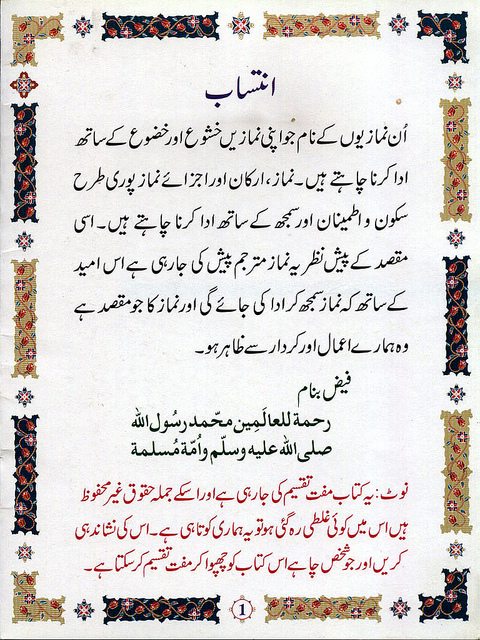
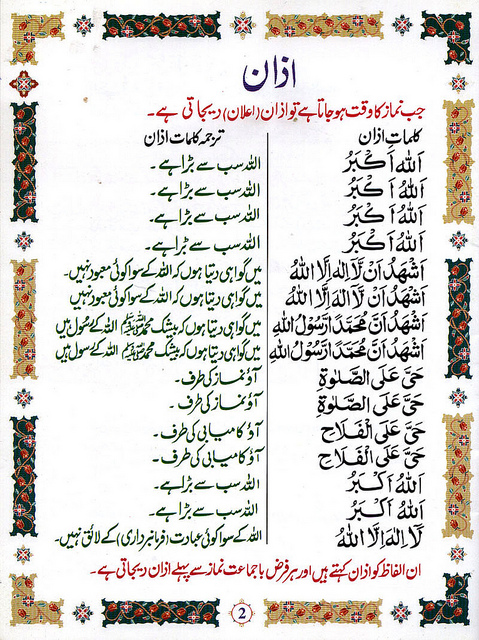
Namaaz Mutarjam
Allah Answers the Prayer of the Suppliant

Call upon Me, I will answer you; surely those who are too proud for My service shall soon enter hell abased.

Allah Answers the Prayer of the Suppliant
[Sahih Muslim : Book 35, Book Name Kitab Al-Dhikr Number 6593]
Narrated Abu Huraira (Radi Allah Anhu): Allah’s Apostle (sal-allahu-alleihi-wasallam) said:
“The supplication of every one of you is granted if he does not grow impatient and says: I supplicated but it was not granted.”
![[Sahih Muslim : Book 35, Book Name Kitab Al-Dhikr Number 6593]](https://www.imanislam.com/images/dua/sahih-muslim_hadith2401.gif)
[Sahih Muslim : Book 35, Book Name Kitab Al-Dhikr, Number 6594]
Narrated Abu Huraira (Radi Allah Anhu): Allah’s Apostle (sal-allahu-alleihi-wasallam) as saying:
“The supplication of one of you is granted if he does not grow impatient and say- I supplicated my Lord but it was not granted.”
![[Sahih Muslim : Book 35, Book Name Kitab Al-Dhikr, Number 6594]](https://www.imanislam.com/images/dua/sahih-muslim-hadith2402.gif)
[Sahih Muslim : Book 35, Book Name Kitab Al-Dhikr, Number 6595]
Narrated Abu Huraira (Radi Allah Anhu): Allah’s Apostle (sal-allahu-alleihi-wasallam) as saying:
“The supplication of the servant is granted in case he does not supplicate for sin or for severing the ties of blood, or he does not become impatient. It was said: Allah’s Messenger, what does:” If he does not grow impatient” imply? He said: That he should say like this: I supplicated and I supplicated but I did not find it being responded. and theu he becomes frustrated and abandons supplication.”
![[Sahih Muslim : Book 35, Book Name Kitab Al-Dhikr, Number 6595]](https://www.imanislam.com/images/dua/sahih-muslim-hadith2403.gif)


Our Lord! and grant us what Thou hast promised us by Thy apostles; and disgrace us not on the day of resurrection; surely Thou dost not fail to perform the promise.

Hajj

Friday Explained By The Prophet (Peace Be Upon Him)
“O you who believe! when the call is made for (the Congregational) Prayer on Friday then hasten to extol the name of Allah and leave off all business. That is best for you if you only knew.” [ALLAH’S Quran – 62:9]
The Prophet (Peace Be Upon Him) has said:
1. [Sunan Abudawud, Book #3, Hadith #1051] Narrated Abdullah ibn Amr: The Prophet (peace be upon him) said: The Friday prayer is obligatory on him who hears the call.
2. [Sunan Abudawud, Book#3, Hadith #1062] Narrated Tariq ibn Shihab: The Prophet (peace be upon him) said: The Friday prayer in congregation is a necessary duty for every Muslim, with four exceptions; a slave, a woman, a boy, and a sick person.
3. [Sunan Abudawud, Book #1, Hadith #0342] Narrated Hafsah, Ummul Mu’minin: The Prophet (peace be upon him) said: It is necessary for every adult (person) to go for (saying) Friday (prayer), and for everyone who goes for Friday (prayer) washing is necessary.
4. [Bukhari, Book #13, Hadith #6] Narrated Abu Huraira: Allah’s Apostle (p.b.u.h) said, “Any person who takes a bath on Friday like the bath of Janaba and then goes for the prayer (in the first hour i.e. early), it is as if he had sacrificed a camel (in Allah’s cause); and whoever goes in the second hour it is as if he had sacrificed a cow; and whoever goes in the third hour, then it is as if he had sacrificed a horned ram; and if one goes in the fourth hour, then it is as if he had sacrificed a hen; and whoever goes in the fifth hour then it is as if he had offered an egg. When the Imam comes out (i.e. starts delivering the Khutba), the angels present themselves to listen to the Khutba.”
5. [Bukhari, Book #13, Hadith #51] Narrated Abu Huraira: The Prophet said, “When it is a Friday, the angels stand at the gate of the mosque and keep on writing the names of the persons coming to the mosque in succession according to their arrivals. The example of the one who enters the mosque in the earliest hour is that of one offering a camel (in sacrifice). The one coming next is like one offering a cow and then a ram and then a chicken and then an egg respectively. When the Imam comes out (for Jumua prayer) they (i.e. angels) fold their papers and listen to the Khutba.”
Commander In Chief
Our Daughters Are A Blessing, Not A Burden
Children are no doubt a great gift from Almighty Allah to all parents. Parents must think of their children as such treasures that all the wealth and material resources are worthless when compared to one’s children. We, as parents, should thank and be grateful to Almighty Allah for blessing us with children whether they are boys or girls. Today, it is quite disheartening to see that some parents rejoice when the newborn child is a male and show their dissatisfaction when the child is a female. But, this should not be the attitude. Islam does not condone this type of behavior, as such was the manner of the parents in the time of ignorance.
In pre-Islamic times, the Arabs used to be disheartened and annoyed with the birth of girls, so a father, when informed his wife had given birth to a girl, said, “By Allah, she is not as blissful as a son; her defense is crying and her care is but stealing!”
He meant she could not defend her father and her family except by screaming and crying, not by fighting and carrying arms. She also cannot be good to them and care for them except by taking from her husband’s money to give to her family. Their traditions allowed the father to bury his daughter alive for actual poverty, or for expected poverty, or out of fear of a disgrace she might bring upon them when she grew up. In that context, the Qur’an says, denouncing and derogating them:
“And when the girl-child who was buried alive is asked. Upon what sin was she killed for.” [Surah al-Takweer, Verses 8-9]
The Qur’an also describes the condition of fathers when their daughters were born:
“And when one among of them receives the glad tidings of a daughter, his face turns black for the day, and he remains seething. Hiding from the people because of the evil of the tidings; “Will he keep her with disgrace, or bury her beneath the earth?”; pay heed! Very evil is the judgment they impose!” [Surah al-Nahl, Verse 58-59]