
TAG: Prayer
Three Kinds Of Dua
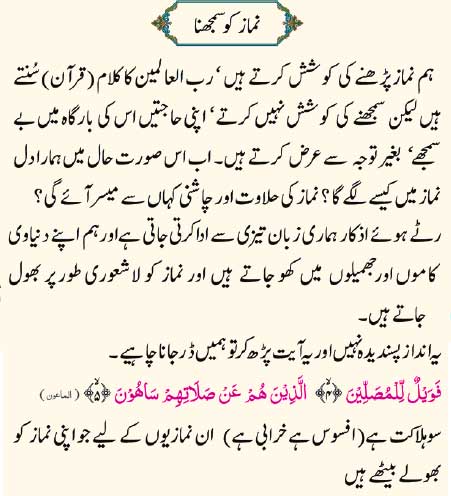
Prayer or supplication (Dua) is the essence of worship or servanthood to God. What rises to God from the whole creations is prayer. It has kinds and degrees:
1. The first kind is the prayer of all organisms, plant, animal and human, through the natural disposition of their bodies and their functioning in line with their duties in creation. This kind of prayer is always accepted.
2. The second kind is that which is uttered by all organisms, plant, animal, and human, in the tongue of vital needs. God meets these needs just on time, with the exception that plants, and the animals relatively weaker and less intelligent (as compared to others, such as wolves and foxes), are nourished more easily than the others. The more powerful and intelligent and more self-subsisting a creature is, the greater hardship it suffers to get nourishment.
3. The third kind of prayer is that which is done by human beings. This falls into two categories:
i. The first category is the active prayer. It means complying with the laws that God has set for life. For example, a farmer’s ploughing the soil is knocking on the door of Divine providence. A patient’s going to the doctor is appealing to God for cure. This kind of prayer is usually accepted.
ii. The second category is the verbal prayer that we do. This kind of prayer is also answered. But answering is different from accepting. God answers all the prayers done sincerely. However, He answers sometimes by giving whatever is asked for, sometimes by giving what is better, sometimes by postponing giving to the afterlife, and sometimes by not giving at all, since it will not turn out in favor of the one who prays. The way that God answers prayer depends on His wisdom.
You Don’t Get Any U-turns On The Way Up To Allah
When we pack our bags to go visit our friends, we remember to pack our clothes, shoes, and other little things.
Since we could know right from wrong, we have started packing our bags and will finish when our souls leave us.
Have you packed your prayer in your bag of provisions everyday? Have you packed your fasting? Have you packed your reading and memorizing the Qur’an?
Our bags are called life. We have to pack everyday because we don’t know when Allah will call us back, so we have to be ready for the journey.
And on the way up to Allah, you don’t get any U-turns so that you could go back and get the things you forgot to pack. So start packing if you already haven’t, and don’t forget, there’s no such thing as too many bags when we’re packing for our trip to Allah.
The Gate Of Iman- Hazrat Abu Bakr Siddique radiallahu taala anhu
Sahih Bukhari Volume 1, Book 8, Number 455
Narrated by Abu Said Al-Khudri
The Prophet delivered a sermon and said, “Allah gave a choice to one of (His) slaves either to choose this world or what is with Him in the Hereafter. He chose the latter.” Abu Bakr wept. I said lo myself, “Why is this Sheikh weeping, if Allah gave choice to one (of His) slaves either to choose this world or what is with Him in the Here after and he chose the latter?” And that slave was Allah’s Apostle himself. Abu Bakr knew more than us. The Prophet said, “O Abu Bakr! Don’t weep. The Prophet added: Abu- Bakr has favored me much with his property and company. If I were to take a Khalil from mankind I would certainly have taken Abu Bakr but the Islamic brotherhood and friendship is sufficient. Close all the gates in the mosque except that of Abu Bakr.
The way of Love , Ishq E Rasool is the gate of the way to Allah , All who achieved communion with Allah , came through the way of love , this is way of Abu Bakr Siddique radi allahu taala anhu and the way of Success ,
He was among the first person to endorse and accept the Apostleship of the Holy Prophet Muhammed Salalaahu Alaihi wasallam.
His deep love and reverence for the Holy Prophet Muhamed Salalaahu Alaihi wasallam earned him some of the highest honors
He Always led the prayer in the absence of The Holy Prophet Muhammed Salalaahu Alaihis wasallam
Sahih Bukhari Volume 1, Book 11, Number 633 :
Narrated by Al-Aswad
“We were with ‘Aisha discussing the regularity of offering the prayer and dignifying it. She said, ‘When Allah’s Apostle fell sick with the fatal illness and when the time of prayer became due and Adhan was pronounced, he said, ‘Tell Abu Bakr to lead the people in prayer.’ He was told that Abu Bakr was a soft-hearted man and would not be able to lead the prayer in his place. The Prophet gave the same order again but he was given the same reply. He gave the order for the third time and said, ‘You (women) are the companions of Joseph. Tell Abu Bakr to lead the prayer.’ So Abu Bakr came out to lead the prayer. In the meantime the condition of the Prophet improved a bit and he came out with the help of two men one on each side. As if I was observing his legs dragging on the ground owing to the disease. Abu Bakr wanted to retreat but the Prophet beckoned him to remain at his place and the Prophet was brought till he sat beside Abu Bakr.” Al-A’mash was asked, “Was the Prophet praying and Abu Bakr following him, and were the people following Abu Bakr in that prayer?” Al-A’mash replied in the affirmative with a nod of his head. Abu Muawiya said, “The Prophet was sitting on the left side of Abu Bakr who was praying while standing.”
Sayings Of The Prophet Muhammad (PBUH)
Narrated by Imran ibn Husayn(Radhiallaho anho): Allah’s Messenger (sallAllaahu `alaihi wasallam) said : If anyone swears a false oath in confinement, he should make his seat in Hell
on account of his (act).
Sunan of Abu-Dawood 3236
Narrated by AbuSa’id al-Khudri(Radhiallaho anho): Allah’s Messenger (sallAllaahu `alaihi wasallam) said :A man giving a dirham as sadaqah (charity) during his life is better than giving one hundred dirhams as sadaqah (charity) at the moment of his death.
Sunan of Abu-Dawood 2860
Narrated by Ibn Abbas (Radhiallaho anho): Allah’s Messenger (sallallaahu ‘alaihi wasallam)said, “There are two blessings which many people lose: (They are) health and free time for doing good.”
Sahih Al-Bukhari Vol. 8 : No. 421
Narrated by Abu Huraira (Radhiallaho anho): Allah’s Messenger (sallallaahu ‘alaihi wasallam) said, ” “Whoever believes in Allah and His Apostle, offers prayer perfectly and fasts the month of Ramadan, will rightfully be granted Paradise by Allah, no matter whether he fights in Allah’s cause or remains in the land where he is born.” The people said, “O Allah’s Apostle! Shall we acquaint the people with this good news?” He said, “Paradise has one-hundred grades which Allah has reserved for the mujahidin who fight in His cause, and the distance between each of two grades is like the distance between the Heaven and the earth. So, when you ask Allah (for something), ask for Al-Firdaus which is the best and highest part of Paradise.” (i.e., The sub-narrator added, “I think the Prophet also said, ‘Above it (i.e. Al-Firdaus) is the Throne of Beneficent (i.e. Allah), and from it originate the rivers of Paradise.”)
Sahih Al-Bukhari Vol. 4 : No. 48 Hadith
Narrated by Abu Huraira (Radhiallaho anho): Allah’s Messenger (sallallaahu ‘alaihi wasallam) said, “Angels come to you in succession by night and day and all of them get together at the time of the Fajr and ‘Asr prayers. Those who have passed the night with you (or stayed with you) ascend (to the Heaven) and Allah asks them, though He knows everything about you, well, “In what state did you leave my slaves?” The angels reply: “When we left them they were praying and when we reached them, they were praying.”
Sahih Al-Bukhari Vol. 1 : No. 530
Some Hadith On Supplication
1496. Usamah bin Zaid (May Allah be pleased with them) reported: The Messenger of Allah (PBUH) said, “He who is favored by another and says to his benefactor: `Jazak-Allah khairan (may Allah reward you well)’ indeed praised (the benefactor) satisfactorily.”
[At-Tirmidhi].
Commentary: If one is unable to return someone’s kindness with kindness, he should say, “Jazak-Allahu khairan (may Allah reward you well).” This means: “I am unable to reciprocate your kindness. May Allah grant you the best reward for it.” Obviously there is no match for the reward that one gets from Allah. For this reason the Prophet (PBUH) said that it was the best of the praise for a benefactor.
1497. Jabir (May Allah be pleased with him) reported: The Messenger of Allah (PBUH) said, “Do not invoke curses on yourself or on your children or on your possessions lest you should happen to do it at a moment when the supplications are accepted, and your prayer might be granted.”
[Muslim].
Commentary: Almighty Allah always listens to everyone’s prayer but He has fixed certain times when He grants more prayers addressed to Him. Therefore, one should never curse oneself or one’s own children or one’s own business, etc., lest this is done at the time when prayers are accepted by Allah and then one has to regret it all his life.
1498. Abu Hurairah (May Allah be pleased with him) reported: The Messenger of Allah (PBUH) said, “A slave becomes nearest to his Rubb when he is in prostration. So increase supplications in prostrations.”
[Muslim].
Commentary: This Hadith points out the excellence of supplicating while prostrating in Salat, as one gets closer to Allah in this position.
1499. Abu Hurairah (May Allah be pleased with him) reported: The Messenger of Allah (PBUH), “The supplication of every one of you will be granted if he does not get impatient and say (for example): `I supplicated my Rubb but my prayer has not been granted’.”
[Al-Bukhari and Muslim].
The narration of Muslim is: “The supplication of a slave continues to be granted as long as he does not supplicate for a sinful thing or for something that would cut off the ties of kinship and he does not grow impatient.” It was said: “O Messenger of Allah! What does growing impatient mean?” He (PBUH) said, “It is one’s saying: `I supplicated again and again but I do not think that my prayer will be answered.’ Then he becomes frustrated (in such circumstances) and gives up supplication altogether.”
Commentary: We learn from this Hadith that one should continue beseeching Allah without ever thinking that in spite of praying for a long time, his prayer has not been granted. One should never allow frustration to overcome in his mind. If a person’s supplication is not granted for a long time, there would be certainly some good for him in that delay the reason of which is known to Allah Alone. It is, therefore, essential that he should never cease to pray whether his prayer is granted or not. Persistence in prayer is certainly beneficial to him.
1500. Abu Umamah (May Allah be pleased with him) reported: The Messenger of Allah (PBUH) was asked: “At what time does the supplication find the greatest response?” He (PBUH) replied, “A supplication made during the middle of the last part of the night and after the conclusion of the obligatory prayers.”
[At-Tirmidhi].
Commentary: “Al-‘Akhir” is the characteristic of “Jauf” and in the present context it means the late hours of night. “Jauf” can also mean here “middle”, that is in the later-half of the night.
In other words, if the night is divided between two equal parts then it (Jauf) would be the middle of the second part. In either case it is the time of the night which in other Ahadith has been termed as the third part of the night. It is the time when Almighty Allah comes to descend on the sky of this world.
Prayers are also granted by Allah after the obligatory Salat.
1501. `Ubadah bin As-Samit (May Allah be pleased with him) said: The Messenger of Allah (PBUH) said, “Whenever a Muslim supplicates Allah, He accepts his supplication or averts any similar kind of trouble from him until he prays for something sinful or something that may break the ties of kinship.” Upon this someone of the Companions said: “Then we shall supplicate plenty.” The Messenger of Allah (PBUH) said, “Allah is more plentiful (in responding).”
[At-Tirmidhi].
Commentary: We learn from this Hadith that prayer (supplication) is beneficial to us in any case, because Almighty Allah either grants the prayer we make, or if the supplication is not being accepted, He removes some future trouble that was destined for us, or He grants us in full in the Hereafter.
A Muslim should never feel shy of praying to Allah. In fact, he should persistently pray because there is no end to His Treasures.
1502. Ibn `Abbas (May Allah be pleased with them) said: The Messenger of Allah (PBUH) used to say when he was in distress: “La ilaha illallahul-Azimul-Halim. La ilaha illallahu Rabbul-`Arshil-`Azim. La ilaha illallahu Rabbus-samawati, wa Rabbul-ardi, wa Rabbul-`Arshil-Karim. (None has the right to be worshiped but Allah the Incomparably Great, the Compassionate. None has the right to be worshiped but Allah the Rubb of the Mighty Throne. None has the right to be worshipped but Allah the Rubb of the heavens, the Rubb of the earth, and the Rubb of the Honourable Throne).”
[Al-Bukhari and Muslim].
Commentary: The only medicine in a time of distress is the remembrance of Allah Whose Help alone should be sought. This Du`a contains words which glorify Allah and exalt Him far above all else. It is desirable to recite these words when one is in distress as this is exactly what the Prophet (PBUH) used to recite in such situations.
Easy Actions Equal In Reward To Hajj
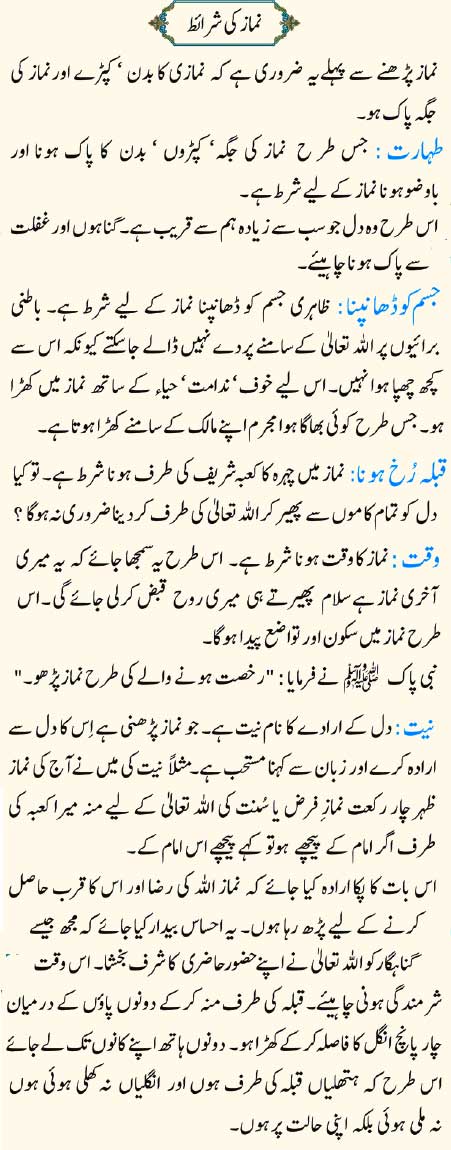
Muslim reported that the Prophet, sallallahu `alayhi wa sallam said, “?Hasn’t Allah made for you Salat Al-`Ishaa’ in congregation equal to Hajj, and the Fajr prayer in congregation equal to `Umrah.”
“Whoever walks to an obligatory prayer in congregation, it is like Hajj, and whoever walks to a voluntary prayer, it is like a voluntary `Umrah.” (Saheeh Al Jaami`, 6432)
“Whoever prays Fajr in congregation, then sits remembering Allah until the Sun rises, then prays two units of prayer, he will receive the reward of Hajj, and `Umrah – complete, complete, complete.” (Saheeh Al Jaami`, 6222)
It is authentically reported that people said, “O Messenger of Allah! The rich took the reward of akhirah, they do Hajj and we do not; they engage in jihaad, and we do not. So the Prophet, sallallahu `alayhi wa sallam, said, “Shall I not guide you to something that, if you stick to it, you will come with what is better than what one of them will come with: that you say Allahu Akbar 34 times, and Subhan Allah 33 times, and Alhamdulillah 33 times, at the end of every prayer.”
“When one prays for one’s brother, the angel says: ‘Amin, and for you the same.'” (Saheeh Al Jaami`, 2143) So pray for your brother pilgrim that Allah accepts his Hajj and gives him its reward.
Allah Makes Religion Easy For The Believers
[ALLAH’S Quran – 18:88] “But as for him who believes and does righteous deeds – he will have the ultimate good [of the life to come] as his reward; and [as for us,] we shall make binding on him [only] that which is easy to fulfil.”
The Prophet (Peace Be Upon Him ) has said:
[Bukhari, Volume #7, Hadith #38] “The Prophet Muhammad (peace be upon him) once asked a companion: “(Is it true) that you fast all day and stand in prayer all night?” The companion replied that the report was indeed true. The Prophet then said: “Do not do that! Observe the fast sometimes and also leave (it) at other times; stand up for prayer at night and also sleep at night. Your body has a right over you, your eyes have a right over you and your wife has a right over you.”
[Bukhari, Book #2, Hadith #38] “Narrated Abu Huraira: The Prophet said, “religion is very easy and whoever overburdens himself in his religion will not be able to continue in that way. So you should not be extremists, but try to be near to perfection and receive the good tidings that you will be rewarded; and gain strength by worshipping in the mornings, the nights.”
(See Fath-ul-Bari, Page 102, Vol 1).
[Bukhari, Book #21, Hadith #251] “Narrated ‘Aisha: A woman from the tribe of Bani Asad was sitting with me and Allah’s Apostle (p.b.u.h) came to my house and said, “who is this?” I said, “(She is) So and so. She does not sleep at night because she is engaged in prayer.” The Prophet said disapprovingly: Do (good) deeds which is within your capacity as Allah never gets tired of giving rewards till you get tired of doing good deeds.”
As Hajj Approaches, Ummah Gets United
Prophet Muhammad (peace be upon him) delivered a passionate and soul-stirring sermon during his first and only Haj on the 9th of Dhul Hijjah – the day of Arafah. The sermon, which is popularly known as the Farewell Sermon, is recorded in several authentic books of Ahadith, including Sahih Al-Bukhari and Musnad Ahmad. The Prophet (peace be upon him) did not live till next year’s Haj and this was his farewell address to the tens of thousands of Muslims who did the pilgrimage with him.
“O People, just as you regard this month, this day, this city as sacred, so regard the life and property of every Muslim as a sacred trust. Return the goods entrusted to you to their rightful owners. Treat others justly so that no one would be unjust to you. Remember that you will indeed meet your Lord, and that He will indeed reckon your deeds.”
The Prophet also exhorted the Muslims to fear Allah regarding women and to keep their hands off each other’s wealth and property. The 9th of Dhul Hijjah is sacred even for those Muslims who are not performing Haj. Its fast is an expiation for sins committed in the previous year and the next. (Sahih Muslim, no. 1162)
The sight of hundreds of thousands of Muslims embarking on their journey of Haj, proclaiming the talbiyah, telecast all around the world calls us to think about the time when Prophet Ibrahim (peace be upon him) built the Ka’bah with his son Isma’il in the scorching, arid, and barren valley of Makkah thousands of years ago. He found it incredible that people would one day throng this Sacred House, in this uninhabited land, to answer their Lord’s call for Haj. He therefore prayed for Makkah to be blessed with fruit and provision from all around, and for people’s hearts to be inclined towards its people.
“O our Lord! I have made some of my offspring to dwell in a valley without cultivation, by Your Sacred House; in order, O our Lord, that they may establish regular Prayer: so fill some hearts among men with love towards them, and (O Allah) provide them with fruits so that they may give thanks.” (Qur’an, 14:37)
He then proceeded, in submission to Allah’s command, to make the call for Haj to all mankind. Allah responded by declaring that a day would come, when this Sacred House would bring forth pilgrims from every distant valley, and on every riding beast available to them; they would come, responding to Allah’s call for Haj.
“And proclaim to mankind the Haj (pilgrimage). They will come to you on foot and on every lean camel, they will come from every deep and distant (wide) mountain highway (to perform Haj).” (Qur’an, 22:27)
The blessing is apparent. The Muslim Ummah, though divided today by sects, groups, and international borders, unites into one nation. Yes, we all unite during Haj, Alhamdulillah. We put everything aside to respond to Allah’s call. All pilgrims gather together on a single stretch of land – the plain of Arafah. Away from their comfortable homes, dressed in a pair of unstitched cloths, their faces covered with dust, their heads unprotected from the sun, their bellies half-empty, and their hearts humbled, they stand in remembrance of their Lord, turning to Him in repentance and submission. The most diehard of sinners can, on this day, transform into a humble, penitent servant with the mercy of Allah.
The Prophet (peace be upon him) said: “There is no day on which Allah frees more of His slaves from the Fire than the day of Arafah. He draws close then He praised them before the angels and says, ‘What do these people want?’” (Sahih Muslim, no. 1348)
After returning from Arafah, however, some unfortunate Muslims fall into the trap of Satan and fall into petty disputes about petty matters! They forget the essence of Haj, which teaches valuable lessons of mutual harmony and forbearance, as the Prophet advised in his last sermon.
Nothing rings true as much as the part of his sincere speech quoted below, the message of which, if Muslims were to take back home with them after Haj, would change their attitudes for good: “Know that every Muslim is a brother to every Muslim and that the Muslims constitute one brotherhood. Nothing shall be legitimate to a Muslim, which belongs to a fellow Muslim, unless it is given freely and willingly. Do not, therefore, be unjust to yourselves.” (Al-Bukhari, no. 1623; and Muslim, no. 98)