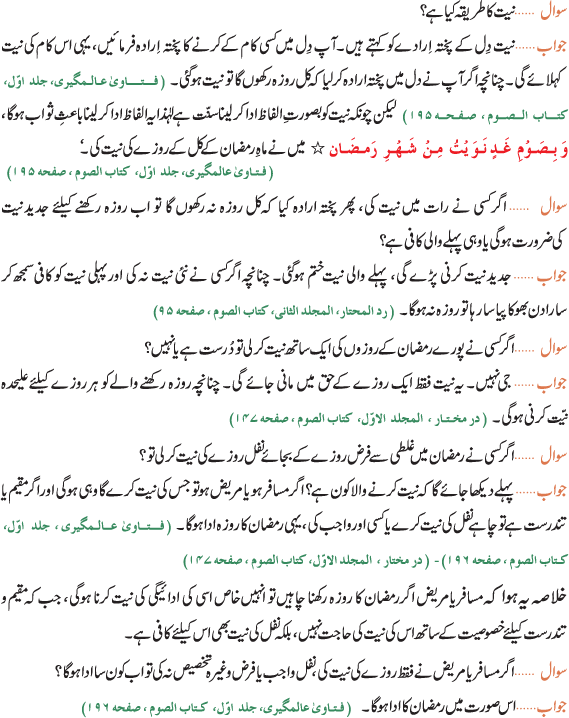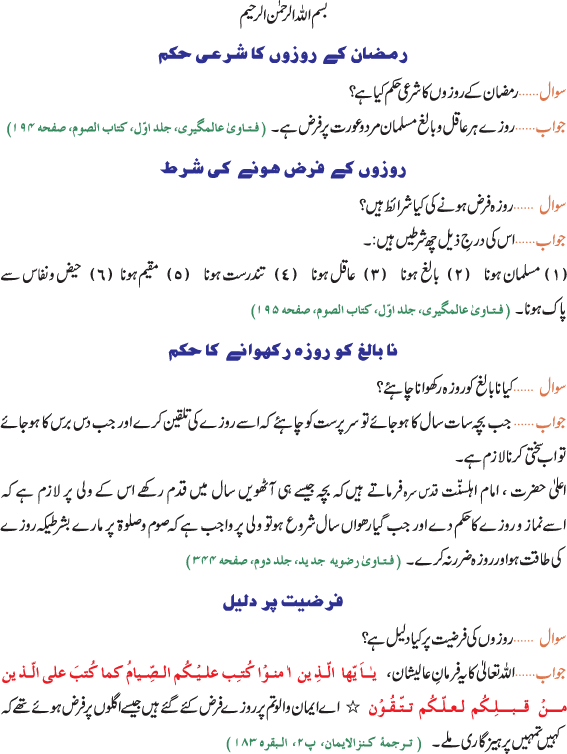

Ramadan Kay Rozon Ka Sharai Hukum
TAG: Ramadan
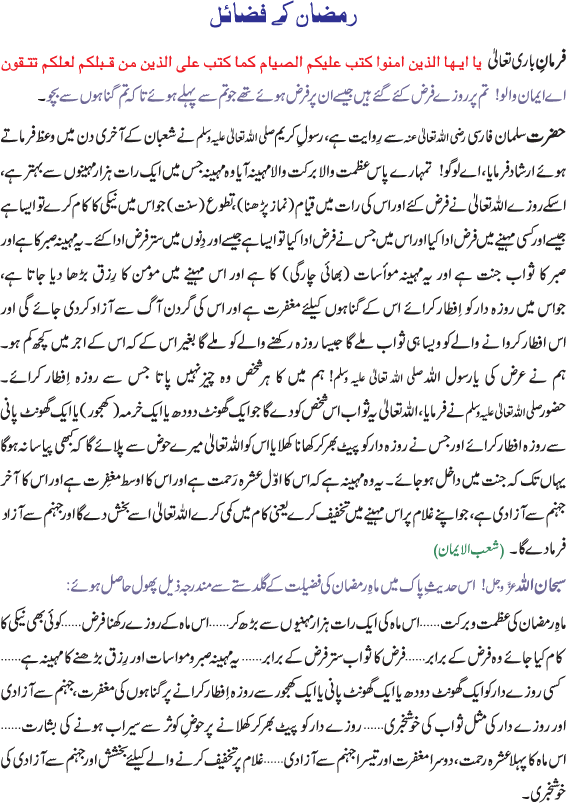
Mah-e-Ramadan k Fazail

Mah-e-Ramadan k Fazail
After Ramadan
The Holy month of Ramadan came like seasonal rain and passed by. This rain did not water the plants and crops -it showered upon the hearts of believers. It is sad, but true, that the hearts of the majority of Muslims are stricken with spiritual drought and spiritual decadence. It is a drought caused by excessive indulgence in un-Islamic activities, immoral behavior, unjust actions, unfair dealings, etc. Drought caused by lack of rain destroys crops -drought caused by lack of piety, lack of fear of Allah, and lack of Allah consciousness destroys the SPIRITUALITY of the heart.
Ramadan’s spiritual rains brought to life the Masaajid and other prayer places. Ramadan had fanned the dying spark of charity . Ramadan had awakened the dying spirit of tolerance, patience, and sympathy for the less fortunate.
Now that we come to the end of Ramadan the big question is what to do? Did we go through all the spiritual exercises in Ramadaan in order that we may have the freedom to indulge, on Eid day, in all types of immoral, shameless, and indecent amusement? Did we restrain ourselves from halaal food, drinks, and other pleasures from dawn to sunset throughout Ramadan, so that we may return with renewed vigor to gambling, drinking, adultery, and fornication? Will the spirit of tolerance, mercy, patience, charity, and sympathy be still evident, or will these noble qualities be shelved until the dawn of the next Ramadan?
Will the Masajids which were filled on most nights in Ramadan remain the same or will they become empty wondering where the faithful have gone? Our lifestyles after Ramadaan will show whether we used the month to bring about a total reformation within ourselves or are we going to waste the valuable opportunity?
The National and international position of the Muslim communities leaves much to be desired. Muslims are lamenting the loss of lives, destruction of property, oppression, tyranny, injustice, and a host of other problems all over the world. They are wondering why the promised help of Allah to the believers is nowhere in sight. Just one glance into the lifestyles of the overwhelming majority of Muslims is sufficient to answer the question. Millions of Muslims do not have much to their credit besides Muslim names.
Allah’s help comes with action and Islamic qualities -not with names or faces – Arabs or non-Arabs, African or European, Chinese or Indians. On the other hand, every group, organization, society, or individual who talks about Islam, seems to have got its own brand of Islam. The Islamic teachings which were left behind for us, crystal clear and pristine pure, have become so adulterated with foreign customs, alien practices, and un-Islamic ideologies, that a new Muslim has to make an effort to search for the Quran and Sunnah brand of Islam or remain confused and ignorant.
May Allah Ta’ala on the occasion of Eid give us the guidance to resolve that we shall make the Quran and Sunnah our guiding lights and practice Islam as much as possible. If the non-Muslim inhabitants of our country see Islam in the lives of Muslims, they will not require much persuasion to accept our beautiful deen.
Eid Ka Falsafa Aur Tareekhi PasManzar

Muhammad Muneeb ur Rehman
The Secrets Of Dates
PROPHET Muhammad (PBUH) gave special attention to dates as part of the believer’s diet, especially during the holy month of Ramadan. Allah Almighty mentioned palm trees many times in the Qur’an and made its fruit the food of the dwellers of paradise.
So what are the secrets of this great nutriment? Is it possible to think of using dates as a remedy for some diseases? What do scientists of today say about dates?
Dates are one of the most nourishing fruits and it is sometimes called the “bread of desert.” More than two-thirds of dates’ weight is natural sugar.
This fruit was highly esteemed by the ancient civilizations more than 5,000 years ago. Ancient Egyptians considered dates as a symbol of fertility, while the Romans and the Greeks used them to ornament their stately triumph pageants. Today, dates are widely grown in the Arabian Peninsula, Iran, Egypt, Iraq, Spain, Italy, and the United States. There are more than 600 varieties of dates.
Dates and the pre-birth period
Dates stimulate the uterus by regulating and hastening its contractions to facilitate delivery. The uterus is a relatively large muscular organ and it urgently requires an adequate supply of natural sugar during labor and delivery.
Being a laxative, dates are essential for pregnant women before delivery in order to purge the colon and intestine and facilitate delivery. The Quranic verse explains this, as Allah tells Mary: And shake the trunk of the palm-tree towards thee – thou wilt cause ripe dates to fall upon thee [Mariam – 25]
Nutriment and medicine for children
Dates contain natural sugar which is easily absorbed and digested. Thus, it is safe and comforting for children’s stomachs and intestines. And date juice is useful especially if we mix it with milk – it becomes a very nourishing and restorative drink for children and adults. Dates and honey paste, taken three times a day, are used for the treatment of diarrhea and dysentery in children,
This paste also comforts and hardens the gums during teething and it facilitates the process.
Treatment for obesity
The wide variety of nutritious elements in dates makes it hunger resistive. The cause behind obesity is a persisting feeling of hunger and an appetite for food which drives a person to consume larger amounts of fats and sugar when he eats his meal.
So, treatment by eating a few dates when feeling hungry helps reduce hunger and be filled. These dates provide the body with the necessary sugar and stimulate the intestine, which reduces hunger greatly, and eventually, reduces food consumption. The Prophet’s saying shows this: A household that has dates doesn’t feel hunger. [Narrated by Muslim].
Remedy for liver and other inflammations
Dates remedy the liver and purge it from toxins. Breaking the fast with dates is one of the most magnificent natural remedies for the maintenance and purging of the liver from accumulated toxins. Also, drinking dates’ juice is the treatment of sore throat, various types of fever, rhinorrhea, and the common cold.
Having high medicinal and nutritious value, dates are expected to be the best food for the future. Dates contain as high a percentage as 88 percent of carbohydrate (starch), ( 2.5-5 percent) of fat, (2.3-5.6 percent) Protein, and (6.4-11.5 percent) of vitamins and dietary fiber. The flesh contains (0.2-5 percent) oil, whereas the seed’s weight is (7.7 -9.7 percent) oil. The weight of the seed is ( 6.6 – 14.2 percent) of the date’s weight.
Dates contain Vitamins A, B1 and B2, and fluorine which prevents teeth decay. Other minerals found in various proportions in dates include boron, calcium, cobalt, copper, iron, magnesium, manganese, potassium, phosphorous, sodium, and zinc.
Additionally, the seeds contain aluminum, cadmium, chloride, lead, and sulfur in various proportions. Selenium, an element believed to help prevent cancer and important in immune function, is also found in dates.
If you are feeling weak, don’t hesitate to take seven dates (70 gm) in the morning as the Prophet (PBUH) recommended. You will actually be taking 70 milligrams of calcium, which is very useful for the bones, joints, and nerves; 35 milligrams of phosphorus, which is nutritious for the brain; and 7 milligrams of iron, which strengthens the body in general and the heart in particular.
It’s also suitable for reducing weight as it contains only 0.25 gm of fat. This prophetic meal also regulates and stimulates the bowels with the 10 gm of dietary fiber it contains.
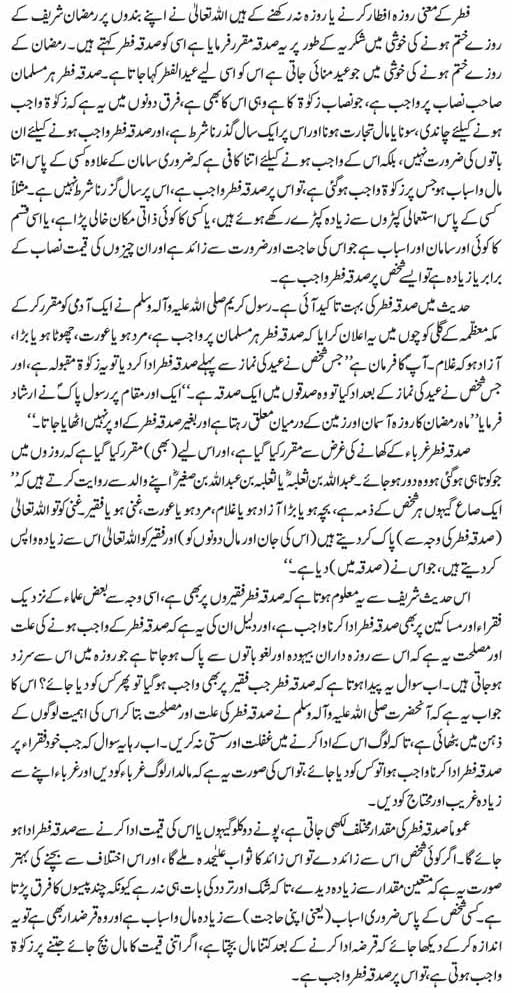
Sadqa Fitr Ki Haqeeqt
Laylat al-Qadr
[Sahih Al-Bukhari : Volume 3, Book 32, Number 232]
Narrated Ibn ‘Umar (Radi Allah Anhu) : Some men amongst the companions of the Prophet Muhammad (sal-Allahu- alleihi-wasallam ) were shown in their dreams that the night of Qadr was in the last seven nights of Ramazan. Allah’s Messenger (sal-allahu- alleihi-wasallam ) said, “It seems that all your dreams agree that (the Night of Qadr) is in the last seven nights, and whoever wants to search for it should search in the last seven nights of Ramazan.”
[Sahih Al-Bukhari : Volume 3, Book 32, Number 233]
Narrated Abu Salama (Radi Allah Anhu): I asked Abu Sa’id (Radi Allah Anhu) about the Night of Qadr and he said, “We practiced Itikaf in the middle third month of Ramazan with Prophet Muhammad (sal-allahu- alleihi-wasallam ). In the morning of the 20th of Ramazan, the Prophet Muhammad (sal-allahu- alleihi-wasallam ) came to and addressed us and said, ” I was informed of the date of the Night of Qadr but I was caused to forget it, or I forget, so search it in the last ten nights of the month of Ramazan.”
[Sahih Al-Bukhari : Volume 3, Book 32, Number 238]
Narrated ‘Ibn Abbas (Radi Allah Anha): The Allah’s Messenger (sal-allahu- alleihi-wasallam ) said, “Look for the Night of Qadr in the last ten nights of Ramazan on the night when nine or seven or five nights remain out of the last ten nights of the Ramazan.”
[Sahih Al-Bukhari: Volume 3, Book 32, Number 239]
Narrated Ibn Abbas (Radi Allah Anha) in this quotation: Allah’s Messenger (sal-allahu- alleihi-wasallam ) said, “The Night of Qadr is in the last ten nights of the month of Ramazan either on the first nine or in the last (remaining) seven nights of Ramazan.”
[Sahih Al-Bukhari : Volume 3, Book 32, Number 241]
Narrated ‘Aisha (Radi Allah Anhu): With the start of the last ten days of Ramazan, Allah’s Messenger (sal-allahu- alleihi-wasallam ) used to tighten his waist-belt (i.e. hard work) and used to offer Salat (Prayer) all the night, and used to keep his family awake for the Salat (prayers).
5 Things About Suhoor
Suhoor is the early morning meal Muslims have before starting their fast. Here are some facts about Suhoor:
1. Prophet Muhammad (PBUH) used to take Suhoor and sometimes he took it with his Sahabah (Companions). Narrated Anas: Zayd Bin Thabit (R) said, “We took the Suhoor with the Prophet. Then he stood for the prayer.” I asked, “What was the interval between the Suhoor and the Adhan?” He replied, “The interval was sufficient to recite fifty verses of the Qur’an.” Sahih Bukhari Volume 3, Book 31, Number 144 ; Sahih Muslim Book 006, Number 2415.
2. Urging Muslims to have Suhoor the Prophet (PBUH) said: “Have Suhoor, as indeed there is a blessing in it.” The Prophet also said: “The difference between our fasting and the fasting of the People of the Book is the (meal of) Suhoor.”
3. Being the only meal eaten by Muslims from dawn to sunrise during the month of Ramadan, Suhoor typically tends to be heavy and is highly regarded by traditions to help avoid weakness caused by the fast. Suhoor as the morning meal is matched by Iftar as the evening meal, during Ramadan, replacing the traditional three meals a day (breakfast, lunch, and dinner).
4. The presence of night-criers – mesaharaty – roaming the streets in towns and villages is yet another tradition still alive in many Muslim countries. The night-crier stops in front of every house in the neighborhood, beating his drum and even calling out people by their names.
5. A Suhoor helps the fasting person persevere through the fast. Traditionally, the dates are considered important in Suhoor meal. Suhoor is intended to be a very humble meal to help remind Muslims that there are those who go without food daily.
Rules Related To Fasting
The Obligation Of Fasting
a) The time for fasting is from the rising of the second dawn until the setting of the sun.
b) Fasting is: abstention from eating, drinking and sexual intercourse by day with the intention.
The Intention
The fasting is valid with an intention from the night, but if one did not intend until the morning, the intention suffices him between [dawn] and {the middle of the day}.
1. Things which invalidates fasting and requires full recompense
1.1 If someone intentionally does one of the following without any valid excuse(see 6 below)
a) Does not fast at all
b) Breaks fast by eating, drinking and sexual activities
c) Assuming that cupping has broken ones fast thus quit fasting for the day.
1.2 Expiation for the above is to
a) Fast unceasingly for two months (60 days), if one breaks fats during this one has to start a new.
b) If unable to do so, it is to feed 60 needy persons two full meals
c) If unable to do so, it is to free one slave.
1.3 Things that break fast and requires one to fast similar numbers of days in recompense
a) If something is entered into the body during the hours when one is supposed to fast, irrelevant of how it entered into the body.(see 5)
* To eat something which is not food such as stone particle or smoking anything.
* When water enters stomach while gargling
* When one is fed by force even when one is sleeping or unconscious
* Inject medicine, place them on wounds which eventually gets in.
* Eating by mistake thinking it is still night or iftar time is due while it is not.
* Involuntary full mouth vomiting and subsequent swallowing of it or part of it.
* When one is force into sexual intercourse or when one is sleeping or unconscious
b) Fasting without intention
c) Breaking (iftar) fast without the intention of doing so.
d) Lustful kissing of ones spouse
e) Emission of semen due to touching, kissing, masturbation.
f) Intentional vomiting.
2. Offensive acts during fasting
* Backbiting, slander
* To lie or deceive
* To use abusive language
* Not having iftar
* Taste a food without swallowing it, using toothpaste.
* Gargling water due to thirsts or hot weather.
* Wrapping oneself with wet clothes.
* Throwing up intentionally
* Weakening the body (e.g. strenuous sport)
* Gathering saliva and swallowing it;
3. Days when fasting is forbidden
* Day of Eid al Fitr (Eid of Ramadan)
* During Eid al ADHa 10, 11, 12 and 13 of month of Dhul Hijjah
4. Events when it is allowed to break the fast and fast later the similar number of days
* If fasting aggravates health-condition
* Snake biting
* Thirsts due to newly developed disease
* Genuine danger for a pregnant mother, or for her fetus.
* Genuine fear for the life of a suckling infant
* Reason to fear death
* Menstruation
* If one is a traveler
5. Things that do not break fast
a) Those things which would otherwise break fast does not do so when one is unaware of the fact that one is fasting(complete forgetfulness of fasting).
b) Entrance of insects (i.e mosquitos), smoke and dust from natural environment does not break fast.
c) Wet dream, swallowing ones own saliva when still in the mouth, smearing oil, ointment on unwounded body do not break fast. or used antimony [in his eyes],
d) If one is overcome by vomiting, his fast is not broken.
6. Etiquettes and desirable practices
* Preparing for the month.
* Bringing to mind the bounty of Allah.
* Purifying one’s intention
* Pre-dawn meal (suhur) as late as safely possible.
* Not unnecessarily delaying the breakingof the fast.
* Performing salat al-Maghrib soon after breaking the fast, then returning to eat.
* Making du’a at the time of breaking the fast.
* Enabling others to break their fasts.
* Abstaining from all forbidden deeds.
* Maintaining a pleasant disposition.
* Abundant reciting of the Qur’an.
* Abundant charity.
* Performing tarawih prayers.
7. Miscellaneous
a) The intention of fasting can be made as late as just before noon, if one forgets to do so during the previous night. If one passes noon without making the intention ones fasting is invalid.( 1.3b)
b) One should eat before the day breaks even when one is not hungry.
c) For a woman whenever during the day menstruation stops she should be observing fasting even though it is not a fast for her. She should fast if it happens just before morning and did not have enough time to take shower and eat.
d) If a woman menstruates, she stops fasting and makes up [fasting for the days of menstruation].
e) Someone who lost consciousness in Ramadan does not make up the day on which the loss of consciousness occurred, but he makes up that which came after it.
f) If a traveller arrives, or a [menstruating] woman attains purity with part of the day [remaining], they abstain [from those things which invalidate fasting] for the rest of that day.
May Allah keep us on the Straight Path. Aameen
The Medical Benefits of Taraweeh Prayer
Muslims derive therapeutic and spiritual benefits starting from the Wudu to the physical movements in the Salat – Takbir, Qiyam, Ruku, Sajda, Jalsa, and Tasleems. Muslims perform five daily contact prayers (Salat) and voluntary prayers (Sunnah, Nafl) throughout the year and Taraweeh prayers during the month of Ramadan. This results in moderate physical exercise, particularly to every muscle in the body. Some muscles contract isometrically (same length) and some contract in approximation or isotonically (same tension). The energy needed for the muscle during exercise is met by a process known as glycogenolysis. The rate of muscle metabolism increases during the performance of Salat, resulting in a relative deficiency of oxygen and muscle nutrients. In turn, this deficiency causes vasodilation – and an increase in the calibre of blood vessels – thereby allowing blood to flow easily back to the heart. The temporarily increased load on the heart acts to strengthen the heart muscle and improve the circulation within the heart muscle.
During the month of Ramadan, additional prayers are performed after salatul Ishaa, called Taraweeh prayers which vary from 8 Rakat (unit of prayer) to 20 Rakat with a few minutes break after every 4 Rakat for chanting and extolling the Majesty of Allah. After Iftar (breaking of fast) the blood glucose level continues to rise from the food ingested. Just before the Iftar meals, the blood glucose and insulin levels are at their lowest level. After an hour or so after the Iftar meal, the blood glucose begins to rise and also plasma insulin. The liver and the muscles take up the circulating glucose. The blood sugar reaches high levels in an hour or two and the benefits of Taraweeh prayers come into effect. The circulating glucose is metabolised into carbon dioxide and water during the Taraweeh prayers.
Hence the Taraweeh prayers help in expending the extra calories and improve flexibility, and coordination, reduce stress-related autonomic responses in healthy persons, and relieve anxiety and depression.
Physical and Emotional Well-Being
The gentle exercises performed in Taraweeh prayers improve physical fitness, and emotional well-being and increase the longevity of the Namazi (one who performs the Salat or Namaz). When a little extra effort is made, as in performing the Taraweeh prayers, there will be a betterment in endurance, stamina, in flexibility and strength. It was noted that the five daily prayers (Salat) produce the same physiological changes without any undesirable side effects as those produced by jogging or walking at about three miles per hour. Recent research studies performed on 17,000 Harvard alumni who entered college between 1916-and 1950 give strong evidence that only moderate aerobic exercise, equivalent to jogging about 3 miles a day, promotes good health and may actually add years to life. Men who expended about 2000 kcal of energy on a weekly basis (equal to a daily 30-minute walk, run, cycle, swim, etc.,) had one-quarter to one-third lower death rates than classmates who did little or no exercise. In addition to the health-boosting qualities of the Salat, the Namazi will be trained to be ever ready for any unexpected physical exertion such as the sudden lifting of children, chairs, or catching a public transportation vehicle. The elderly will accomplish this more securely and efficiently. Hence this is an advantage for the elderly to maintain their physical fitness for a longer period of time. It has been observed that those who fast and perform the Taraweeh prayers report feeling much convalescing and robust.
The Elderly
As human beings grow older, their physiological activity diminishes, as a result, their bones become thinner and if not taken care of will suffer from osteoporosis (which causes the fractures of the bones when they fall in the elderly due to a loss of bone mineral content and consequent sponginess of the bones. The bone then becomes structurally unstable, brittle and susceptible to fractures). Primary osteoporosis is most common among postmenopausal (due to reduction in oestrogen) women or those who have undergone bilateral oophorectomy (both the ovaries removed).
Women are six times more likely than men to develop Type I osteoporosis. The three major prevention strategies of osteoporosis are a high dietary intake of calcium and vitamin D, regular exercise and oestrogen replacement in postmenopausal women. The skin also becomes fragile and crinkled. The repair processes of the body become slower and immune responses are decreased. In the elderly, their physical activity is reduced as a result they have lower levels of Insulin Growth Factor 1. Reserve functions of all vital organs decrease and the elderly are more susceptible to mishaps and ailments. Because of repeated and regular movements of the body during Salat muscle strength, tendon power, joint flexibility and cardiovascular reserve are improved. Hence Salat and Taraweeh prayers enable the elderly to enrich the quality of life and to meet with unforeseen difficulties such as falls that could injure their bodies. Therefore Taraweeh prayers will improve their endurance, self-respect and self-confidence in being self-reliant.
Adrenaline is secreted even by minor activity. The secretion outlasts the incitement.
Even after the Taraweeh prayers are over the effects of adrenaline and noradrenaline are manifest. (Adrenaline also called epinephrine is produced by the adrenal glands. The middle part of these glands, the adrenal medulla, secretes the hormone, which is chemically almost identical to the transmitter substance noradrenaline produced at the ends of sympathetic nerves. Adrenaline secretion into the bloodstream during stress causes acceleration of the heart, constriction of arterioles, and dilation of the pupils. In addition, adrenaline produces a marked increase in metabolic rate thus preparing the body for an emergency.) Even the thought of the intention of performing the Taraweeh prayers is sufficient to activate the sympathetic nervous system. The sympathetic nervous system (thoracolumbar nervous system) is one of the two divisions of the autonomic nervous system, which supplies motor nerves to the smooth muscles of internal organs and to the heart muscle. Sympathetic nerve fibres arise via spinal nerves in the thoracic and lumbar regions. Their endings release mainly adrenaline, which increases heart rate and breathing rate, raises blood pressure and slows digestive processes, thereby preparing the body for “fight or flight” and antagonising the effects of the sympathetic nervous system. The adrenaline would redistribute the blood in the body to the active muscles, would mobilise liver glycogen if necessary in order to provide glucose for the active tissues, would diminish fatigue in skeletal muscles and would facilitate alveolar ventilation relax the bronchiolar muscle, and would initiate cardiovascular changes. Exercise induces a more effective functioning of beta-adrenoreceptors located on cell membranes.
Beneficial effects of Gentle Exercise
The Taraweeh prayer is considered to be a gentle exercise. The beneficial effects of gentle exercise on the body are many which are elaborated on here.
Effects on Skeletal Muscle
Once muscles atrophy in spite of the availability of ample proteins. During the Salat and Taraweeh, every muscle in the body contracts ironically and others isometrically. This gentle exercise also enhances endurance and diminishes tiredness. It helps the incapacitated to make the most of their remnant capabilities. The blood flow in strung muscles is low. During the prayers, the blood flow is greatly increased to the muscles. Blood flow sometimes increases even before the start of Taraweeh prayers, with just the thought of performing the Taraweeh prayers. In addition to needing fats, proteins, and carbohydrates, the human body requires minerals such as Potassium for nerve and muscle activity. It is found in fruits, meats, seafood and milk. Potassium deficiency leads to muscular and neurologic disorders. Potassium is also important in the transmission of nerve impulses and is a major positive ion in intracellular fluids. Potassium is involved in cellular enzyme activities, and it helps regulate the chemical reactions by which carbohydrates are converted to energy and amino acids are converted to protein. Also, Potassium ions cause vasodilation of arterioles. During the Taraweeh prayers, systolic Blood pressure may rise (the larger number in B.P.) a little and the diastolic Blood Pressure(the lower number in B.P.) may remain unchanged or even fall. However after the Taraweeh prayers are over, the B.P. may drop to just below normal levels which is a welcome sign. Taraweeh prayers improve respiratory efficiency; circulation in the capillaries surrounding the alveoli, or air sacs, is increased, and this brings about enhanced gas exchange and deeper breathing. The increase in the maximal consumption of oxygen is what makes the Namazi feel better. Those who perform the Taraweeh prayers, apart from the prescribed Salat, are more alert and active than those who do not perform the
Taraweeh prayers, even after the age of retirement. Taraweeh prayers improve physical strength and joint stability and reduce the risk of injury to the tendons and connective tissues. After age 40, the bone mineral density falls with age. Taraweeh prayers increase bone mineral density in both menopausal and elderly women and prevent osteoporosis and maintain normalcy in bone structures. Osteoporosis results in hip fractures in women after menopause and in elderly men. The risk of osteoporosis is substantially reduced by regular Salat and Taraweeh prayers. The prayers improve lubrication of joints, and movement, and maintain flexibility. Deep vein thrombosis (the most common cause of ulceration of the legs in the elderly) is prevented by performing Salat and Taraweeh prayers.
Metabolic Effects
Salat improves body weight control and expends calories without a proportionate increase in appetite. A combination of moderate dietary restriction, both at the Iftar and Sahur (early morning breakfast before the start of fast) meals, accompanied by the Taraweeh prayers, should achieve weight reduction. This will also reduce both fat and body weight, but the fat-free weight will remain constant or may even increase slightly. Hence during Ramadan, one should not overeat the Sahur and Iftar meals and continue to perform Salat and Taraweeh prayers in order to lose some of the excess weight.
It is well known that exercise prevents coronary heart disease (CHD), increases high-density lipoproteins (HDL or healthy Cholesterol), increases maximum oxygen uptake, slows the heart, lowers the B.P. slightly, decreases ventricular ectopic activity, enlarges the lumen of the coronary arteries and increases cardiac output.
Exercise also improves carbohydrate tolerance and improves late-onset diabetes, and helps cases of chronic respiratory diseases. Beneficial changes have been recorded in the lipid profile, B.P., clotting factors, weight reduction and insulin sensitivity of muscles and other tissues in persons who exercise regularly. Growth Hormone secretion is elevated by fasting and it is further elevated by Taraweeh prayers. As Growth Hormone is necessary for collagen formation, this may be an important factor as to why the skin of those who fast regularly during Ramadan and perform the Taraweeh prayers do not get wrinkled, even when they grow old.
Mental Health
It is a known fact that exercise improves mood, thought and behaviour. Exercise improves the quality of life, induces a greater sense of well-being and energy, reduces anxiety and depression, influences mood favourably and contributes to self-esteem and an aura of confidence; improves memory in the elderly, especially with constant repetition of the Ayaat (verses) from the Glorious Quran and other Ayaat which exalt His Glory. This constant repetition of the Quranic Ayaat would help to screen the mind from incoming thoughts. It has been found by a Harvard University researcher, Dr Herbert Benson that repetition of a prayer, Ayaat of the Quran or remembrance (Dhikr) of Allah or muscular activity coupled with passive disregard of intensive thoughts causes a “relaxation response” that leads to the lowering of Blood Pressure and decreases in oxygen consumption and a reduction in heart and respiratory rates. All these are combined in the Taraweeh prayer which is an ideal condition for “relaxation response.” It combines repeated muscular activity with repetition of Salat, chanting of words of glorification of Allah and of supplications. The Taraweeh prayer puts the mind in a relaxed state. This calm state of the mind may be partly due to the release of encephalins, beta-endorphins (endogenous morphine) and others into the blood circulation. Endorphins are any one of the neuropeptides composed of many amino acids, elaborated by the pituitary gland and acting on the central and peripheral nervous systems to reduce pain. Endorphins are categorised as alpha-endorphin, beta-endorphin, and gamma-endorphin which produce pharmacologic effects similar to morphine. Beta-endorphin found in the brain and GI(gastrointestinal) tract is the most potent of the endorphins and is a powerful analgesic(pain killer) in humans and animals. For example, during childbirth many women release endorphins reducing a woman’s sensation of pain. The release of endorphins is associated with euphoria. During childbirth, women who give birth with little or no medication sometimes label this euphoria a “birth climax.”
Conclusion
Islam is the only religion where physical movements of Salat and Taraweeh prayers are combined with spiritual exercise. When Salat and Taraweeh prayers are practised throughout a person’s life, recurring every few hours or so, trains a person to undertake the difficult task of meditation during physical manoeuvres of Salat and Taraweeh prayers so that the Namazi(one who performs the Salat) benefits both from spiritual as well as physical exercise. Salat and Taraweeh prayers are unique in that tension builds up in the muscles during physical manoeuvres on the one hand, while tension is relieved in the mind due to the spiritual ingredient, on the other hand. The following benefits have been noted among those who perform the Taraweeh prayers: burning off calories and losing weight, maintaining muscle tone and body composition, joint flexibility (stiff joints are often the result of disuse, not arthritis), increasing metabolic rate, improving circulation, improving heart and lung function and aerobic capacity, decreasing heart disease risk profile, increasing your sense of self-control, reducing your level of stress, increasing your ability to concentrate, improving your appearance, reducing depression and resistance to depression, helping you sleep better and suppressing your appetite. Evidence is also accumulating that those who perform regular Salat along with voluntary prayers can conserve and actually retard the loss of bone mass in the elderly, thus staving off the ravages of osteoporosis that afflicts both men and women. It is also possible to retard the ageing process and confer some protection to health in later life. Those who have performed Salat (Fard and Wajib), Sunnah and Nafl and Taraweeh prayers throughout life get protection and a positive effect in terms of health and longevity. They reverse the life-shortening effects of cigarette smoking and excess body weight. Even people with high blood pressure (a primary heart disease risk) reduced their death rate by one-half and their risk of dying from any of the major diseases is reduced. They also counter genetic tendencies toward an early death.
Hence Salat (Fard, Wajib), Sunnah, Nafl and Taraweeh prayers are necessary for Muslims to preserve life and their desirable qualities into old age.