
TAG: Ramadan
Ramadan – The Month Of Mercy And Repentance, The Month Of Qur’an
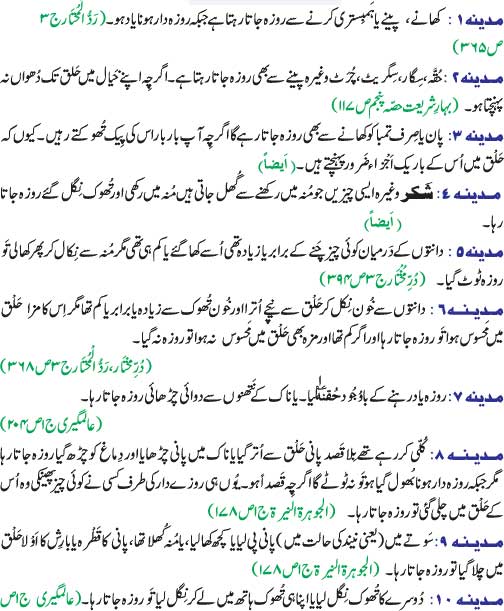
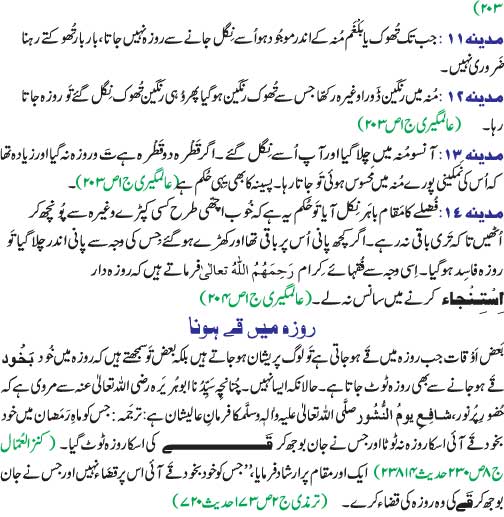
Ramadan, the month of mercy and repentance, the month of Qur’an. In the second year of Hijrah, Allah made it obligatory to fast during this month upon every mature, sane, and healthy Muslim.
Ramadan is the month of seeking forgiveness and protection from the Hell-fire. It is the month of repentance and acceptance of prayers. It is the month when the devils are chained, the gates of Hell are locked and the gates of Paradise are opened.
Ramadan is a month of worship. We should worship Allah sincerely, keep away from sins, spend night and day in prayer, supplication, and recitation from the Holy Qur’an.
Fasting is a shield from many sins and with which Muslims protect himself from the Hell-fire. Fasting is more than just abstaining from food. It also means to abstain from any falsehood in speech and action, from any ignorant and indecent speech and from arguments and quarrel. Therefore, fasting also helps to develop good behavior.
Fasting inculcates a sense of brotherhood and solidarity, as Muslim experiences what his needy and hungry brothers feel. This gives a new sense of togetherness and association.
Allah, the Almighty, said in the Qur’an, “The month of Ramadan in which was revealed the Qur’an, a guidance for mankind, and clear proofs for the guidance, and the criterion (between right and wrong)…” (Qur’an, 2:185)
As Ramadan is the month of the Qur’an, every Muslim should prepare himself to welcome the blessed month of Ramadan by strengthening his relationship with the Qur’an. A Muslim is encouraged to complete a full recitation of the Holy Qur’an during Ramadan.
Ramadan is also a month of charity and sympathy. Let’s give generously to the poor and share meals to break the fast together. Most Muslims also pay Zakah in the month of Ramadan.
Ramadan becomes a blessed month of physical, moral, and spiritual renewal through fasting, charity, and worship.
Why Forgive Others This Ramadan
The Prophet Muhammad (SAW – may the peace & blessings of Allah be upon him) said: Musa (AS – peace be upon him), the son of Imran once asked, “Oh my Lord! Who is the most honorable of Your servants? And He replied to the person who forgives even when he is in a position of power” (Baihaqi).
You know you’re right.
You know what I’m referring to – those times when you get into an argument(s) with a family member, friend, boss, employee, coworker, classmate, teacher, or whoever. You know your facts are right or that you’ve been wronged with an insulting remark, sarcastic comment, or rudeness.
And so, you choose to hold a grudge. After all, you’ve got a right to. Nobody should be treated this way. Why should you forgive? You’re not the one who started this. You’re not the one who doesn’t have the facts straight.
True. You may be right. You may be in that position of power mentioned in the Hadith above. But forgiving others, apart from positively affecting our health (less stress) and our minds (one less negative thing to focus on), is a necessary step to closeness to God.
How can we move up the ladder of spiritual development when we hold bitterness and anger towards another person? While we may have been in the right, is it worth sacrificing our energy on a grudge instead of on growth?
Is there not something strange about asking for God’s forgiveness of our sins while withholding our forgiveness from someone who has hurt us?
One of the distinguishing features of Ramadan is forgiveness. The Prophet explained in one Hadith that Ramadan is a month whose beginning is Mercy, Whose middle is Forgiveness, and whose end is freedom from the Hellfire. This makes it a great time to ask God for His Forgiveness. It’s also a wonderful time to open our hearts and cleanse them of grudges and bitterness by forgiving others.
Let us use these remaining days of forgiveness this Ramadan to open our hearts to those who have wronged us and forgive them as we beg Allah to forgive us.
Sehar o Iftar Kay Fazail

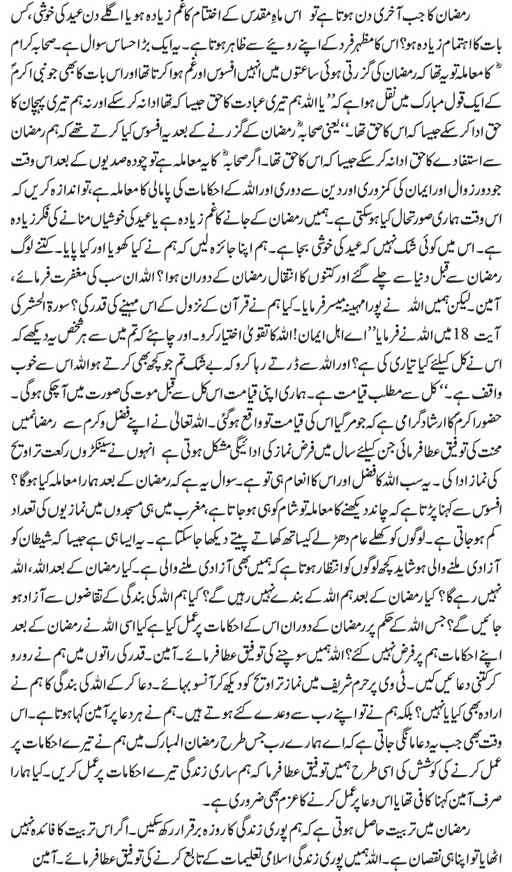
Ramadan: Time For Celebration
The month of Ramadan is a special season that signifies much for every Muslim who fasts in the day and volunteers other forms of worship at night. His motive is the great prize of forgiveness of past sins. As Ramadan is over, Muslims celebrate a festive season, called Eid Al-Fitr, or the feast that ends the fast. It is no wonder that the end of our month of Ramadan, which is a season of worship and blessing, is an occasion of festivity and celebration. Ramadan is certainly a hard month for Muslims. They have to resist their natural desires during its days and they are encouraged to spend at least part of each night throughout the month in voluntary devotion. All this comes on top of the normal duties of life, which makes the obligation of fasting and the recommended night devotion truly hard.
This, however, epitomizes the life of the Muslims who realize that there is always a higher aim to strive for. They look at themselves as trustees of God’s message. They call other people to it and struggle in order to make it known to all people, so that they may have a chance to accept it and reform their lives according to its principles. One can hardly find an advocate of Islam who has a casual attitude to life. The month of Ramadan, with its strong emphasis on the fulfillment of duties, is instrumental in the development of the serious attitude of Muslims. This is the reason why Muslims receive the month of Ramadan when it approaches with open arms, as it were. They go through it with patient perseverance because they realize that it is a season of great benefit to them. Self-discipline and the strengthening of their social ties are simply a part of the bargain. What is more is that for those who fulfill their duties with sincerity of intention and honesty of purpose, forgiveness of their past sins is guaranteed.
It is not surprising, therefore, that we celebrate the end of Ramadan. We welcome the fact that for the next eleven months we are free of the obligation of fasting, although we may volunteer to fast any time during the year, to gain more reward from God. But we celebrate, above all, our forgiveness. As human beings, we are always liable to err, indulge ourselves in some sinful practices or neglect our duties. Some of us are better than others with regard to adherence to the code of life God has provided for us. But we all make mistakes: A momentary distraction from the right course, a fleeting thought of sin or a sinful act of disobedience to God. All sorts of mistakes are possible. None of us is free from temptation; none is immune from falling. Hence, Ramadan provides us with a chance to wipe our slate clean, to feel that we are on the side of God, to renew our determination to follow the path He has set for us. After Ramadan, we feel as if we are born anew. Hence, we celebrate the Eid, as we visit one another, offering congratulations and blessings.
There is an important social aspect to the end of Ramadan and the approach of the Eid. As the Prophet has taught us, the acceptance of our fasting by God is made conditional on our payment of Zakah Al-Fitr. This is a prescribed charity, small in amount, but made obligatory to everyone who has more than enough for his family?s food on the last day of Ramadan. Moreover, everyone has to pay this charity on behalf of his wife and children as well as any other dependents he supports. Only those who do not have enough for their food are exempt, and those, as well as other poor people who may be less unfortunate, are the recipients of this noble act of charity. The idea is to relieve all poor people of the worries of their needs for this festive season. As the Prophet encourages us to pay this zakah to the poor, he makes its purpose very clear: “Make them rich for the day.’
Islam places a strong emphasis on the strengthening of social ties within the Muslim community. It does not like such a great occasion as Eid Al-Fitr, which marks the acceptance of the fast and the forgiveness of those who have carried out their obligations in the proper manner to pass while a section of the community is unable to take part in the festivity because of their need. Hence, the payment of Zakah Al-Fitr is made a religious duty, which is unique in all systems of taxation, religious or secular.
This zakah is imposed on people, not on their wealth or income. Thus, everyone, even babies born a minute before the Eid prayer, should pay this zakah, or have it paid on their behalf by their fathers or guardians. Some scholars are of the opinion that a prospective father should also pay it for his unborn child if his wife is pregnant.
The amount paid is estimated in measure. It should, preferably, be given in a measure of wheat, dates, barley, corn or rice, or any other product, which is considered the staple diet of a particular community. The measure is roughly equivalent to a little over two kilograms of wheat or four times the fill of the cupped hands of an average person. It is possible, according to an increasing number of scholars, to pay this zakah in cash, particularly where there is an abundance of shops and commodities. If in a certain community there are few shops, and commodities are scarce, then Zakah Al-Fitr must be paid in kind. A unique aspect of this form of charity is that some of those who receive it, the very poor, receive so much of the zakah of their fellow Muslims that they find themselves with more than they need for their food on the last day of Ramadan. Therefore, they become liable to pay this zakah to others who are less fortunate than they are.
The deadline for the payment of Zakah Al-Fitr is the Eid prayer, normally offered a short while after sunrise on the day of the Eid. As for the range of time allowed for its payment, it should be remembered that it is payable in the last few days of Ramadan. Some schools of thought allow their payment at any time during Ramadan.
One aspect of the blessings of Ramadan is that on the day when it is over, not a single person of the Muslim community goes hungry for the lack of food or because he is poor.
Welcoming Ramadan
ABU HURAIRA (may Allah be pleased with him) narrated that Allah’s Messenger (peace be upon him) said, “When the month of Ramadan starts, the gates of Jannah (Paradise) are opened and the gates of Hell are closed, and satans are chained.” (Bukhari and Muslim)
The gates of Jannah are opened in this month because lots of righteous deeds are performed and as an encouragement for those who seek Allah’s reward. The gates of Hell are closed because fewer sins are committed by believers. The Satans will be chained so they do not have the chance as in other months to whisper into the hearts of believers and misguide them.
Allah has prescribed fasting upon all nations. He said:
“O you who believe! fasting has been prescribed for you as it was prescribed for those before you, that you may become Al-Muttaqoon (the pious).” (Qur’an, 2:183)
If fasting were not a great act of worship, and the reward was not so great, Allah would not have prescribed it on all nations.
Atonement of sins.
Abu Huraira (may Allah be pleased with him) that the Prophet (peace be upon him) said: “He who observes the fast of the month of Ramadan out of sincerity and hope for the reward from Allah will have his past sins forgiven.” – (Bukhari)
That is, when fasting is observed out of belief and without resentment to it as an act of worship or doubt in its reward, Allah will forgive the past sins of the one who observes it.
Abu Huraira (may Allah be pleased with him) reported the Prophet (peace be upon him) as saying: “Allah said: All the deeds of Adam’s children belong to them, except fasting, which belongs to me and I will reward it. Fasting is a shield (against Hell and against sins). If one of you happens to be fasting he should avoid sexual relations with his wife and should avoid quarreling. Should someone fight or quarrel with him let him say, ‘I am fasting.’ By Him in Whose hand my soul is, the smell from the mouth of a fasting person is better in the sight of Allah than that of the musk.” (Bukhari and Muslim). It is a shield because it safeguards the believer from vain talk and wrongdoing, and hence it protects him from Hell.
Of all the good deeds, Allah has favored fasting to be greatly rewarded by Him and distinguished it with prestige when it is observed with the pure intention to please Him alone.
Fasting is so meritorious for a believer that he will have two occasions of joy. The first is at the time of breaking his fast when he enjoys the bounties of Allah because he has been favored with Allah’s mercy to observe the fast while many others have been deprived of this great blessing. He will rejoice in the second occasion when he meets his Lord and enjoys the abundant reward for having observed fasting. In addition to this, fasting intercedes with Allah on behalf of the believer on the Day of Judgment.
Who should fast and who should not?
Fasting is obligatory on the mature sane and healthy Muslim. Those who are immature (i.e. young children) are encouraged to fast. People suffering from a terminal illness or are too old to fast are exempted. Allah does not overburden His slaves.
Travelers are permitted to abstain from fasting. However, it is praiseworthy to fast while traveling if no hardship is imposed. In any case, travelers should make up the days they missed fasting in Ramadan once Ramadan is over and they are back home.
The sick fall into three categories:
• If it is neither hard nor harmful for them, they must observe fasting.
• If it is hard, but not harmful for them, they are permitted to break their fast.
• If it is harmful to them, then they must abstain from fasting.
The days that are missed in Ramadan must be made up once Ramadan is over.
During the monthly period or period of post-natal bleeding, women should abstain from fasting but must make up the days they missed after the fasting month is over. The Pregnant or breastfeeding woman whose health or the health of the suckling baby might be affected by fasting should break her fast and make up the missed fasts after Ramadan.
The wisdom behind fasting
A Muslim fasts by leaving his desires in order to please his Lord, hoping for His reward. Common sense dictates that one would not give up desired things except for the sake of more desirable ones, in this case, the pleasure of Allah, which is the most sought after desire.
It is a means of achieving piety and righteousness. The Prophet (peace be upon him) said, “He who does not give up forged speech and evil actions, Allah does not need his refraining from eating or drinking.” (Saheeh Muslim). In other words, Allah does not accept his fast.
The heart, through fasting, is inclined to maintain its tenderness since desires are not sought, but rather shunned. Thus the heart tends to be more receptive to the words of Allah.
A rich person will be more appreciative of Allah’s graces and bounties. He will go through what the poor and needy normally experience and will be motivated to help them. Fasting reduces pride or egoism and increases humbleness. Moreover, fasting has health advantages by means of decreasing the intake of food and relaxing the digestive system. Allah’s wisdom and His Graces are great.
Obligatory while fasting
Performing the other acts of worship and duties is most important, and Salah is in particular, as without it no other act of worship is accepted by Allah.
Praying in the congregation is a great aspect of our religion. Everyone should attend.
Its reward is twenty-seven times greater than that which is performed individually. (Bukhari)
Once the Prophet (peace be upon him) was about to burn the houses on those who did not attend the congregational prayers. (Bukhari)
Refraining from bad behavior such as lying, cheating, music, smoking, backbiting and slandering others to create animosity among them. The Prophet (peace be upon him) said, “No slanderer shall enter Paradise.” (Bukhari)
Recommended in fasting
• Taking the meal of suhoor. The Prophet (peace be upon him) said: “Take (the meal of) suhoor because there is blessing in it.” (Bukhari). He (peace be upon him) also said: “The difference between our fasting and that of the people of the book is taking the meal of suhoor.” (Saheeh Muslim). Even taking a cup of water as suhoor has blessing in it.
• Breaking the fast as soon as the sunsets. (Bukhari)
• Making du’a upon breaking fast. (Abu Dawood)
• Reciting as much Qur’an as possible during the month of Ramadan.
What breaks the fast–
Sexual intercourse in the daytime. The willful violation of the fast by this practice requires the fast of sixty consecutive days in order to make up for the day in which the intercourse took place. (Bukhari)
– Willful ejaculation by means of kissing or caressing, etc. Wet dreams and unintentional ejaculation do not break the fast.
– Eating, drinking, smoking or taking any food substitutes, such as receiving blood, glucose, or I. V. substances while observing the fast.
– Willful, not unintentional, vomiting.
– Menstrual bleeding. – (Bukhari). For practices other than the sexual intercourse, fasts are to be made up a day for a day after Ramadan.
Applying kuhl (surmah), eye drops, ear or nose drops do not break the fast. They are neither food nor its substitute. Perfumes, Siwaak or toothbrush without toothpaste do not break fast since it has been reported that the Prophet (peace be upon him) used to do so. (Saheeh Al-Jaami As-Sagheer)
Ramadan Ke Baad Ki Zindgi

Eid Ka Maqsad
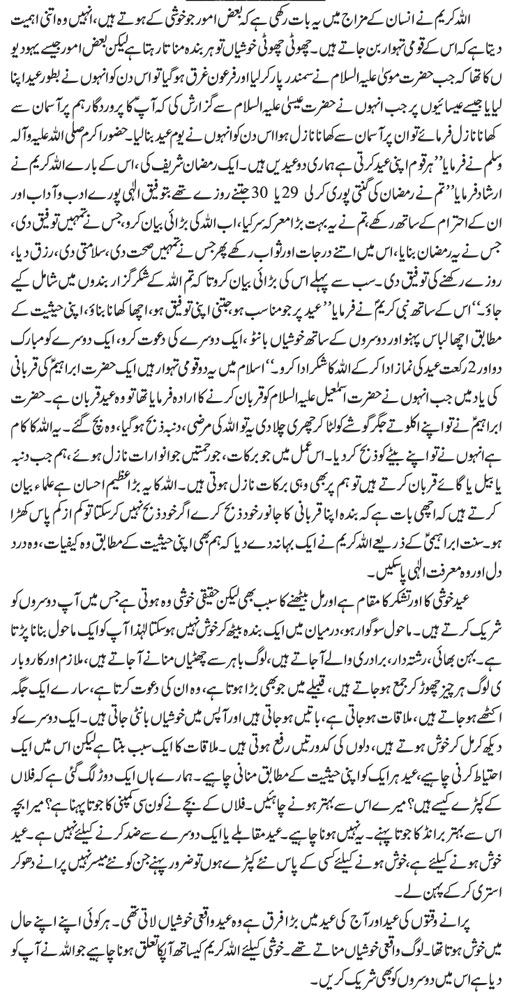
What Should One Do On EID Day
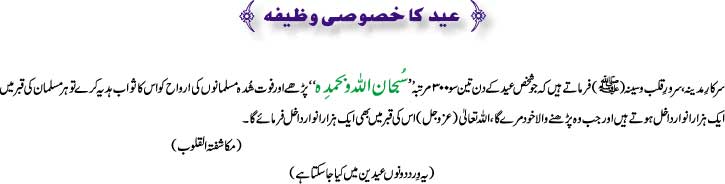
Our beloved Prophet say “The person who say Subhan-Allah-e-wa-bai Hamdehe 300 times on Eid day & conveying reward of this virtuous deed to all Muslims who have been died, then Allah will gave one thousand lights (Anwaar) in the grave of every Muslims and after death the person who say will also revive one thousand lights (Anwaar)”. (Mukashifat-alquloob by Imaam Ghazali)
EID MUBARAK
Anas (RA), a companion of prophet Muhammad (peace be upon him) reported that when the Prophet Muhammad (PBUH) migrated from Makkah to Madinah, the people of Madinah used to have two festivals. On those two days they had carnivals and festivity. Prophet Muhammad (PBUH) asked the Ansaar (the Muslims of Madinah) about it. They replied that before Islam they used to have carnivals on those two joyous days. The Prophet Muhammad (PBUH) told them: ‘Instead of those two days, Allah has appointed two other days which are better, the days of Eid-al-Fitr and Eid-al-Adha.’ (Hadith)
EID-UL-FITR is celebrated on the first day of Shaw’waal, at the completion of Ramadan. Shaw’waal is the 10th month of the Islamic calendar. The Eid-al-Fitr is a very joyous day; it is a true Thanksgiving Day for the believing men and women. On this day Muslims show their real joy for the health, strength and the opportunities of life, which Allah has given to them to fulfill their obligation of fasting and other good deeds during the blessed month of Ramadan.
Sunnah of Eid
- Wake up early.
- Prepare for personal cleanliness, take care of details of clothing, etc.
- Take a Ghusl (bath) after Fajr.
- Brush your teeth.
- Dress up, putting on best clothes available, whether new or cleaned old ones.
- Use perfume (men only).
- Have breakfast on Eid-al-Fitr before leaving for prayer ground. On Eid-al-Adha, eat breakfast after
Salaat or after sacrifice if you are doing a sacrifice. - Pay Zakaat-al-Fitr before Salaat-al-Eid (on Eid-al-Fitr).
- Go to prayer ground early.
- Offer Salaat-al-Eid in congregation in an open place except when whether is not permitting like rain, snow,
etc. - Use two separate route to and from the prayer ground.
- Recite the following Takbir on the way to Salaat and until the beginning of Salaat-al-Eid:
Allaho-Akber, Allaho-Akber. La ila-ha ill-lal-lah. Allaho-Akber, Allaho-Akber. Wa-lilahill hamd.(Allah is great, Allah is great. There is no god but Allah. Allah is great, Allah is great. And all praises
are for Allah).
How to offer Eid prayer:
Ibn Abbass (RA) reported: ” I participated in the Eid-ul-Fitr prayer with the Messenger of Allah (saw), Abu Bakr (RA), Umar (RA) and Uthman (RA), and all of them held Eid prayer before Khutbah, and then the
Prophet Muhammad (saw) delivered the Khutbah (sermon).” ( Muslim )
Who should go to the prayer ground & offer Eid Prayer:
Umm Atiyah (RA) reported: “The Messenger of Allah (saw) commanded us to bring out on Eid-al-Fitr and
Eid-al-Adha, young women, hijab-observing adult women and the menstruating women. The menstruating women stayed out of actual Salaat but participated in good deeds and Duaa (supplication). I (Umm Atiyah) said to the Holy Prophet (saw): Oh! Messenger of Allah, one does not have an outer garment. He replied: Let her sister cover her with her garment.” ( Muslim )
On the Eid day, every believing man, woman and child must go to the prayer ground and participate in this
joyous occasion.
Structure of Eid prayer:
Eid prayer is wajib (strongly recommended, just short of obligatory). It consists of two Rakaat (units) with
six additional Takbirs. It must be offered in congregation. The prayer is followed by the Khutbah.
(Note from Maqsud: Eid prayer is sunnah according to other Fiqahs, only Hanafi consider it as wajib)
The Khutbah is part of the worship and listening to it is Sunnah. During the Khutbah, the Imam must remind
the community about its responsibilities and obligations towards Allah, fellow Muslims and the fellow human beings. The Imam must encourage the Muslims to do good and ward off evil. The Muslim community must also be directed to the state of the community and the Ummah at large and the feelings of sacrifice and Jihaad should be aroused in the community. At the conclusion of the prayer the Muslims should convey greetings to each other, give reasonable gifts to the youngsters and visit each other at their homes. Muslims should also take this opportunity to invite their non-Muslims neighbors, co-workers, classmates and business acquaintances to Eid festivities to expose them to Islam and Muslim culture.
Laylatul Qadr
Ubaadah bin Saamit (Radhiallaho anho) reports that he asked the Prophet (Sallallaho alaihe wasallam) about “Laylatul Qadr”. He replied: “It is in Ramadhan, during the last ten days, on the unevenly numbered nights, either the 21st 23rd, 25th, 27th, 29th. Whosoever stands in “Ibaadah” on this night, with sincere faith and with genuine hopes of gaining reward, his previous sins will be forgiven. Among the signs of this night is that it is a serene, quiet, shining night, neither hot, nor cold but temperate as if a moon is shining clear, and no meteors are shot at the “Shayateen” on that night; it lasts until the break of the dawn. Another sign is that at morn, the Sun rises without any radiant beams of light, appearing rather like the moon in it’s fullness. On that day, Allah prohibits the “Shayateen” from rising up with the Sun.”
COMMENTARY
Part of what has been mentioned in this Hadith has already been dealt with. Some signs are here mentioned about the actual night. These signs are clear and need no further elucidation. Apart from these, there are other signs too, as mentioned in the Ahadith or in the experiences of those who had the good fortune to experience “Laylatul Qadr.” The sign that is, however; most specific in the Hadith is the rising of the sun, ‘without any radiant beams of light.’ Other signs are not always there. One Sahaabi, Ab’da bin Abi Lubaaba (Radhi Allaho anho) says: “On the evening of the 27th , I tasted the water of the sea and it was sweet.” Ayub bin Khalid said: ‘I once had to bathe myself with sea water, and on tasting it, found, it sweet. This was on the 23rd night.” Some of the “Mashaaikh” (religious divines) wrote that, on the evening of “Laylatul Qadr”, everything prostrates itself before Allah, so much so that trees fall flat on the ground, then return to their normal position; these are however spiritual phenomena not visible to the ordinary person.
Aaisha (RadhiAllaho anha) reports: “I said: ‘O Messenger of Allah (Sallallaho alaihe wasallam), should I find myself the “Laylatul Qadr”, hat shall I pray. The Prophet (Sallallaho alaihe wasallam) replied: say, Allaahumma innaka afuwwun tohibbu al’afwa fa’fu anna “O Allah, Thou art the One who grants pardon for sins. Thou lovest to pardon, so O pardon me.”
COMMENTARY
This is indeed such an all-inclusive prayer, wherein one begs that Allah in His infinite Grace should forgive his sins. If that has been obtained, the path to the Hereafter is secure. What more would one require? Imaam Sufyaan Thowry used to say that to keep oneself busy on this night with ‘Duaa’ (invocations to Allah) is better than any other form of worship (Ibaadah). Ibne Rajab says that one should not only remain busy with ‘Duaa’, but should also take part in all other form of ‘Ibaadah’, e.g. recitation of the Holy Qur’an, ‘Salaat’, contemplation, etc. This latter opinion is most correct and nearer to what Rasulullah (Sallallaho alaihe wasallam) had said, as already mentioned in the previous Ahaadith.