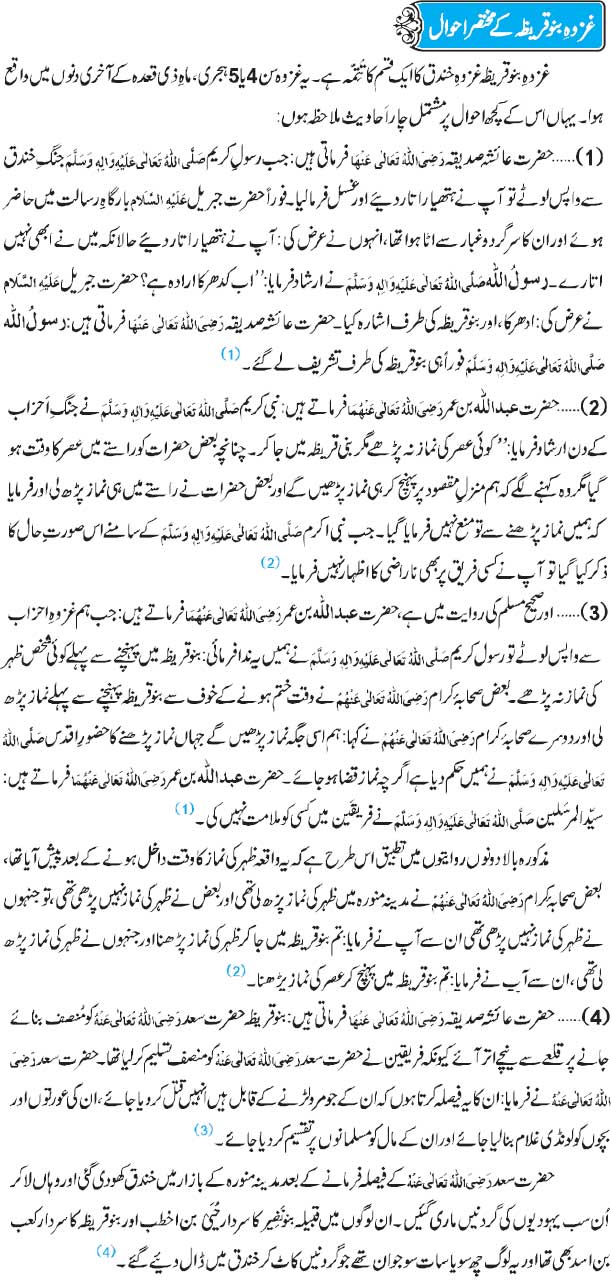
Ghazwa Banu Qurayza

Explanation of the Quran and Iman of the Believer!
The word Hadith comes from the Arabic language MEANING the record of the statements and events of Prophet Muhammad (PBUH).
The Hadith is also acknowledged as the words of wisdom explaining the Holy Quran. The Hadith is the second pillar after the Quran upon which every Muslim rests his faith. Hadith consists of Mat’n and Isnad. Mat’n means the text of the Hadith, while Isnad means the chain of transmitters (Ravi’s – / narrators) to that Hadith.
Since Islam has offered humanity the most comprehensive value system for all aspects of life, the explanation of this system is of the greatest importance. Islam presents its laws and principles as a mixture of spiritual and intellectual guidelines. Any neutral person who studies Islam rationally is amazed by the harmony of its commandments with human nature. Now our duty and mission are to present the true spirit of Islam, as it was revealed by Allah to His Prophet (PBUH). A true and comprehensive understanding of Islam would not be possible without careful recognition of the pattern set by the Holy Prophet (PBUH). The true spirit of the Holy Qur`an cannot be ingested if indifference or negligence is shown towards the pattern set by the Holy Prophet (PBUH) whose words and acts are a role model for the Muslim Ummah.
The sanctity of Hadith is highlighted by Hazrat Annas Bin Maalik (R.A), one of the famous transmitters (Ravi’s – / narrators) of Hadith. According to him: “It warns me to narrate or attribute any statement with Allah’s Prophet (PBUH) that he did not say; as Allah’s Prophet (PBUH) said that whoever attributes with me any false statement should find his place in Hell.”
Following are some Hadith of the Holy Prophet (PBUH) that are vital in the character Building of Muslims and that relates to our everyday lives:
Hakim Narrator:- Hazrat Buraidah Salmah (RA)
The Messenger of Allah (P.B.U.H) said: He who recites, learns and practically acts (on what he learns), will be crowned on Resurrection day. This crown will be made of light (Noor) and its light will be like that of the sun. His parents will be given such two garments, the comparison of which will not be found in the whole world. They will ask why have we been given these garments. Allah will say “In lieu of the reading of the Quran by your child”.
Hakim Narrator:- Hazrat Abdullah Bin Umro Bin Aas (RA)
The Messenger of Allah (P.B.U.H) said: He who read the Quran, conceived the knowledge of Prophethood in between his ribs, even though no inspiration (Wahee) is being sent to him.
It is not good conduct on the part of a Hafiz-e-Quran (one who memorizes the Quran by heart ) to address others with anger, who are in a rage themselves. Neither should he behave with the ignorant people in the same way. Since he is holding inside of him the Kalaam of Allah.
Sahih Al-Bukhari Hadith – Hadith 1.75 Narrated by Ibn Abbas (RA)
Once the Prophet embraced me and said, “O Allah! Bestow on him the knowledge of the Book (Quran).”
Sahih Al-Bukhari Hadith – Hadith 1.80 Narrated by Anas (RA)
Allah’s Apostle said, “From among the portents of the Hour are (the following):
1. Religious knowledge will be taken away (by the death of religious learned men).
2. (Religious) ignorance will prevail.
3. Drinking of alcoholic drinks (will be very common).
4. There will be prevalence of open illegal sexual intercourse.
Sahih Al-Bukhari Hadith – Hadith 9.135 Narrated by Abdullah bin Umar (RA)
Allah’s Apostle said, “While I was sleeping, I was given a bowl full of milk (in the dream) and I drank from it (to my fill) till I noticed its wetness coming out of my limbs. Then I gave the rest of it to ‘Umar bin Al-Khattab.” The persons sitting around him, asked, “What have you interpreted (about the dream) O Allah’s Apostle?” He said, (It is religious) knowledge.”
Tirmizi Narrator:- Hazrat Abu Saeed (R A)
The Messenger of Allah (P.B.U.H) explained this Hadith-e-Qudsi that Allah says, he who does not find time to do Zikir and Dua(supplication ), because of his involvement in the Quran, I bestow upon him more than those who do Dua.
And the superiority of the Kalaam of Allah over all other Kalaams is the same as the superiority of Allah over His creation.
Ibn-e-Habaan Narrator:- Hazrat Jabir (RA)
The Messenger of Allah (P.B.U.H) said: The Quran is that recommender whose recommendation will be accepted and is such a disputer whose dispute will be accepted. whoever keeps it (Quran) in front of him, meaning practically does what it teaches, the Quran will take him to Jannah. And he who keeps it behind his back, meaning does not practically do what it teaches, the Quran will take him to hell.
Note: ‘A disputer whose dispute will be accepted’ means for those who are reading it and practically doing what it teaches, the Quran will dispute for them in the court of Allah for increasing their ranks. And for those who are careless, it demands why they are not paying it, it’s due right.
Muslim Narrator:- Hazrat Umar (RA)
The Messenger of Allah (P.B.U.H) said: Allah increases as well as decreases the ranks of many people, because of This Quran. Meaning those who practically do what the Quran teaches, Allah, rewards them with honor in this world and the hereafter. And those who do not practically do what the Quran teaches, Allah disgraces them.
Behqi Narrator:- Hazrat Abu Zar (RA)
The Messenger of Allah (P.B.U.H) said to me that do recitation of the Quran and the Zikir (remembrance) of Allah. Because of this deed, your Zikir (remembrance) will be done in the skies. And this deed will be a source of guidance with light (Noor) for you on the Earth.
Muslim Narrator:- Hazrat Abdullah Bin Umar(RA)
The Messenger of Allah (P.B.U.H) said: Two persons should be envied. One who Allah has blessed with the Quran and he keeps himself busy day and night with its recitation. Second whom Allah has blessed with wealth and he keeps himself busy day and night by spending it (in the way of Allah).
Tirmizi Narrator:- Hazrat Imran Bin Hussain (RA)
The Messenger of Allah (P.B.U.H) said: He who reads the Quran should ask a question through the Quran from Allah. Soon such people will come who will read the Quran and will ask the questions with it from other people.
Tirmizi Narrator:- Hazrat Abdullah Bin Umar (RA)
The Messenger of Allah (P.B.U.H) said: (The day of Resurrection) The person with the Quran will be told ? Keep on reciting the Quran and keep on climbing the ranks of Jannah and recite slowly slowly as you recited slowly slowly in the world. your place will be where your last Aayat will end.
Note:- ‘The person with the Quran’ means a Haafiz of Quran or one who recites the Quran mostly or one who ponders as well as practices on the Quran.
Tirmizi Narrator:- Hazrat Abu Huraira (RA)
The Messenger of Allah (P.B.U.H) said: On Resurrection day when the person with the Quran will come (In the court of Allah) the Quran will request to Allah ‘Present him with a special garment’. A crown of nobleness will be awarded from Allah. It (Quran) will again request ‘O my Lord present more’. A full dress of esteem will then be awarded from Allah. It (Quran) will then request ‘O my Lord be pleased with this person’. So Allah will be pleased with him. Then it will be said to him ‘Keep on reciting the Quran and keep on climbing the ranks of Jannah’ and (for him) for every Aayat a good deed will be increased.
Hakim Narrator:- Hazrat Uns (RA)
The Messenger of Allah (P.B.U.H) said: In the eyes of Allah some people are like special people of a house. The companions (RA) requested ‘Who are these people’ (P.B.U.H.) said: people of the Quran, as they are special people of Allah.
Note:- ‘people of the Quran’ means a Haafiz of Quran or one who recites the Quran mostly or one who ponders as well as practices on the Quran.
Tirmizi Narrator:- Hazrat Ibn-e-Abbas (RA)
The Messenger of Allah (P.B.U.H) said: He who does not have even a portion of the Quran saved in his heart, he is like a deserted house.
Note: meaning just like the happiness and prosperity of a home is by its inhabitants, similarly the happiness and prosperity of a person’s heart is by the remembrance of the Quran.
Tirmizi Narrator:- Hazrat Usman Bin Affan (RA)
The Messenger of Allah (P.B.U.H) said: The best among you is the one who learns and teaches the Quran.

(23:1-7) Successful indeed are the believers; who are reverent during their Contact Prayers (Salat). And they avoid vain talk. And they give their obligatory charity (Zakat). And they maintain their chastity. Only with their spouses, or those who are rightfully theirs, do they have sexual relations; they are not to be blamed. Those who transgress these limits are the transgressors.
2:235] You commit no sin by announcing your engagement to the women, or keeping it secret. GOD knows that you will think about them. Do not meet them secretly, unless you have something righteous to discuss. Do not consummate the marriage until their interim is fulfilled. You should know that GOD knows your innermost thoughts, and observe Him. You should know that GOD is Forgiver, Clement.
[24:31] And tell the believing women to subdue their eyes, and maintain their chastity. They shall not reveal any parts of their bodies, except that which is necessary. They shall cover their chests, and shall not relax this code in the presence of other than their husbands, their fathers, the fathers of their husbands, their sons, the sons of their husbands, their brothers, the sons of their brothers, the sons of their sisters, other women, the male servants or employees whose sexual drive has been nullified, or the children who have not reached puberty. They shall not strike their feet when they walk in order to shake and reveal certain details of their bodies. All of you shall repent to GOD, O you believers that you may succeed.
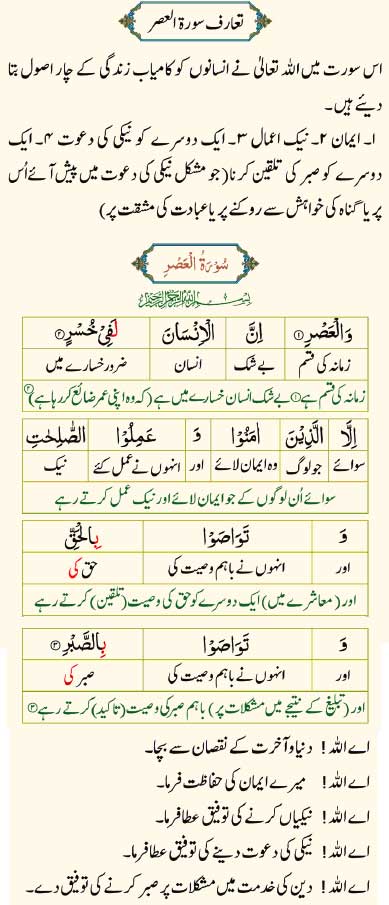
1. Lo! those who purchase a small gain at the cost of Allah’s Covenant and their Oaths, they have no portion in the Hereafter, Allah will neither Speak unto them nor will
(AlQuran. Surah AAlImraan. Para # 4)
Penance For Breaking An Oath:
1. They destroy themselves (by taking false oaths), and Allah knoweth that they verily are liars.
(AlQuran. Surah AlTauba. Para # 10)
2. Allah does not hold you accountable for your laghw (ineffectual) oaths, but He does hold you accountable for the oath with which you have bound yourself. Its expiation is to feed ten poor persons at an average of what you feed your family with, or to clothe them, or to free a slave. However, if someone cannot afford, he has to fast for three days. That is expiation for the oaths that you have sworn. Take care of your oaths. That is how Allah makes His signs clear to you, so that you may be grateful.. (AlQuran. Surah AlMaaida. Para # 6)
The Prophet (peace be upon him) was known to love good smells. He sums up what he loved of material things in this present world, saying: “Of all that is available in this present life, I am made to love perfume and women, but the thing that gives me best gratification is prayer.” (Related by Ahmad and Al-Nassaie.) This does not mean that the Prophet disliked other things that people find pleasant or enjoyable. It simply means that the Prophet did not feel an urge to have luxuries or expensive articles that people are normally keen to have. Whatever was available was sufficient for him. Anything that served the purpose in hand was good enough.
He did not disdain to have the most modest, simple, and functional things. However, he was always keen that he always had a good smell. If he went through someplace or close to some activity that gave an unpleasant smell, he would immediately try to dispel that smell with some perfume.
The Prophet also loved women. He grew up in a community where women were treated as inferior to men in every respect. The message he was given, i.e. the message of Islam, lays much emphasis on the equality of men and women.
As God’s messenger who delivered His last message to mankind, he demonstrated such equality in the way he treated women and the guidance he provided to both men and women. He always urged his companions to be kind to their womenfolk and to take good care of them.
He also loved women’s company. Moreover, when it became necessary that he should marry several wives, for social, political, and legislative reasons, he did not feel this as a burden.
On the contrary, he was pleased to have them as part of his family. Some may read this Hadith as meaning that the Prophet had an extraordinarily strong sexual desire, but there is no suggestion of that in any Hadith.
However, nothing gave the Prophet greater satisfaction than prayer. Whenever he had a problem or felt stress, he resorted to prayer and it was certain to clear his stress.
Yet a good smell was important to the Prophet. He was keen that whoever was with him should be pleased with his smell. Therefore, the Prophet used to wear perfume when he went out. Lady Ayesha reports: “I used to give the Prophet the best smelling perfume we could have, and I would often see the brightness of perfume in his head and beard.” (Related by Al-Bukhari and Muslim.)
The phraseology of this Hadith indicates that perfume was an important article in the Prophet’s home and that his wives were keen to ensure that he had some perfume to wear when he left home. He wanted to make sure that he had a pleasant smell when he met people.
The Prophet’s practice is a Sunnah, which means that it gives a good example to follow. While this is required or recommended in religious matters, it indicates a good practice in other areas. If the Prophet did something that is unrelated to religion in a particular fashion, without saying anything to suggest that people should follow his example, then his practice is merely a matter of personal choice and is not a Sunnah.
However, if a person follows the Prophet’s example in such matters, believing that whatever the Prophet did was best, he is rewarded for his intention. Hence, many of the Prophet’s companions did that.
Nafi’ reports: “Abdullah ibn Umar used to be perfumed with aromatic smoke, using unsplit aloes and he would add camphor to it. He would say: ‘The Prophet used this type of smoke for perfume.” (Related by Muslim and Al-Nassaie.)
This Hadith speaks of a type of good smell that is still used in all parts of Arabia, which is the aromatic smoke. People everywhere use incense to give a good smell, and there are several types of plants that give such smoke. A type of aloe wood that gives perhaps the best smell is known in Arabia as the Oud, and Ayesha reports: “The Oud was the best type of perfume the Prophet loved.” (Related by Abu Al-Shaykh and Ibn Saad.)
People realized that the Prophet loved a good smell. Therefore, they often offered him a touch of perfume, and he would accept it willingly. Anas reports: “The Prophet never declined to have a touch of perfume offered to him.” (Related by Ahmad, Al-Bukhari, Al-Nassaie, Abu Dawood and Al-Tirmidhi.)
This Hadith is reported in more than one way. Another version that has a different chain of transmission also quotes Anas as saying: “God’s Messenger was never seen to decline perfume offered to him.” (Related by Al-Nassaie and others.)
The last two Hadiths suggest that accepting any perfume offered was a habit of the Prophet. This is clearly confirmed by a Hadith in which Ayesha reports: “The Prophet disliked to go out to meet his companions without wearing some perfume. He would have a touch of perfume toward the end of the night.” (Related by Abu Al-Shaykh.) Needless to say, Ayesha is referring to the time of dawn when the Prophet went out to the mosque to offer Fajr prayer.
He was keen that he should have a pleasant smell, always wearing perfume. It is a good practice to follow that we should wear some perfume before going out in the morning, whether to pray or when we go to work.
The Muslim society the Prophet (peace be upon him) established was a model society to the standards of which all subsequent Muslim generations aspired.
The Prophet’s companions were keenly aware of the change that occurred in their lives as a result of their adoption of Islam and implementing it. The gulf that separated their lives before and after Islam was great indeed. Hence they appreciated the meaning of a quality the Prophet indicated of true believers: that they should hate to relapse into disbelief as much as they would hate to be thrown into the fire.
However, the community that lived in that society was a community of ordinary human beings, with diverse characters and divergent interests. They experienced all the feelings and desires that motivate ordinary people. If they were prepared to work hard and go to war in support of their faith, they would certainly have preferred a comfortable and easy life. They withstood much hardship, leading a life of poverty for many years. This, however, did not change the fact that, like every one of us, they would have preferred a better standard of living. When the Battle of Hunayn was over, the Muslims gained great wealth. According to the rules Allah states in the Qur’an, one-fifth of all spoils of war go to the state. The others are equally divided among the soldiers, according to well-defined criteria. The Prophet gave a number of notables from Makkah very large gifts that made them truly rich. Until very recently, these were fighting hard to suppress Islam. Now, they were new Muslims, and indeed one or two of them were still unbelievers. Since these commanded positions of authority among their people, the Prophet wanted to purge their old hatred of Islam and to ensure that they were now committed to it
The Prophet did not give any such gifts to anyone of the Ansar, the people who never faltered in their commitment to Islam, enduring much hardship in the process. It was natural that they should feel that with such prizes available to the Prophet, they would receive their fair share. Therefore, when they realized that there was nothing coming their way, apart from their rightful shares, they complained. Their spokesman made their feelings clear to the Prophet, showing all due respect.
The Prophet spoke to the Ansar and reminded them of the great change Islam brought into their lives. They acknowledged this and expressed their gratitude to Allah and to the Prophet. He then started his own indebtedness to them, acknowledging that they gave him shelter when his own people were plotting to kill him, and they supported him against all enemies.
The Prophet then stated the situation that gave rise to their complaint, and he made the issues underlining it very clear. Those gifts went to people who knew very little about Islam so that they would feel that they would lose nothing of their material world when they accepted Islam. On the other hand, the Ansar were keenly aware of what Islam meant to them. He said: “People of the Ansar, are you aggrieved over a trifle of this world which I have given out to certain people in order to win their hearts over to Islam and left you to rely on your faith? Are you not satisfied, people of the Ansar, that other people should go to their quarters with sheep and camels while you go back to your own quarters with Allah’s Messenger? By Him who holds Muhammad’s soul in His hand, had it not been for my emigration I would have been one of the Ansar. If all people went one way and the Ansar went another way, I would take the way of the Ansar. My Lord, shower your mercy on the Ansar, and the Ansar’s children and the children of their children.”
– By NAUSHAD SHAMIM AL-HAQ