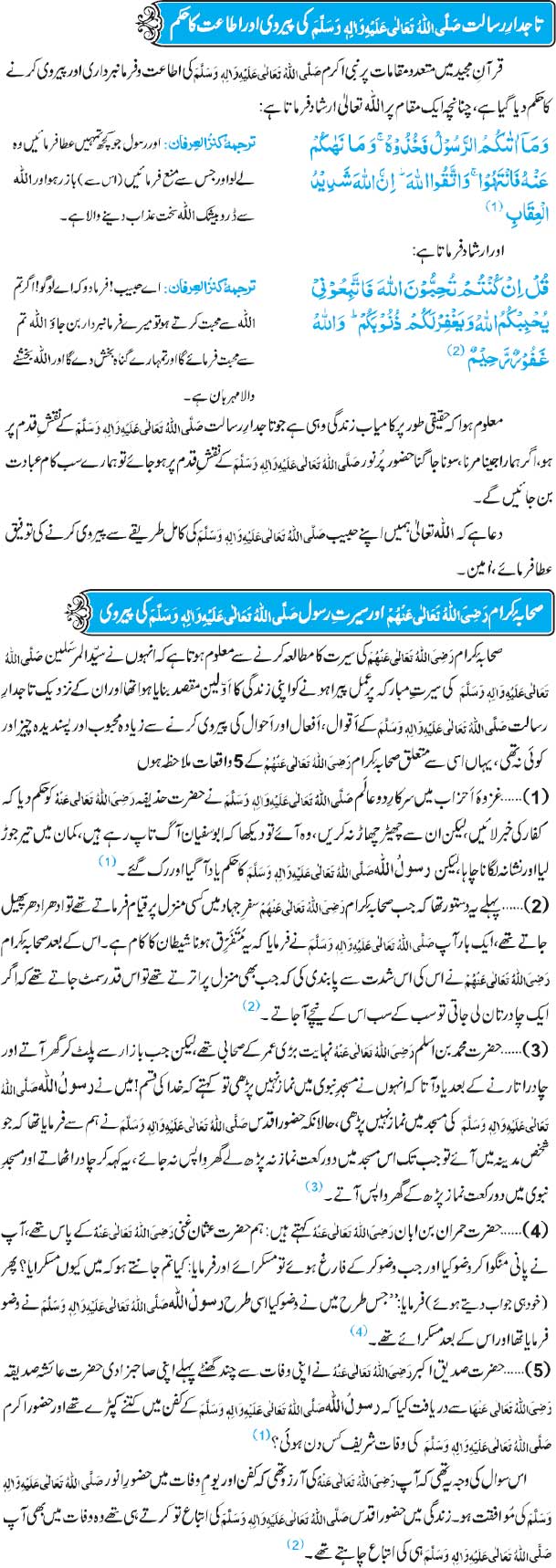
Tajdar e Risalat (PBUH) Ki Pairwi Aur Itaat


Backbiting is one of those Islamic topics that often gets sidelined. Appearing as one of the frequent tarbīyyah topics in common circles and gatherings, the issue may be forgotten or ignored. This is severely problematic, as backbiting is one of the most devastating sins a person can ever commit, and not keeping ourselves reminded about it can lead to grave consequences. To make it fresh in our minds again, let’s tackle the issue in a practical way. Here are 5 common misconceptions that we ourselves or others you encounter may have about backbiting, what is misunderstood, and how to respond to them.
Misconception #5: I’m not backbiting, I’m just saying.
When people respond with, “I’m just saying,” they’re telling themselves that what they’re mentioning is not something so bad as backbiting, it’s just “saying” things as they are. In other words, they’re trivializing the act, and telling themselves that backbiting isn’t really all that bad.
But backbiting is no walk in the park. It’s one of the most disgusting acts one could ever commit. That’s why Allah subḥāna wa ta’ala asks those who backbite, “Would one of you love to eat the flesh of his dead brother (or sister)?”1 God, Himself is comparing backbiting to something vilely rancid, so no one is fooled to think it’s not an inhuman act like that of murder or rape. The imagery of you eating the dead carcass of the person you’re talking about really paints a clear picture.
Not only that, Allah is asking us if we would love eating that flesh. It’s as if He is saying not only is backbiting as disgusting as eating that person’s dead flesh when we backbite, it’s as if we enjoy eating it, too.
Response: Describe to them how disgusting an act backbiting really is.
“You’re not, just saying. You’re going to that person’s body after their Janazah, ripping off their thigh, chewing it up, and enjoying it, too.”
Misconception #4: I’m not backbiting, everyone already knows about this person, anyway.
If a person is mentioning things about someone already known, not only are they still backbiting, they’re following the footsteps of hypocrites. The hypocrites of Medinah spread rumors about ‘A’isha, may Allah be pleased with her, and as a result were cursed by Allah to the depths of Hellfire.
Hellfire, which was intensified by Allah for thousands of years, turning its flame from orange to red to yellow to black, and burns 70 times worse than Earth’s fire (minimum 210th degree burns?). The same Hellfire where those who spread lies about others get hooks pierced into their cheeks and slammed back to rip off their faces, and are given scalding hot puss to drink as a relief.
If everyone already knows about it, why spread it and potentially go to the horror that is Hell? And if not the Hellfire, then being punished in the grave with copper nails repeatedly scratching your face and chest off? The risk simply isn’t worth it.
Response: Remind them about the punishment of backbiting and how it makes spreading rumors not worth the risk.
“Mentioning what everyone already knows about somebody is a dangerous path to Hellfire. Is spreading the news so important that it’s worth living with black fire that’s 70 times hotter, boiling puss drinks, and having your cheeks ripped off your face?”
Misconception #3: I’m not backbiting, I’m warning others about a person’s mistakes.
Human beings have a natural desire to warn others about harm. That’s why when they see something wrong with someone else, they’ll personally identify those characteristics as a problem, make a decision to be careful about it for themselves, and naturally want to notify others about it as well.
But that’s where the problem comes in. We want to naturally talk about someone else’s faults, but if we do, it’s backbiting. How can we get past this natural desire that’s so troublesome?
Simple. First, we need to realize which of these natural tendencies is okay and which isn’t. It’s completely okay to be adverse to the faults of others. However, telling others about those mistakes, while naturally easy, is the major sin of the two.
The Prophet sal Allahu ‘alayhi wa sallam said backbiting is “talking about your brother in a manner which he does not like.” That means saying anything about the person that they wouldn’t want you to counts as backbiting. If you know the person you’re talking about wouldn’t like what you’re saying about them, don’t say it.
If we feel the desire to go out and warn someone about it, do so on the person with the faults in the first place in a kind and sincere manner. Our problem as Muslims is that we talk a lot about people behind their backs but never confront them in person.
Secondly, on an encouraging note, remember that by not backbiting, we get closer to guaranteed Paradise. The Prophet sal Allahu ‘alayhi wa sallam said whoever guarantees control over what is in between their thighs and their jaws, he will guarantee them Paradise.
This guarantee is awesome in two ways. Not only makes not backbiting easier because of the amazing goal attached to it, it comforts us in the fact that our religion understands. Notice how the Prophet sal Allahu ‘alayhi wa sallam asked for whoever guarantees control, showing that he knows it’s natural to lose control. But at the same time, he’s encouraging us to take that control and work towards Paradise.
Response: Explain to them what backbiting is and the reward of abstaining from it.
“Talking about others negative traits in any way shape or form is backbiting and none of your business, and if you stay away from it you’re working towards guaranteed admission to Paradise.”
Misconception #2: I’m not backbiting, I’ll tell them later or I don’t care, I can say it to their face.
Some people justify backbiting by thinking if they inform the person later they were talking about them behind their back, it makes the act okay. But telling someone you backbit about them after the fact is a part of the process of repenting and making up for the sin. It has to be done sincerely, with regret and shame for the act, driven by a balanced fear of Allah’s punishment and a hope in His Mercy.
Trying to justify backbiting by telling someone you backbit about them is like trying to justify believing Prophet Jesus, peace be upon him, as the son of Allah by saying you will just repent later. Not only is it an imbalance between fearing Allah and having hope He will forgive you, it doesn’t make the act okay to commit in the first place.
What’s worse is when some people claim they, “don’t care” about backbiting and they supposedly can or will say what they backbit about someone to their. Not only is that even more of a misunderstanding than planning to tell them later, it just shows two things. One, they’re just a jerk. It isn’t bad enough that they’re backbiting, but they have to go and act “brave” by claiming they can tell the person the insult to their face.
In addition to being a jerk, they also need to be careful when they say, “I don’t care.” Do they really not care? And what do they not care about? They don’t care about incinerating in that 70 times hotter black fire we mentioned before? And having their cheeks ripped off your face and having to drink searing hot puss afterward? Are they really sure they don’t care? Chances are no.
Response: Backbiting about someone with the intention to tell them later doesn’t make it okay. It’s still backbiting. And claiming you, “don’t care” and can say it to their face shows that you’re a jerk and don’t care about the Hellfire.
Misconception #1: I’m not backbiting, it’s true.
This, by far, is the most common misconception and response we find Muslims making when we warn them about backbiting. They think that backbiting is only when you mention bad things about people that aren’t true. Is that really the case?
Going back to the definition of backbiting, the Prophet sal Allahu ‘alayhi wa sallam said backbiting is to mention things about your brother (or sister) which they don’t like. After the Companions heard this definition, one of them asked, “what do you think about if what I say about that person is true?”
“If (that) is actually found (in that person) what you claimed, you, in fact, backbit him. And if that’s not in that person, it’s slander,” the Prophet sal Allahu ‘alayhi wa sallam answered.
This shows that we’ve got it all wrong. Just because what we’re saying is true, doesn’t mean it’s not backbiting. In fact, it proves that we are indeed backbiting because backbiting is true information. If it wasn’t true, we’d be doing something worse than backbiting, slander.
That makes a whole lot of things count as backbiting. That’s why when ‘A’isha said about Ṣafiyya, the wife of the Prophet sal Allahu ‘alayhi wa sallam who was the daughter of a Jewish leader, that, “she’s short,” he got upset and said, “you have said a word that if were to be dropped into the sea it would contaminate it.”
‘A’isha and the Prophet sal Allahu ‘alayhi wa sallam knew about Ṣafiyya’s height. So did everyone else who saw her in Medinah, and all the people from her tribe before she married the Prophet. In other words, what ‘A’isha said was as true as it gets. But the fact that it was true made it backbiting. And if something as small as what she said was poison to the entire sea, what about when we talk about how people may be gaining weight, undergoing a divorce, losing their hair, struggling to control their anger, failing to give up a public sin, or anything else they wouldn’t like said about them?
Response: Inform them about the truth being backbiting and falsehood being slander.
“Yeah, you’re backbiting, because the Prophet sal Allahu ‘alayhi wa sallam if it’s true, which you’re saying it is, then it’s backbiting.”
Conclusion
Backbiting is no misdemeanor. It’s a federal offense. In fact, it’s more than that. It’s a universal act of ethical treason, the likes of which transcend this world and has severe consequences in the next.
We need to remember that when we signed up to become Muslim, we agreed to follow all of the rules, and one of the rules is that for anyone else who signed up for the contract of La ilah ha illa Allah, Muḥammmad al-rasulullah you can’t ever talk behind their back. Doing so is not only a horrible sin and a disgusting act, it’s one of the worst things you could ever do to your Muslim brother or sister.
While you may be fired up to use the responses to these misconceptions and are trying to think of people you could use them on, ask yourself if the person to respond to is none other than you. Do you have these misconceptions about backbiting? Have you ever made any of these five justifications or something similar to them? If so, give yourself the responses and work on yourself first, and eventually, you can work on correcting others, as well.
Al Huda Institute
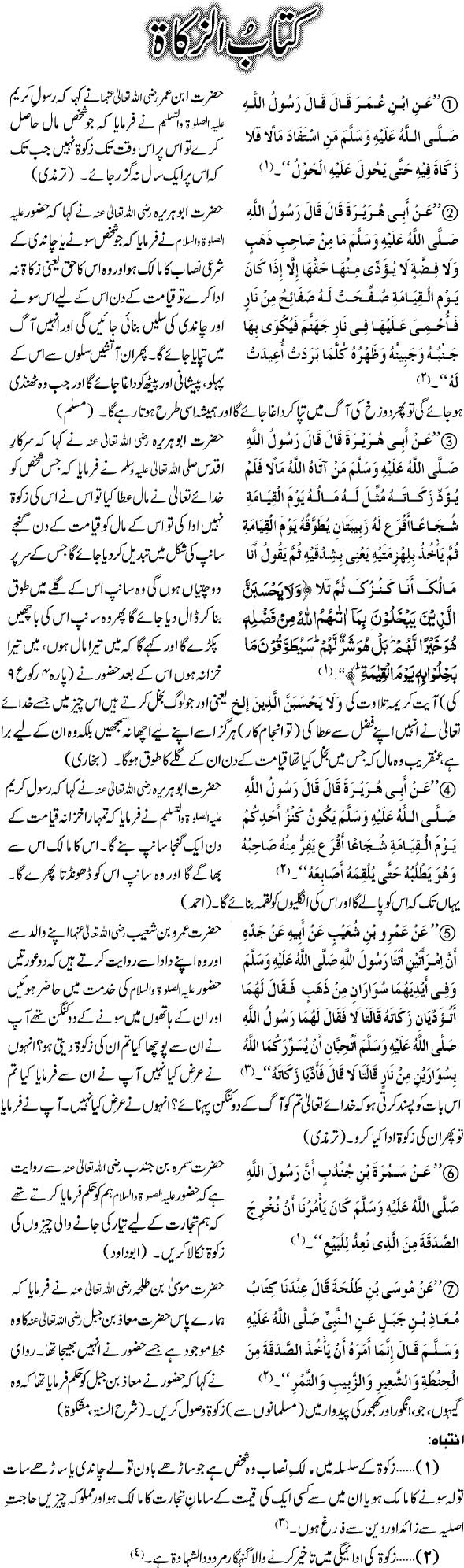
THE Messenger of Allah (peace be upon him) said, “Umrah is an expiation for the time between it and the previous ‘Umrah, and an accepted Haj has no less a reward than Paradise.” (Al-Bukhari)
The person who intends to perform Umrah “clips his nails, trims his mustache, shaves his pubic hair, and plucks out the hairs of his armpits. Then he performs Ghusl (complete bathing), and the male pilgrim wears an Izar (lower garment affixed at the waist like a bath towel) and a Rida’ (a garment worn over the shoulders) that are both clean and white.” (Note: Women may enter the state of Ihram in any clothing within the Islamic guidelines)
After completing this and while approaching one of the Meeqat (marked posts around Makkah) for Haj and Umrah), he should enter the state of Ihram which is “the intention to enter into one of the two sacred rituals, Al-Haj or Al-‘Umrah.”
The state of Ihram has certain prohibitions; some of which are as follows:
• Wearing stitched clothing such as shirts, socks, hoods, and a thawb by men.
• Applying perfume.
• Shaving the hair or cutting it, even a little.
• Cutting the nails on either the hands or feet.
• Having sexual intercourse with one’s spouse and the actions that precede it like kissing.
The pilgrim should then begin the Talbiyyah (answering of the command) and continue it until he reaches Masjid Al-Haram.
The meaning of the wording for the Talbiyyah is: “I am here at Your service, O Allah; I am here at Your service. I am here at Your service; You have no partner; I am here at Your Service. Verily the Praise and the Blessings are Yours, and also the Sovereignty. You have no partner.”
When the pilgrim arrives at Masjid Al-Haram, he should proceed to the area of Tawaf (circumambulating the Ka’ba) being in a state of purity. He comes to the Black Stone and kisses it, touches it, or points to it if he is unable to reach it. He then begins Tawaf with the Ka’ba on his left performing Ar-Ramal (walking with a brisk trot) while making supplication to Allah. Whenever he passes the Yemeni corner, he touches it if he can. On reaching the Black Stone again, a circuit is complete. He repeats this procedure for two more circuits. For the remaining four circuits the pilgrim stops Ar-Ramal and walks at a normal pace with tranquility. A total of seven circuits must be completed during Tawaf.
After completing the Tawaf, the pilgrim should pray two Rak’ah (units) of Salah behind the Maqam (standing place) of Ibrahim reciting Surah Al-Kafiroon in the first unit and Surah Al-Ikhlaas in the second one. Thereafter, the pilgrim should proceed to the hill of As-Safa to begin Sa’ee which is “to walk between As-Safa and Al-Marwah.” He stands on As-Safaa, faces the Ka’ba, and supplicates to Allah for as long as he wishes. Then he walks to the hill of Al-Marwah moving quickly between the two green markers, making Du’a along the way. Arriving at Al-Marwah constitutes one unit.
Standing on Al-Marwah, he supplicates to Allah (facing the Ka’ba) for as long as he wishes. He then walks back to the hill of As-Safa increasing the pace between the two green markers and supplicating to Allah along the way. On arriving at As-Safa the second trip is completed. The pilgrim must make a total of seven units completing As-Sa’ee at the hill of Al-Marwah.
After completing the Sa’ee, the pilgrim must cut his hair to exit the state of Ihram. The male pilgrim may either shorten all of his hair or shave it off completely. The female pilgrim shortens her hair the length of a fingertip. This completes the Umrah.
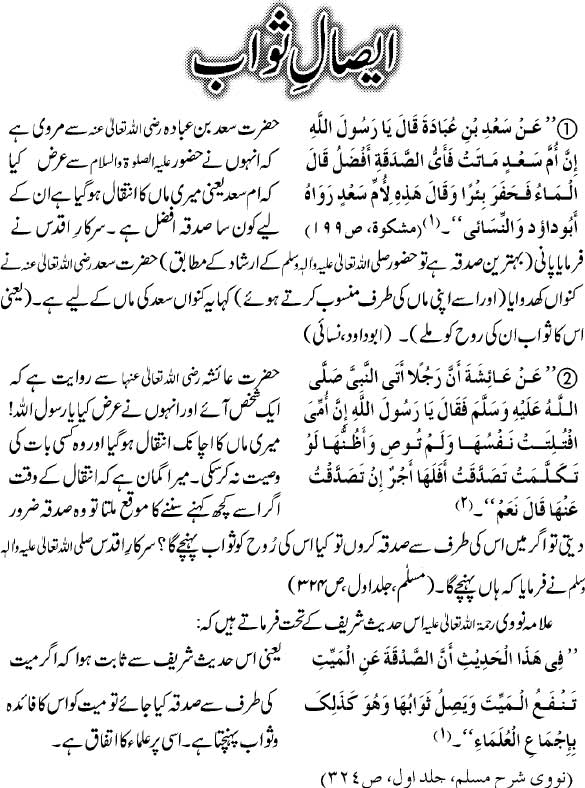
One of the most common myths about the Qur’an is that Usman (r.a.), the third Caliph of Islam authenticated and compiled one Qur’an, from a large set of mutually contradicting copies. The Qur’an, revered as the Word of Allah (swt) by Muslims the world over, is the same Qur’an as the one revealed to Prophet Muhammad (PBUH). It was authenticated and written under his personal supervision. We will examine the roots of the myth which says that Usman (r.a.) had the Qur’an authenticated.
1. Prophet Muhammad (PBUH) himself supervised and authenticated the written texts of the Qur’an
Whenever the Prophet received a revelation, he would first memorize it himself and later declare the revelation and instruct his Companions (R.A. ‘Radhi Allahu Taala Anhu’) May Allah be pleased with him who would also memorize it. The Prophet would immediately ask the scribes to write down the revelation he had received, and he would reconfirm and recheck it himself. Prophet Muhammad (PBUH) was an Ummi who could not read and write. Therefore, after receiving each revelation, he would repeat it to his Companions. They would write down the revelation, and he would recheck by asking them to read what they had written. If there was any mistake, the Prophet would immediately point it out and have it corrected and rechecked. Similarly, he would even recheck and authenticate the portions of the Qur’an memorized by the Companions. In this way, the complete Qur’an was written down under the personal supervision of the prophet (PBUH).
2. Order and sequence of Qur’an divinely-inspired
The complete Qur’an was revealed over a period of 22½ years portion by portion, as and when it was required. The Qur’an was not compiled by the Prophet in the chronological order of revelation. The order and sequence of the Qur’an too was Divinely inspired and was instructed to the Prophet by Allah (SWT) through archangel Jibraeel. Whenever a revelation was conveyed to his companions, the Prophet would also mention in which surah (chapter) and after which ayat (verse) this new revelation should fit.
Every Ramadhaan all the portions of the Qur’an that had been revealed, including the order of the verses, were revised and reconfirmed by the Prophet with archangel Jibraeel. During the last Ramadhaan, before the demise of the Prophet, the Qur’an was rechecked and reconfirmed twice.
It is therefore clearly evident that the Qur’an was compiled and authenticated by the Prophet himself during his lifetime, both in the written form as well as in the memory of several of his Companions.
3. Qur’an copied on one common material
The complete Qur’an, along with the correct sequence of the verses, was present during the time of the Prophet (PBUH). The verses, however, were written on separate pieces, scrapes of leather, thin flat stones, leaflets, palm branches, shoulder blades, etc. After the demise of the prophet, Abu Bakr (r.a.), the first caliph of Islam ordered that the Qur’an be copied from the various different materials onto a common material and place, which was in the shape of sheets. These were tied with strings so that nothing of the compilation was lost.
4. Usman (r.a.) made copies of the Qur’an from the original manuscript
Many Companions of the Prophet used to write down the revelation of the Qur’an on their own whenever they heard it from the lips of the Prophet. However, what they wrote was not personally verified by the Prophet and thus could contain mistakes. All the verses revealed to the Prophet may not have been heard personally by all the Companions. There were high possibilities of different portions of the Qur’an being missed by different Companions. This gave rise to disputes among Muslims regarding the different contents of the Qur’an during the period of the third Caliph Usman (r.a.).
Usman (r.a.) borrowed the original manuscript of the Qur’an, which was authorized by the beloved Prophet (PBUH), from Hafsah (may Allah be pleased with her), the Prophet’s wife. Usman (r.a.) ordered four Companions who were among the scribes who wrote the Qur’an when the Prophet dictated it, led by Zaid bin Thabit (r.a.) to rewrite the script in several perfect copies. These were sent by Usman (r.a.) to the main centers of Muslims.
There were other personal collections of the portions of the Qur’an that people had with them. These might have been incomplete and with mistakes. Usman (r.a.) only appealed to the people to destroy all these copies which did not match the original manuscript of the Qur’an in order to preserve the original text of the Qur’an. Two such copies of the copied text of the original Qur’an authenticated by the Prophet are present to this day, one at the museum in Tashkent in and the other at the Topkapi Museum in Istanbul, Turkey.
5. Diacritical marks were added for non-Arabs
The original manuscript of the Qur’an does not have the signs indicating the vowels in the Arabic script. These vowels are known as tashkil, zabar, zair, paish in Urdu and as Fatah, damma and qasra in Arabic. The Arabs did not require the vowel signs and diacritical marks for correct pronunciation of the Qur’an since it was their mother tongue. For Muslims of non-Arab origin, however, it was difficult to recite the Qur’an correctly without the vowels. These marks were introduced into the Quranic script during the time of the fifth ‘Umayyad’ Caliph, Malik-ar-Marwan (66-86 Hijri/685-705 C.E.) and during the governorship of Al-Hajaj in Iraq.
Some people argue that the present copy of the Qur’an that we have along with the vowels and the diacritical marks is not the same original Qur’an that was present at the Prophet’s time. But they fail to realize that the word “Qur’an” means a recitation. Therefore, the preservation of the recitation of the Qur’an is important, irrespective of whether the script is different or whether it contains vowels. If the pronunciation and Arabic is the same, naturally, the meaning remains the same too.
6. Allah Himself has promised to guard the Qur’an
Allah has promised in the Qur’an :
“We have, without doubt, sent down the Message; and We will assuredly Guard it (from corruption).”
[Al-Qur’an 15:9]
May Allah guide us true path…Aameen
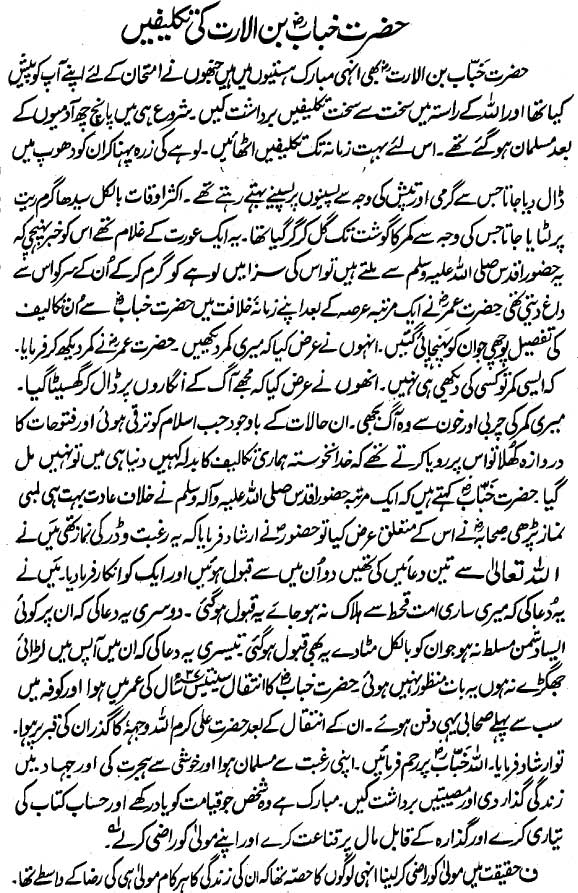
Zakat is one of the five pillars of Islam. In importance, it is next to prayer and the commandments concerning Zakat and prayer in the Holy Qur’an occur together.
Zakat literally means purification, growth, righteousness, and blessing. According to the Shariah or Islamic law, it denotes a specific amount in the wealth of Muslims due for distribution among the needy in the community. The obligatory character of Zakat and punishment for those unmindful of this responsibility are spelled out in the Holy Qur’an thus: “Take sadaqah (alms) from their wealth in order to purify them and sanctify them with it, and invoke Allah for them.” (9:103) and;
“… And those who hoard the gold and silver (Al-Kanz: the money, the Zakat of which has not been paid) and spend them not in the Way of Allah, announce unto them a painful torment – on the Day when that (Al-Kanz) will be heated in the fire of Hell, and with it will be branded their foreheads, their flanks and their backs. “This is the (treasure) which you hoarded for yourselves: Now taste of what you used to hoard.” (9:34)
The payment of Zakat has a healthy impact on the giver, the recipient and the society at large. It purifies the assets of the giver, retains his quest for material goods and creates in him the virtue of sharing his wealth with others. It uplifts him from a life of material pursuit to a life endued with moral purpose.
Zakat satisfies the recipient’s needs and alleviates his suffering. Poverty is an invitation to disbelief; it may kill virtue. That is why Islam, instead of abandoning the poor to the caprice of the rich, makes a compelling demand for Zakat payment. The payer gives Zakat as an act of worship, while the destitute receives it as a right, without any obligation towards the payer.
Zakat thus creates love and brotherhood between the rich and the poor, minimizes social tensions and bridges the gap between the haves and the have-nots. It provides social and economic security to the Muslim community and brings its members closer together. Its rewards are boundless.
According to some Islamic scholars, Zakat in the legal sense means “a right on wealth” or “the specified part of wealth designated by Allah to be given to certain beneficiaries.” Zakat is not a tax.
It is a spiritual-material obligation on every Muslim in possession of a minimum amount of wealth, or more, for a period of one lunar year. The minimum Zakat payable on monetary wealth and on gold and silver is 2.5 per cent, or the 40th part of the wealth.
There are eight conditions which make Zakat obligatory, some of them relating to the owner and others to the possessions. They are: Anyone owning Zakatable wealth must be a Muslim, free person (not a slave), of sound mind, an adult, in complete ownership of his wealth, in possession of such wealth which is over and above the requirements to satisfy the essential needs of the owner and of those legitimately dependent on him or her, free from debt, and in possession of a defined quantity of wealth for one complete lunar year.
Zakat is not obligatory on those who have not reached the age of puberty. A child is not required to pay Zakat even if he or she is the owner of enough wealth which makes Zakat obligatory on an adult. The moment a minor reaches the age of puberty, the regulations relating to Zakat will become applicable. According to some Islamic scholars, however, the guardian of such a child should pay Zakat on behalf of the minor.
Zakat is calculated on the wealth possessed by a person, and unless and until he or she attains the minimum quantity of the specified wealth, he or she is not liable to pay Zakat. This minimum limit is known in the Shariah as Nisab.
The person who has the specified minimum and over is considered wealthy enough to pay Zakat and, in this manner, share his wealth with the indigent. Besides cash, Zakat is applicable only to the following categories of wealth: gold, silver, livestock that graze, and all types of commercial merchandise.
The possession of 7.5 tolas (87.48 grams) minimum gold or 52.5 tolas (612.36 grams) minimum silver, or their equivalent of cash, for one lunar year makes one liable to pay Zakat at the rate of 2.5 percent. It is payable on the minimum and whatever is in excess thereof. If someone possesses some gold and some silver but the quantity of each of the metals does not reach the minimum limit by itself, but they touch the minimum value if put together, then Zakat will become payable on the total.
Gold and silver in any shape or form – jewelry, utensils, etc. are all considered as wealth and Zakat becomes payable on them if the weight reaches the minimum limit and their possession completes 12 lunar months.
All jewelry made of gold or silver is subject to the payment of Zakat if the quantity reaches or exceeds the Nisab limit and remains in possession for 12 months, even if the jewelry is used everyday by the owner or kept for future use, because gold and silver in any form are liable for payment of Zakat. The same is applicable to gold and silver utensils.
Some other schools of Fiqh are of the view that the jewelry worn in normal use of Muslim women of that social status is exempt from Zakat.
Clothes, irrespective of cost and quantity, are exempted from Zakat. But if they have gold or/and silver embroidered or thread work on them, and the weight of gold or/and silver metal used therein reaches or exceeds the minimum Nisab limit, then Zakat will have to be paid on that portion alone at the end of every 12 months.
The amount of money possessed by one which could purchase the minimum Nisab quantity of gold or silver will be regarded as eligibility for the Nisab for the purpose of Zakat. If a person possesses, say, five tolas of gold or 25 tolas of silver, but he also possesses enough cash to purchase 2.5 tola of gold or 27.5 tolas of silver, then he will be considered as having reached the Nisab limit and will be liable to pay Zakat.
There is no Zakat on pearls and/or precious stones, provided they are not meant for trade or investment. Whenever a person’s wealth reaches the minimum Nisab, from that date calculation of the year will begin for the purpose of Zakat and Zakat will have to be paid on the completion of 12 months of the Hijra calendar.
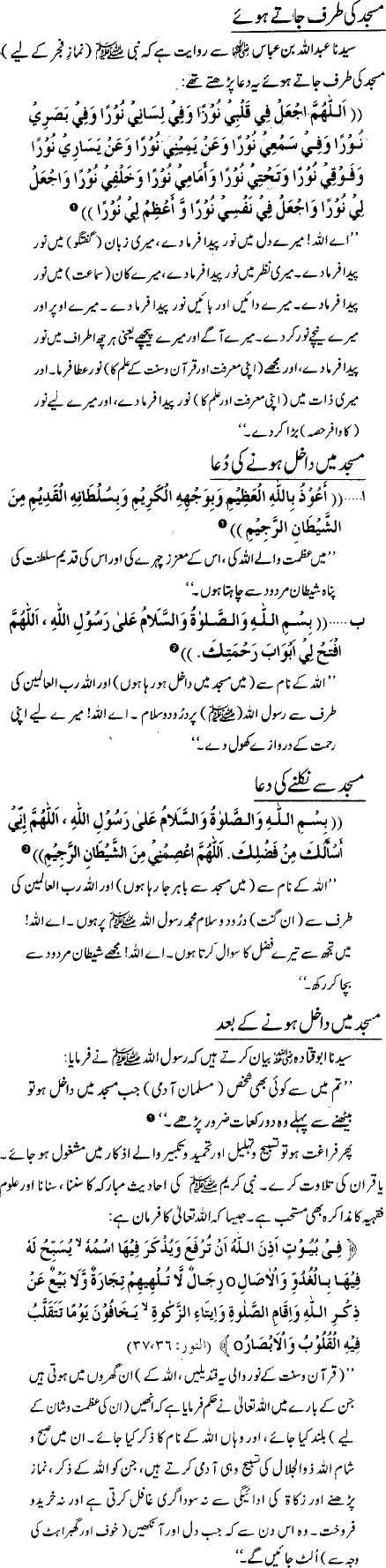
It is easy to understand how the idea of Muslims praying five mandatory prayers a day is misunderstood to mean that they pray only those five observances and no more.
Muslims should know the great status of fajr in the sight of Allah. Allah (SWT) says (interpretation of the meaning) “Establish regular prayers at the sun’s decline till the darkness of the night, and the recital of the Quran in the Fajr prayer, for the recital of the fajr, is witnessed” (Al-Israa 17:78)
In addition, The Prophet (PBUH) said:
“Whoever prays the fajr prayer in congregation, it is as if he (or she) had prayed the whole night long.” [Muslim & Tirmidhi].
Now, to show the seriousness of missing this prayer, we present the hades of the prophet (PBUH) “the most burdensome prayers for the hypocrites are Isha and Fajr, but if they only knew what they contain, they would come even if they had to crawl.” [Ahmad]
The Fajr (dawn) prayer is amongst the most important acts of worship, being one of the five obligatory prayers. unfortunately, many of us have become so used to missing it at its prescribed time – which ends at sunrise – that we have forgotten its position in our religion, and barely feel anything is wrong when we wake up in the morning for work or school without having performed the fajr prayer. on the other hand, if one of us was to miss a job interview or a flight, we all know how disappointed he or she would feel the fajr (dawn) prayer is amongst the most important acts of worship, being one of the five obligatory prayers.
Do not let satan benefit from his actions. do not put off a good that you intended to do as you never know how much reward you might receive from the hardships you encounter while trying to achieve that good.