TAG: Quran
No Time Like Ramadan Time: “Golden Hours On Angel Wings”
Soon, once again, the blessed month of Ramadan will be with us; once again, like “golden hours on angel wings”, will descend upon us in its blessed moments. Like every other year since Hijrah, it will summon Muslims, as individuals and as a corporate body, to an intense and sustained life of Fasting and Prayer, of worship and obedience, of devotion and discipline all centered on the Quran which, too, was sent down in these very moments in the custody of ‘noble and trustworthy’ angels. The call will go forth to every believer to take to prolonged companionship with the Book of God. To a life of redoubled endeavor to become what God desires Muslims to be. Ramadan bids our hearts and minds, our society and polity, to come to.
Joyfully and dutifully the Muslims will respond. Every day will be spent in Fasting: from dawn to sunset, for one whole month, not a morsel of food, nor a drop of water, indeed nothing shall pass down the throat; nor will sex be indulged in. Each night. hours will be devoted to standing in Prayers before Allah, reciting and reading His words as sent down in the Quran. During the day, too, reading the holy text will be a cherished business.
Fasting, in one form or another, has always been an important and often necessary part of religious life, discipline, and experience in every faith. As a means par excellence to come nearer to God, to discipline the self, to develop the strength to overcome the temptations of the flesh, it needs no emphasis. Yet Islam turns Fasting, as it does every other act of worship and devotion, into something different and unique, the life-giving center of life.
How does it impart new meaning and force to Fasting?
Put simply: by prescribing for it the time of Ramadan. This may sound like making things too simplistic or trivializing the important. But Ramadan is no trivial event. For it is the month “in which was sent down the Quran: the Guidance for mankind, with manifest truths of guidance and the Criterion [by which to judge the true and the false” (Al-Baqarah 2:185). It was on a night in Ramadan that the last Divine message began to come down: “Read in the name of your Lord…” (Al-Alaq 96:1). That is why you must fast in Ramadan, says the Quran.
Ramadan, therefore, centers the entire discipline of Fasting on the Quran. The sole purpose is to prepare us for receiving the Divine guidance, for living the Quran, for witnessing the Truth and Justice that it perfects, for striving to make the word of God supreme.
How is this purpose achieved?
The fruit of Fasting ought to be that rich inner and moral quality that the Quran calls taqwa. “Ordained for you is Fasting . . . so that you might develop taqwa” (2:183). The most basic condition for being guided by God, too, is taqwa. The significance is plain to see. Fasting, linked to Ramadan in which Allah’s guidance came down, generates taqwa which becomes directed on the supreme goal of entering the world of the Quran and of living therein, instead of being a spiritual ecstasy to be frittered away in the delights of the soul. It becomes the key with which can be unlocked all the doors leading to the blessings which the Quran has to offer; honor, prosperity, and freedom from fear and anxiety in this world; success, Paradise and God’s good pleasure in the life-to-come. No time for Fasting other than Ramadan could have made taqwa such a potent force.
More importantly, the fulfillment of being guided by the Quran comes about when we strive to discharge the mission it entrusts to us. For, having the Book of God ‘a weighty word’ places on our shoulders a heavy responsibility: to hear is to make it heard, to know is to act, to have is to share, to say shahadah is to do shahadah. This means an unflinching pursuit to create a new self within us, and to create a new world of Quranic ideals outside us.
This is the sole purpose for which a new Ummah was created and charged with the mission of bringing man to God by witnessing to His guidance, ‘so that you be witnesses unto mankind, and the Messenger be witness unto you’ (Al-Baqarah 2: 143). Otherwise, when the Quran came, the world was not devoid of godly men who fasted, and stood in prayers before God and wept.
Discharging that mission requires immense inner and moral resources like knowledge of and devotion to the Quran, strong faith (Iman), resolve, and steadfastness (sabr). For it is no light task. Few have a full and clear understanding of what it means. Let us pause here and reflect on why otherwise we shall never grasp what the Ramadan Fasting is for and what it achieves.
When in Ramadan the first ray of Divine revelation reached the Prophet, blessings and peace be on him, in Hira, its message of Iqra was impregnated with world-shaking forces; he, therefore. trembled. The second revelation made things clear: ‘arise and warn; make the greatness of your Lord the greatest’ (Al-Muddaththir 74:2-3); he, then, took up his task with a single-minded dedication, and encountered stiff opposition. For, the call to ‘let God be the Greatest’ (fakabbir) implied that all false claiments ‘ and every claimant is false ‘ to greatness, to unlimited power, authority and lordship over men and things, to obedience, loyalty, and servitude from God’s creatures be challenged, and dethroned.
This, it is not difficult to see, requires supreme sacrifices in ‘giving up’ (Hijrah) everything one loves and fighting with all that one possesses for the sake of that love of Allah which must be greater than all else (Al-Baqarah 2:165). A life of Jihad therefore necessarily requires important qualities: knowledge of and devotion to the Quran, deep and strong faith (Iman), resolve and steadfastness (sabr), total trust (tawakkul), and, of course, taqwa. Read the Quran and you will find every promise of success here and in the Hereafter conditional upon these qualities.
Fasting, combined with the Quran recital in night prayers, generates these rich resources which Ramadan harnesses to the fulfillment of the Quranic mission.
First, look at taqwa. What is it? Literally, it means saving ourselves from harm. In the moral life, therefore, taqwa must primarily mean. firstly, accepting that some actions and beliefs are harmful, that is to say, right and wrong do exist, and secondly, having the resolve and will to avoid the wrong and do the right. As a consequence, thirdly, his conduct should reflect this consciousness and resolve, if he is not a hypocrite.
To have the Quranic taqwa, which will entitle us to its guidance, we must know that there are realities and values beyond matter, beyond what we are incapable of perceiving by our physical senses, beyond this world, that man needs to be guided to what is right and what is wrong, (yu’minuna bil- ghayb). We should also be prepared to submit, willingly, all that we possess ‘mind, body, wealth’ to the truth that we know and believe (yuqimunas salata wa mimma razaqnahum yunfiqun).
Every moment in Ramadan engraves these lessons on our hearts. Integrates them in our practice. The most elementary physical needs ‘food and water and sleep’ are readily and joyfully sacrificed. Hunger and thirst are no more harmful; God’s displeasure is. Physical pleasures no more hold any lure; God’s rewards do. The scale of values is turned upside down. The measure of comfort and pain, success and failure are radically changed. Without this change, none is entitled to take up Allah’s cause.
To the uninitiated, or an outsider, the devotional regimen of Ramadan may appear harsh and austere, but, in fact, it is eagerly awaited by believers. The sighting of the new moon, the crescent that signals the beginning of Ramadan is met with celebrations and jubilation. Even children ‘ who are not required to fast’ look forward to their first experience of Ramadan fasting. The sick, too, remain restless for having been deprived of this blessing. Such jubilation and eagerness, to sacrifice time, wealth, and life in submitting to whatever God asks of us, and regret and sorrow if prevented from doing so for reasons beyond our control, is highly desirable in the way of Allah.
These qualities spring from genuine faith in the heart. For a Muslim, the fast is primarily a commandment to his person, though its collective aspect is no less important. Little wonder, then, that individuals gladly take on the tribulations of Ramadan as an expression of their faith. Just as Fast is something special between man and his God which only He can reward, so should we take Jihad to be.
Whatever the physical discomfort, the mortification of the flesh is certainly not the desired object in Islam. The gifts of God are there to be enjoyed, but the limits by Him must also be strictly observed ? that is another lesson of taqwa in Ramadan. As the sun sets, the fast must be broken, and sooner the better. All that became forbidden at His command, becomes permissible, again at His command.
Similarly eating before dawn is strongly urged, even though the hour is unearthly. For it provides the necessary strength for the rigors of the day ahead. Fasting and praying are obvious acts of worship but eating, drinking, and sleeping, too, constitute forms of worship. So in the way of Allah: what matters is His command, the whole life must witness to Him.
The month-long regimen of dawn-to-sunset abstinence from food, drink, and sex, for the sake of Allah alone, internalizes the lesson that one must never touch, acquire or enter that which does not belong to one under the law of God. A man can no more remain a slave to his own self-indulgence as he prepares for the arduous journey on the road to his Lord.
For many, it is difficult to see the value of long hours of hunger, thirst, and sleeplessness. Productivity losses are difficult to accept in an age that has tried to make gods of gross national product and economic growth. According to Islam, however, man is created to live a life of total submission to the One and Only God, and this purpose must be paramount in all scales of values. Ramadan fasting is crucial to this understanding. It shows that its purpose, like God’s guidance through His Prophets and Books and all other rituals of worship, is to train the believer in how he must live totally and unreservedly, at all costs, in submission to God.
Obedience, let there be no misunderstanding. is not limited to mere outward conformity with the letter of law. The law must be observed, but evil, in all its forms, must be eschewed. lbn Maja the great Hadith scholar, reports that the Prophet said: When the month of Ramadan arrives, the gates of Paradise are flung open while those of Hell are closed. All the shayatin (satans) are put in chains and a herald cries out. ‘O you who seek good come here and those who desire evil desist’.
Imam Bukhari, the most renowned Hadith scholar narrates: Eyes should refrain from seeing evil, ears from hearing evil, heart from reflecting evil, tongue from speaking evil. The Prophet said: “One who does not give up speaking false words and acting by them is not required by God that he give up only his food and drink.” On another occasion, he said: “Many are the observers of fast who gain nothing from their fast but hunger and thirst” (Darimi).
As a collective experience Ramadan suffuses the entire life of communities with the spirit of taqwa; even the air, it seems, is changed with a new fervor. In Ramadan, we can see a beautiful example of how Islam unites the individual and the society under the sovereignty of One Lord alone.
In Ramadan, therefore, the demands of Allah take precedence over all other demands; no part of the personality, no aspect of our life remains outside His writ, even aspects as mundane as timings for eating and going to bed. Thus, a will is strengthened, a determination is reinforced, the spirit of sacrifice is intensified, self-control is heightened.
But, above all, the life in Ramadan revolves, as it must, around the Quran which, as the Word of God, must become the core of all devotional activities. At least one reading of the Quran is a required duty during nightly Prayers, after the ‘Isha.’ But it ought to be extensively recited both within and without ritual prayers. Ramadan is not only the annual celebration of the coming down of the Quran by disciplining every moment of life into the surrender of God, it is also the occasion for heart and mind to get absorbed in its words and teachings.
Closely linked to fasting is the nightly prayer. Sleep is deliberately avoided to enter into communion with God’s words, to prostrate before Him, and thus to move nearer to Him. It is during the quiet and calm of the night that we can dwell upon God’s words, and the truths which might otherwise elude us can be grasped.
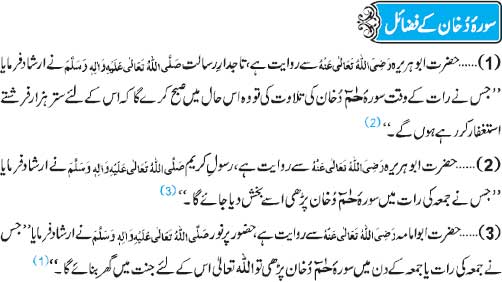
No time is like Ramadan time. For in it lies that night which is ‘better than a thousand months, the ‘Night of Destiny … in it the angels and the Spirit descend’ (AlQadr 97:1-4). It is ‘that blessed night in which was made distinct everything wise’ and ‘a warning’ and a ‘mercy’ was sent down which God has always sent for mankind (AlDukhan 44: 3-6).
That is why Fasting is placed in Ramadan. In this technological age, when the clock has become the only measure of time and every concept of the sacredness of time has been erased from human memory, some may find it difficult to visualize how every moment of Ramadan encompasses centuries in it, how it allows us to draw nearer to God at a much faster pace. Acts of virtue during the month are especially rewarded; an obligatory act (fard) increases seventy times; a voluntary one (nafl) is rewarded like the obligatory. Each of its moments offers the immense possibility of great spiritual journeys. As the poet Iqbal said:
Far though the valley of love may be,
a long and terrible way,
The path of a hundred years maybe
traveled at times in a sigh.
If Ramadan is blessed because the Quran began to come down in this month; it is blessed, too, because the Quran triumphed in this month. The Quran is the al-Furqan (criterion by which to judge the truth and the falsehood); in Ramadan falls that day which the Quran calls the Yawmul Furqan, Day of Criterion, on which the truth and the falsehood were judged, and the Truth triumphed. That was the Day of Badr when the Prophet, blessings, and peace be on him, beseeched God for help and victory thus: O God if this group perishes today, You will not be worshipped anymore’ (Ibn Ishaq). This was both a petition and a pledge; an expression of the final goal of all of his strivings, and of what our lives ought to be devoted to. Only an inattentive mind can ignore the significant link between al-Furqan descending in Ramadan. and Yaum al-Furqan falling in Ramadan.
Thus, to come back to the center: Ramadan reminds us of our mission, the only purpose of our existence as Muslims. It prepares us to discharge that mission; it deepens our consciousness, brings us closer to Quran and the Prophet, blessings and peace be on him, strengthens our resolve, schools us to taqwa and patience.
The end of Ramadan brings Eid-al-Fitr. the feast of the breaking of the fast, which celebrates the revelation of the Quran. The Quran makes it clear: ?that you complete the number, and proclaim the greatness of God for His having guided you, and that you render your thanks’ (2:185). Man’s response to the Divine initiative of guidance must be gratitude and extolling Him as the Greatest. That is why constantly on lip is the tasbih: Allahuakbar. . . walillahil-Hamd.
Even so, the heart still remembers wistfully the trying days and the silent, busy nights when the soul was engulfed in the dawn of light and cries out:
Stand still, you ever-moving
sphere of heaven,
That time may cease, and
midnight never come.
Surah An-Nasr

Living And Dying In Islam
The German philosopher Goethe wrote, “If Islam means submission to the will of God, then in Islam we all live and die.” This succinctly summarizes the goal of Muslims: To live and die in accordance with God’s will as revealed in the Qur’an and practiced by the Prophet. Muslims attempt to adjust their view of the world with the lens of the Qur’an. The will of God is expressed in the Qur’an through both expectations and examples. The expectations are usually descriptions of how a believer should live his or her life, and various stories in the Qur’an provide positive and negative examples. The epitome of a positive exemplar is Moses, whose story is dealt with in great detail in the Qur’an. The struggle is at the root of life on earth, a spiritual survival of the fittest. The fittest are those closest to God; they are those who are “steadfast in prayer and spend out of what We have provided for them” (Qur’an 2:3; Ali 1999, p. 17). The negative prototype is embodied in Pharaoh, who elevates himself above God’s law and makes his own law the only source of guidance. Moses is given the Promised Land for his perseverance and steadfastness, and Pharaoh is destroyed by his own hubris and rebellion against the divine will. The story of Moses is an example of submission (Islam), and Pharaoh’s is of rebellion and infidelity (kufr). Between these two lies the struggle of humanity.
Life is meant to be an arena whereby one struggles with good and evil. The Qur’an teaches that good and evil exist in the heart of every individual as well as in society. The individual struggle is to act righteously in accordance with the Qur’an and prophetic example and to shun one’s own evil and its impulses. The collective struggle is to work with others to make the world a more righteous place. In Arabic, this inward and outward struggle is called jihad. While it can mean a militant struggle against those who attack the Muslim lands, it also signifies a person’s struggle with the lower tendencies of the soul, the gravitational pull of self-destructive forces that lead to alienation from God and a state of spiritual disequilibrium. Because humans inevitably fall short morally and succumb to these destructive tendencies from time to time, a means of reestablishing spiritual balance is given, called Tauba or atonement. This is done by experiencing a genuine sense of remorse for one’s transgressions and removal of the unhealthy effects of that state by turning to God and seeking divine grace through prayer, charity, and a sincere resolution not to return to the destructive patterns of the past.
While life is seen as a spiritual test and journey, it is also seen as being filled with blessings from God to be enjoyed: “Eat and drink, but waste not by excess, for God loveth not the wasters. Say: ‘Who hath forbidden the beautiful (gifts) of God which He hath produced for His servants, and the things, clean and pure, (which He hath provided) for sustenance?” (Qur’an, p. 352). Thus, in Islam, marriage is highly recommended and celibacy is frowned upon. The Muslim savants of the past identified sexual relations between a wife and her husband as a foretaste of eternal bliss in the afterlife. The Prophet Muhammad (peace be upon him) encouraged marriage and stated, “There is no monasticism in Islam.” In Islam, children are highly esteemed and seen as one of God’s greatest blessings to humanity. The Prophet stated that humans were born innocent and later corrupted by their societies. Thus, parents are held responsible for maintaining that state of innocence and raising them with a sense of love and awe of the divine. Motherhood is highly regarded in the Qur’an and the prophetic tradition. In most Muslim societies, adult women are still predominantly mothers and housewives during their productive years.
What Is Islam?
What is Islam?
Islam is an Arabic word meaning “surrender” or “submission.” It is a faith that encompasses approximately one-fifth of humanity. Its adherents reside in almost every country of the world and comprise majorities in large segments of Africa, the Middle East, the Indian subcontinent, and Asia. Approximately more than 6 million Americans follow Islam.
The Origins of Islam
The historical origins of Islam date back to seventh-century Arabia. The Prophet Muhammad (peace be upon him), an aristocratic Arabian born and raised an orphan in the sanctuary city of Makkah, experienced a revelation in his fortieth year. He began to preach to his own people, most of whom initially persecuted him. After thirteen years of suffering with patience and endurance, he migrated to the nearby city of Madinah. For over twenty-three years, beginning in 610 C.E., the Prophet orally transmitted the Qur’an. Muslims believe the Qur’an was revealed from God through the archangel Gabriel. In it, a cosmology, a theology, and an elaborate eschatology are described. By the end of the Prophet’s life in 632 C.E., almost the entire Arabian Peninsula had converted from paganism to Islam, and within a hundred years, its followers stretched from France to China.
Although considered the youngest of the three great Abrahamic faiths that include Judaism and Christianity, Islam does not view itself as a new religion but rather as a reformed Abrahamic faith. Muslims believe that the Qur’an corrects distortions of previous prophetic dispensations while not departing from the aboriginal faith of humanity, which according to the Muslims is Islam or submission to one God. While Muslims believe all prophets have taught the unity of God and that their beliefs about God were the same, their actual practices have changed to suit various times and places. According to Muslims, this is why religions tend to differ outwardly while retaining an essential inward truth common to them all. However, the Qur’an declares its message as uniquely universal applying to all people for all remaining time.
Allah Ki Rah Say Rokna

Building A Close Relationship With The Qur’an
Recite the Holy Qur’an as much as we can for It will come as an intercessor for its reciter’ on the Day of Judgement [Muslim]
Learn the Qur’an and recite it, because the example of one who learns the Qur’an, reads it and recites it in Tahajjud is like an open bag full of musk whose fragrance permeates the entire place. And the person who has learnt the Qur’an but sleeps while the Qur’an is in the heart is like a bag full of musk but with its mouth closed.
Virtues of reciting the Qur’an
“Whoever reads a letter from the Book of Allah will receive a hasanah (good deed) from it (i.e. his recitation), and the hasanah is multiplied by ten. I do not say that Alif-Laam-Meem is (considered as) a letter, rather Alif is a letter, Laam is a letter, and Meem is a letter.” [At-Tirmidhi, Ad-Darimi]
“There is no envy (acceptable) except in two (cases): a person whom Allah has given the Qur’an and recites it throughout the night and throughout the day. And a person whom Allah has given wealth, that he gives out throughout the night and throughout the day.” [Al-Bukhari and Muslim]
It was narrated that Abdullah ibn Mas’ud said: Whoever reads Tabarakallahi Biyadihil Mulk [i.e. Surah al-Mulk] every night, Allah will protect him from the torment of the grave. At the time of the Messenger of Allah (Peace be upon him) we used to call it al-mani’ah (that which protects). In the Book of Allah, it is a surah which, whoever recites it every night has done very well. (an-Nasa’i)
Abdullah Ibn ‘Abbas and Anas Ibn Malik (Ra) reported that the Prophet (Peace be upon him) said, ‘Whoever recited Surah Zilzilah (99) would get the reward of reciting half the Qur’an. Whoever recited Surah al Kaafirun (109) would get a reward as if reading a quarter of the Qur’an. Whoever recited Surah al Ikhlas (112) would get a reward as if reading one-third of the Qur’an’. (At-Tirmidhi 2818/A)
Reading, understanding, and implementing the Qur’an in our daily lives
The virtues of reciting the Qur’an are too numerous to list. In order to get closer to Allah, we need to recite the Qur’an, understand it and implement it in our daily lives.
We should make a target of reading at least a chapter a day. If one can’t manage that then at least half a chapter. If one still can’t manage that then recite at least a quarter of a chapter or even a page a day. However much we can manage we should try to recite each day with its meanings and implement what we learn into our daily lives.
Reading a little each day is better than reciting a lot once in a while. We should build a close relationship with the Qur’an which is in fact building a close relationship with Allah!
“Verily Allah raises nations by this book (the Qur’an) and puts down (i.e. destroys) others by it.” [Muslim]
The Qur’an And The Science Of Stars
The Qur’an is that miraculous book of Allah that brought humanity from the days of ignorance to the age of rationalism. It is that unique and phenomenal book in the history of mankind that opened doors to every science. Allah said, “We shall show them Our signs in the Universe and in their own selves until it becomes manifest to them this the Qur’an is Truth.” (Qur’an, 41:53)
There have been many contentions and theories on scientific subjects by various people around the world, the Qur’an, however, has definite answers to all. It has been readily proven time and again; that many doctors and scientists have accepted that the Qur’an holds answers to all those questions which have been answered by them, recently, with the help of modern technology. As Allah said, “He has taught man which he knew not.” (Qur’an, 96:5)
Some accepted facts about the sun, the moon, and the stars are as follows:
Allah said, “And He has made the sun and the moon, both constantly pursuing their courses.” (Qur’an, 14:33)
When the sun is wound round and its light is lost. And when the stars fall. (Qur’an, 81:1-2)
Then when the stars lose their lights. (Qur’an, 77:8)
Qur’an has mentioned the two theories of science. First, about the movement of the stars, and the second about the end of solar energy. Under the Ptolemaic system, it was said that sunrises and pierces through the sky and the earth is stable. But, this notion was dropped in the 16th century and the theory of Prussian astronomer Copernicus was accepted, who said that the earth revolves around the sun.
It was only after Galileo, an Italian mathematician, that the true nature of the solar phenomenon was recognized. He invented a telescope and observed the rotation of the sun. Thus, what the Qur’an mentioned in the early 17th century was accepted by people in the seventeenth century. “And the sun runs on its fixed course for a term (appointed). That is the Decree of the All-Mighty, the All-Knowing.” (Qur’an, 36:38)
“And by the planets that move swiftly and hide themselves.” (Qur’an, 81: 16)
Scientists also say that the total life of the sun is 10 to the power 10 years, and it will eventually change into black dwarf stars. The Qur’an also confirms the fact that the sun’s light would disappear. They also admit that the death of the sun would be the end of this world — the Day of Judgment will come.
– by Ahmad Wahaj Siddiqui
Muslim College Life: Dating, Drinking and Deen
Freedom. Young people live for the day when they can move out of the house and go to college and finally be free. Freedom from their parents, from restrictions on their lifestyle, from everyone telling them what to do.
This is why in college you find a whole generation that does what they want. Life’s short they say, let’s enjoy ourselves while we can.
So it goes for Muslims. In college, you find the most amazing things, Muslims who don’t pray, Muslims who date, go out to parties, and drink.
Why is this happening?
For one, when students go off to university they finally realize that what they believed in was blind. Religion becomes like a fairytale, when they got old enough, they knew better than to believe in it.
Most have little knowledge about Islam and have maybe memorized the right rituals to get by. Why believe something on faith, they ask. After all, we cannot see heaven or hell. How do we know Islam is right anyway?
Islamic culture to them means marrying someone they never knew. It means arranged marriages and never hanging out or having fun.
For girls Islamic culture has even less to offer. It would mean double standards or having to serve a husband the rest of her life.
The western alternative to this looks a lot more attractive.
In western culture “love and romance” are supposedly everywhere. Everyone is out looking for love freely. Meeting someone, going out, seeking pleasure sounds a lot better.
But what about the downside? For love at first sight, you need to have the right image, the right hair, the right clothes.
Girls have to aspire to be like the latest supermodels, they have to hold back age. Who’s going out with who, what are my friends thinking, what will happen if I don’t get the right girl or guy, what is my girlfriend or boyfriend thinking, all become important.
Frustration, desperation, and unhappiness become the norm.
Imagine all the heartache youth would save if they followed the Islamic alternative.
In true Islam, unlike culture, there is no gameplaying. If two people wish to be involved they are both straight with one another.
Unlike what goes on today amongst some Muslims, they both meet each other and make a contract to marry. Women are treated with respect, there is no sexual bombardment like there is in western society. Sex in western culture is also often seen as a vice or a sin of the flesh. But even in religious Islam, sex is seen as natural. As long as it is in the right circumstances when the two are committed to one another in marriage.
Drinking in college is also the norm, unfortunately. If you don’t drink or party you’re seen as weird. Drinking is cool and a way for people to socialize, meet and have fun. The one who doesn’t is less of a person and ‘misses out’. Drinking and all the harm that comes with it is cut off at the root in Islam. So many problems are avoided, accidents, pregnancy, violence, and even rape for example.
In college and in the world, success in life is not seen in terms of religion. It is seen as what other people think, one’s careers, how much money they make. If you are religious you must have failed at life. But why do we have this separation? and this blindness in religion?
The Quran tells us again and again not to have blind faith, not to follow the religion of our forefathers.
Yet, we as Muslims have stopped thinking. We may think about what our friends or other people will say, but we avoid thinking about the real issues.
We spend so much time on the opposite sex, thinking about careers, money, etc, but we forget to think about death and how much of this we will really be able to take with us?
“Every soul shall have a taste of death and only on the Day of Judgement shall you be paid your full recompense.. .for the life of this world is but goods and chattels of deception”
(Quran 3:185)
Shouldn’t we take the time to contemplate what will happen to us after we hit the grave? After all, what is the point of life if we are not accountable for our actions? If there is no creator, what is the point of being honest or good?
If we really look at our life we see that everything is indefinite, getting a job, even living until tomorrow. In fact, we could die anytime, this is definite, the _only_ dead certain thing in our life.
Most of us believe we can make up for our actions later or we can be religious later.
We are gambling.
The chances of our dying today are little, but the stakes are high. Allah reminds us of the importance of this,
“O you who believe, obey Allah as he should be obeyed, and die not except in a state of Islam”
(Quran3:102)
Each of us needs to decide.
On the Day of Judgement, it will be us alone who will be asked about our actions.
“Verily We have revealed the Book to thee in truth, for (instructing) mankind. He, then that receives guidance benefits his own soul: but he that strays injures his own soul…”
(Quran 39:41)
This is the true definition of freedom. To learn about Islam and the world openly. To contemplate life and death. And after learning the truth, obeying the word of God.
“Those on whom knowledge has been bestowed may learn that the (Quran) is the truth from your Lord and that they believe therein, and their hearts may be made humbly (open) to it…”
(Quran 22:54)
Once students have this rock-solid intellectual belief in Islam, the corruptness and falseness of the people around them are clear. The beauty and wisdom of the Islamic way, the best alternative is clear. What others do is of less importance. If others think they were weird to pray or weird, to be honest, they would still pray and still be honest because they know their deen.
Our Quran’s are left on the top shelves, gathering dust. Sometimes the most it is read is when someone dies. How is this to help, when the guidance comes too late. The Quran is for the living. The path to understanding and following Islam comes from learning first.
How many of us are Muslim, yet have never read the Quran in our native language?
How many of us are Muslim, yet have yet to open a book on hadith or sunnah?
How many of us defend Islam to non-Muslims, but do not follow it ourselves?
May Allah forgive and lead us and all those lost to the straight path.
In Sha Allah.
Ameen.
based on a talk by Abdul Wajid “Born to be Brown”, UK
by Huma Ahmad
Quran Ka Stah Na Choro